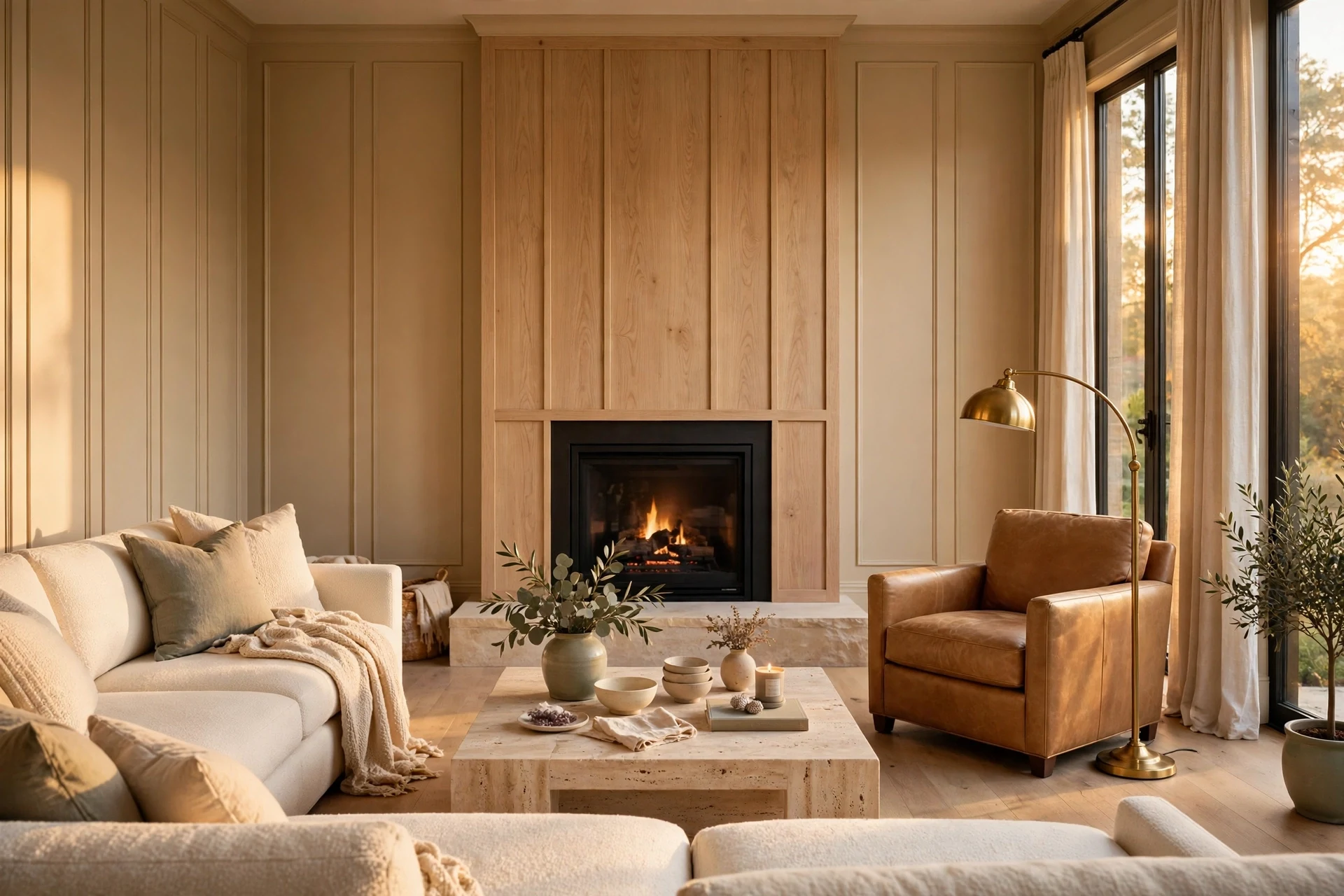
Living room wainscoting is wood or MDF wall paneling — board-and-batten, shiplap, or picture-frame molding, usually capped with a chair rail — applied to living room walls to add architecture, texture, and warmth. These 33 living room wainscoting ideas walk you through every way to use it, from charcoal media walls to sage reading corners, across fireplaces, accent walls, open-plan zones, and small spaces.
It feels like the difference between a room that is decorated and a room that is dressed. Run a hand along a painted batten and the wall answers back with rhythm and shadow. Warm greige softens the light; walnut grounds the floor line; brass catches the last of the afternoon sun. The living room stops being a pass-through and starts holding you a little longer. Here are 33 ideas worth saving — and stealing.
Why Living Room Wainscoting Ideas Work So Well
Wainscoting began as protective paneling in 17th-century Dutch and English homes and matured into Georgian raised panels and Victorian beadboard. Board-and-batten arrived with Shaker building, prized for honest carpentry. What separates living room wainscoting from trim is scale: it runs at furniture height or full height, reads as architecture, and gives drywall the shadow lines of an older house.
Paint-grade poplar or MDF battens take Benjamin Moore "Revere Pewter" or Sherwin-Williams "Accessible Beige"; rift-sawn white oak brings quiet grain, warm walnut adds weight behind fireplaces. Palettes center on warm greige, soft white, muted sage, and charcoal, with brass or blackened steel accents. Belgian linen and undyed wool soften the millwork.
It is trending because the post-pandemic living room became office, cinema, and retreat at once, and homeowners want permanence without a gut renovation. Paneled walls photograph with a depth flat paint cannot fake. One wainscoted wall delivers that collected feeling in a single weekend.
Small spaces can carry it with discipline: one or two walls at two-thirds height, a slim cap rail, and tonal paint — panel and wall in the same warm greige — so the rhythm reads without chopping the room. Prioritize the wall the sofa faces and skip chunky crown under eight-foot ceilings.
| Element | Classic Millwork | Modern Layered |
|---|---|---|
| Philosophy | Architecture first | Warmth through texture |
| Materials | Poplar, MDF, walnut | White oak, brass, linen |
| Color palette | Warm greige, soft white | Muted sage, charcoal |
33 Living Room Wainscoting Ideas
1. Charcoal Board-and-Batten: Living Room Wainscoting Ideas with Real Drama
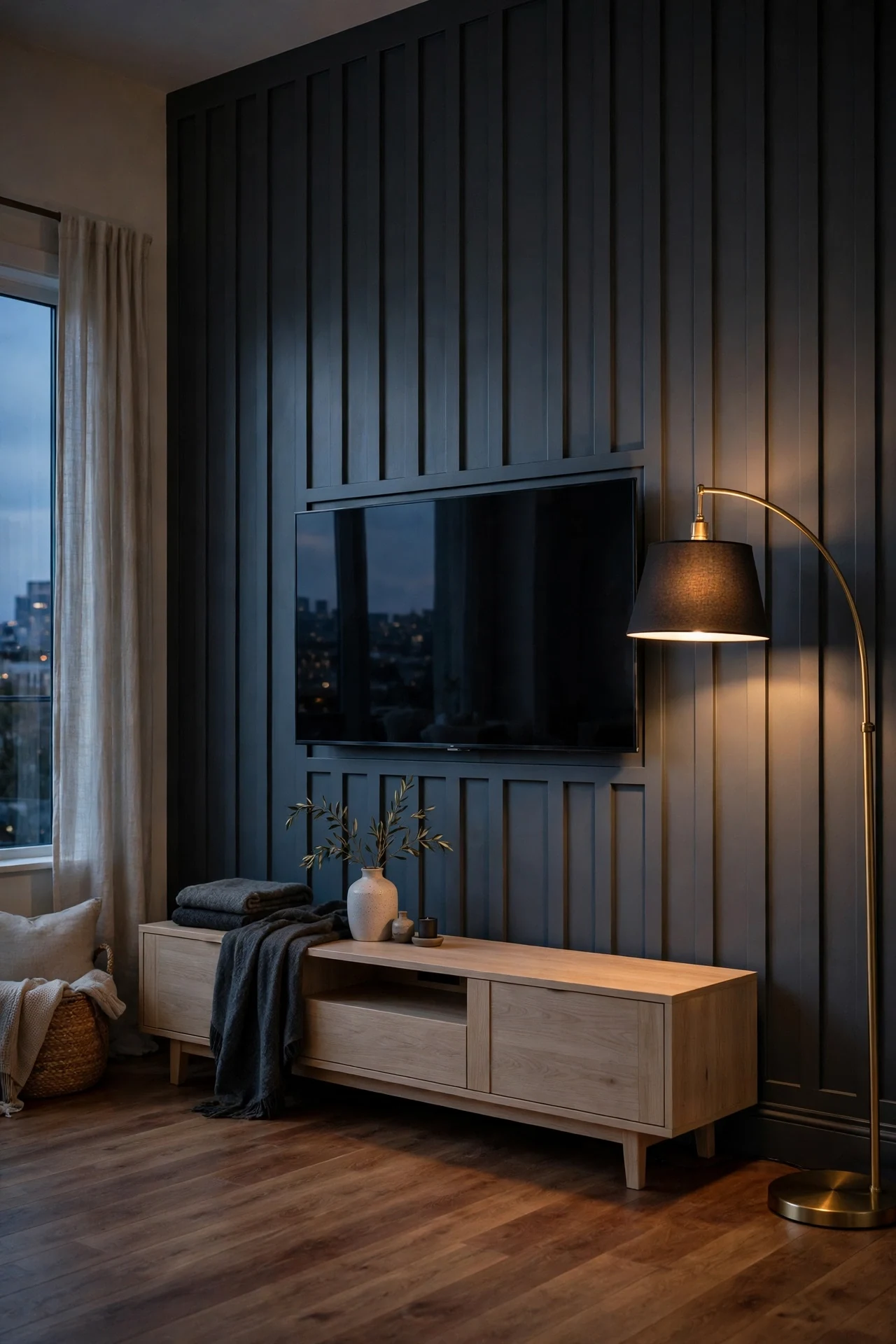
The room feels cocooned and cinematic, like the lights just went down. Deep charcoal compresses the wall so a big television reads as architecture, not a black rectangle floating on drywall. The battens' narrow shadow lines keep the dark paint lively — the contrast lives in the millwork itself. Paint MDF battens and the wall behind them in one coat of Farrow & Ball "Railings", and mount the TV nearly flush on a recessed bracket. Run battens full height and keep the console low in pale oak.
💡 Quick Win: *Test the mood first: paint one wall in Behr "Cracked Pepper" and add three floating oak shelves for a weekend version.*
2. White Oak Battens Around the Fireplace

The hearth feels anchored, like the room grew around it. Vertical white oak battens draw the eye up past the mantel, giving a standard builder fireplace the proportions of a crafted inglenook. The pale grain keeps the wood from reading heavy, while the dark firebox punches a focal point into all that calm. Clad the chimney breast in rift-sawn white oak battens spaced four inches apart, finished with matte hardwax oil. Keep the mantel shelf thin — two inches of oak — so the battens stay the star.
3. Brass Picture Lights Over a Sofa Wall

The wall glows like a gallery after hours. Warm light raking down picture-frame molding doubles every shadow line, so the millwork looks twice as deep as it measures. That wash of light also flatters everyone in the room — brass shades throw a kinder glow than any overhead can. Mount one slim brass picture light centered over each molding panel, wired to a dimmer. Keep sofa backs below the chair rail so the lit panels stay fully visible.
💡 Quick Win: *No wiring? Use battery-powered brass picture lights with a remote — they mount with two screws and look wired from three feet away.*
4. A Low Boucle Sectional Against Greige Battens
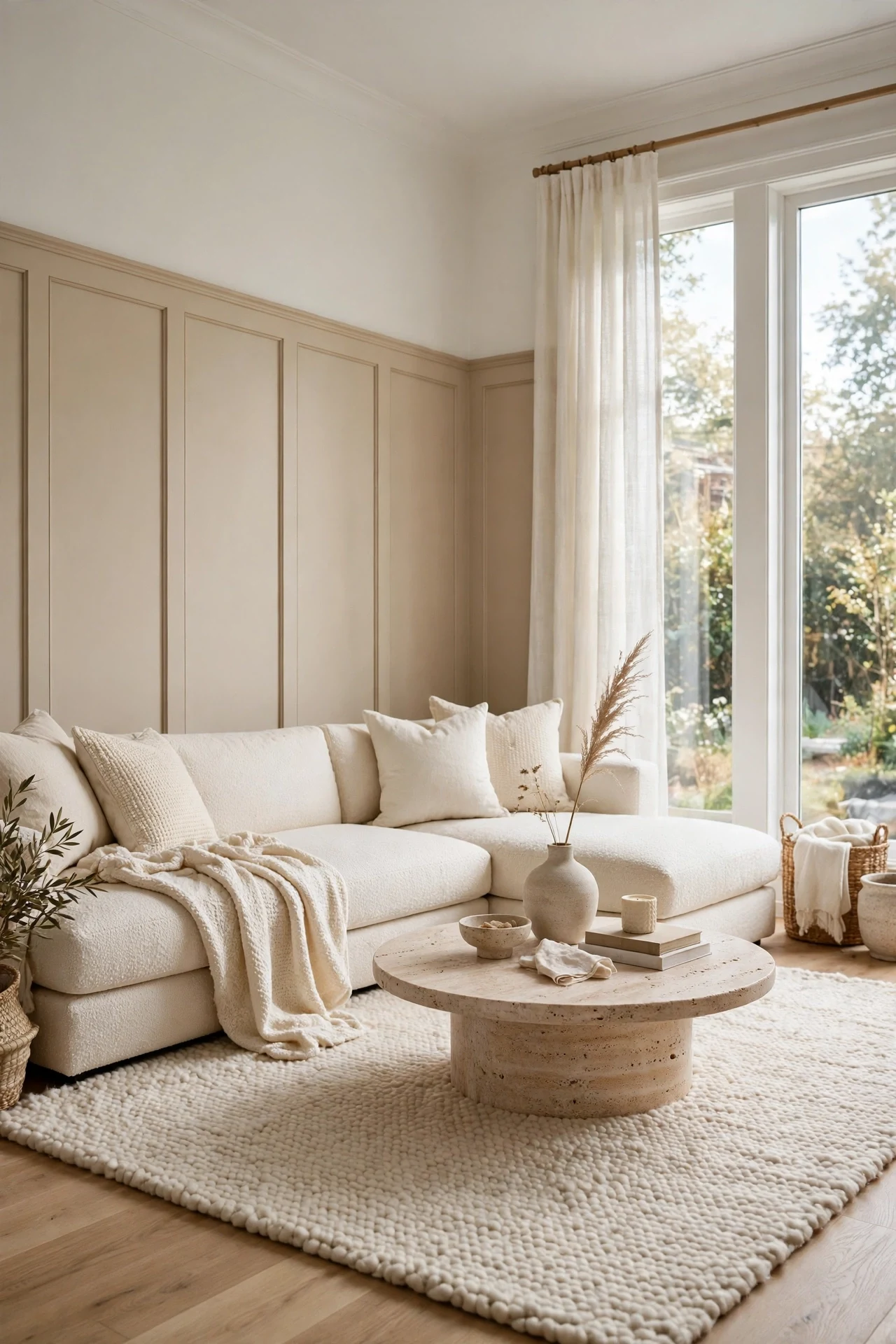
The room feels hushed and touchable, all soft edges. A low boucle sectional lets the greige battens run uninterrupted above it, so the wall's vertical rhythm becomes the room's artwork. The nubby boucle against crisp painted battens is a texture conversation — soft versus structured — that needs no pattern at all. Choose a sectional whose back sits at least six inches below the chair rail. Paint battens in Sherwin-Williams "Accessible Beige" and keep every textile within two tones of it for a calm, collected palette.
5. Belgian Linen Drapes on a Shiplap Accent Wall
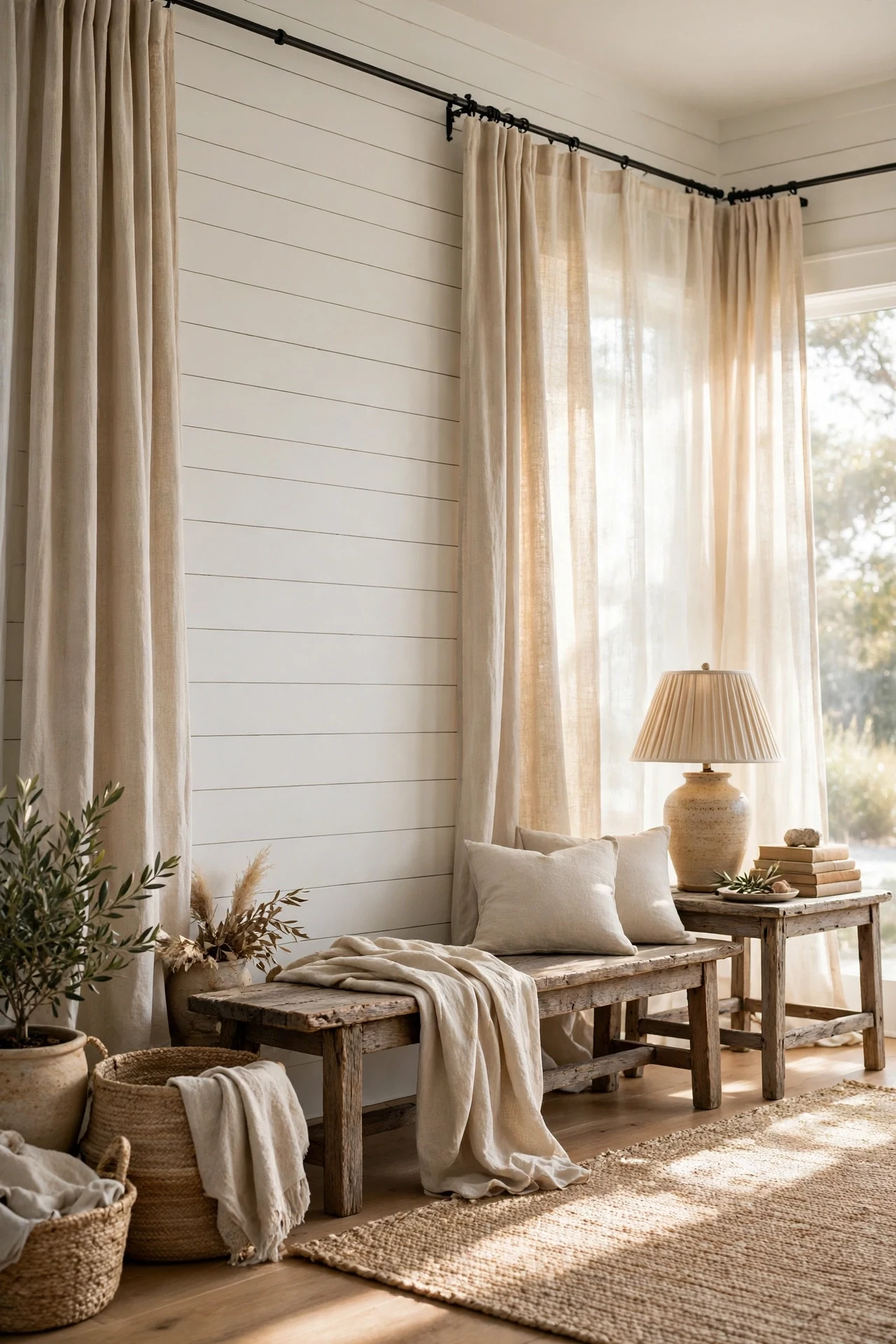
The wall breathes, soft and sun-washed. Horizontal shiplap stretches a narrow living room visually wider, while the linen drapes break the paneling's rhythm just enough to keep it from feeling like a beach cottage cliché. Light filtering through natural flax throws a dappled pattern across the shiplap grooves — texture layered on texture. Hang the drapes ceiling-high and two feet wider than the window so the shiplap shows as a deliberate frame. Choose unlined Belgian linen for that glow.
💡 Quick Win: *Swap heavy drapes for two flax linen panels from IKEA's DYTAG line — under $60 a pair and the light effect is nearly identical.*
6. Wainscoting That Zones an Open-Plan Living Room
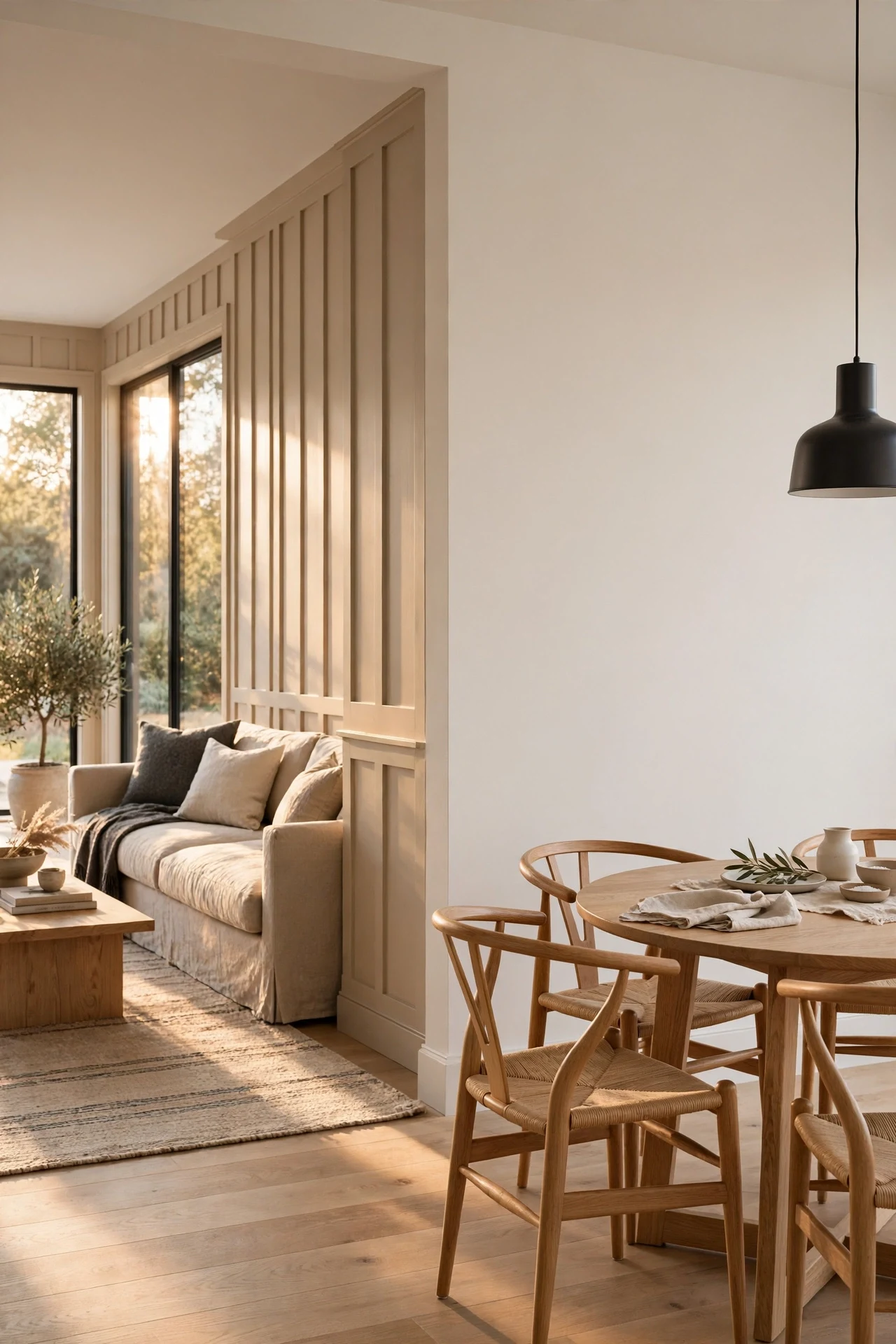
The space finally reads as rooms, not one long hallway. Ending the wainscoting at a crisp vertical line creates an architectural boundary where no wall exists — the paneled zone feels like the living room, the plain zone like the dining room. The eye accepts the cue instantly because texture signals enclosure more strongly than furniture arrangement alone. Stop the battens at the edge of the rug zone and finish the cut edge with a simple vertical casing. Repeat one material — the oak — on both sides so the zones feel related.
7. Living Room Wainscoting Ideas for Small Spaces: Vertical Shiplap That Lifts the Ceiling
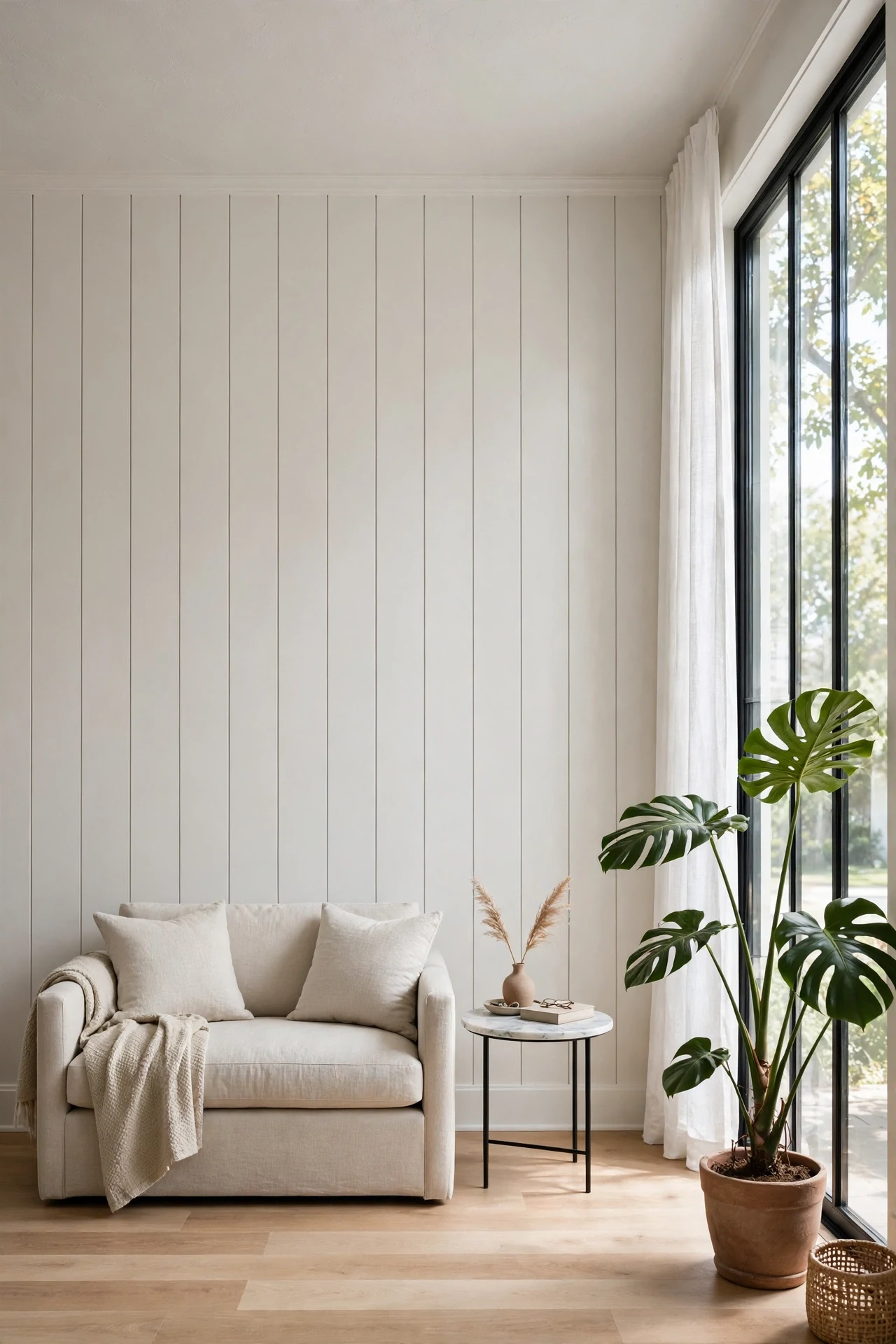
The ceiling feels a foot higher than it is. Vertical shiplap pulls the eye straight up, borrowing height the room doesn't have, and the all-white finish keeps every groove reading as light rather than line. In a small living room that vertical pull matters more than any furniture trick — walls do the work so the furniture can stay minimal. Run the shiplap floor to ceiling with no chair rail to break the line. Keep furniture low and leggy so the vertical panels dominate the view.
💡 Quick Win: *Paint existing paneling and trim the same white in one weekend — the height illusion comes from the uninterrupted color, not new millwork.*
8. Full-Height Picture-Frame Molding in Muted Sage
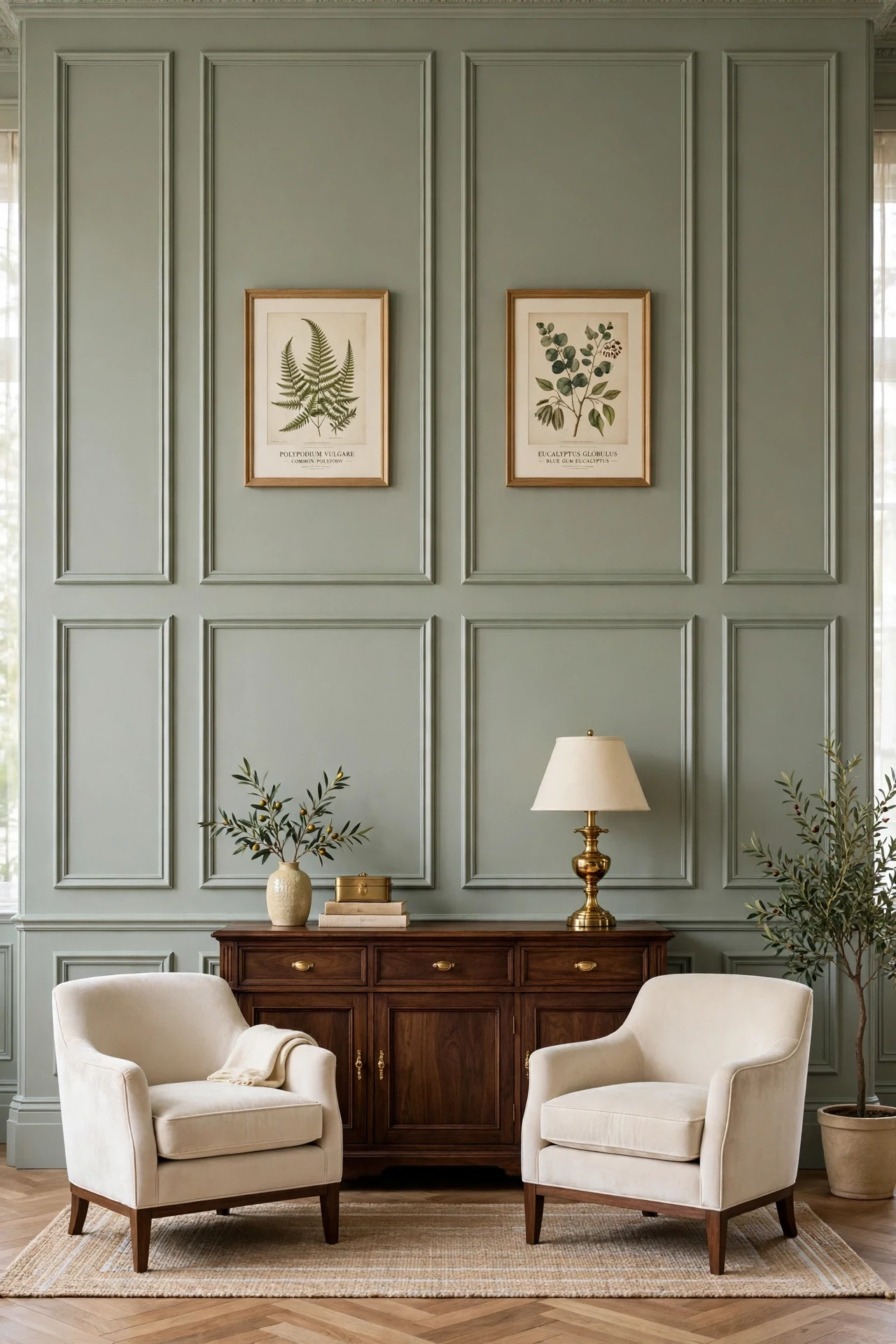
The room feels composed, like a well-cut jacket. Full-height molding boxes in muted sage give flat walls a tailored grid that reads custom without a single piece of real paneling. Sage sits between gray and green, so it calms the room while still registering as color — never beige-boring, never loud. Lay out the molding rectangles with a laser level, keeping two-inch stiles between boxes for a furniture-grade look. Paint wall and molding in one satin finish of Farrow & Ball "Lichen" so light moves evenly.
9. Walnut Raised Panels Behind the Fireplace
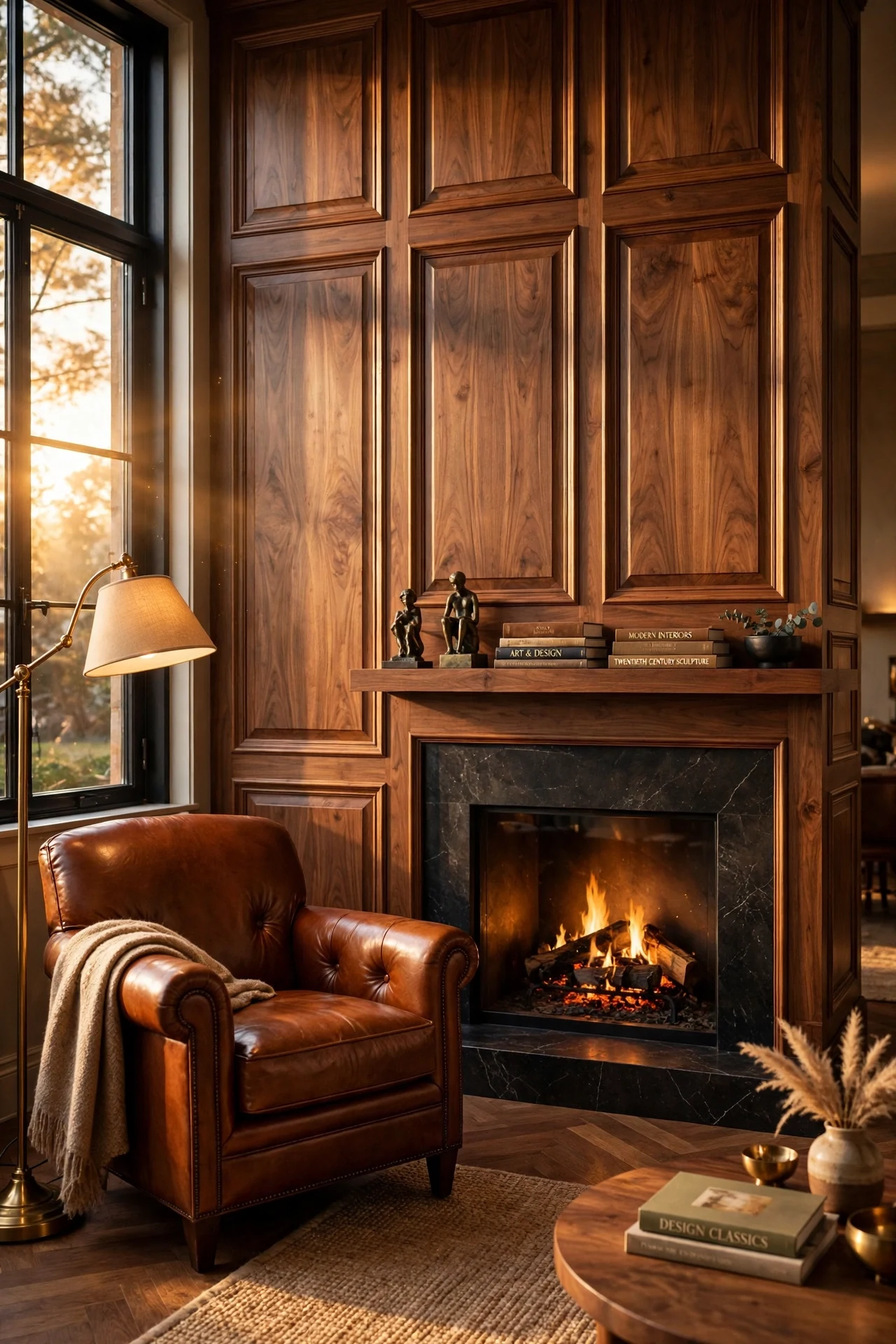
The fireplace wall feels carved from one dark, glowing block. Raised walnut panels catch firelight on their beveled edges, so the wall flickers gently even when the room is still — no other material does that. The darkness concentrates the room's energy at the hearth, which is exactly where a living room's gravity should sit. Use book-matched walnut veneer panels with a true raised bevel, finished in matte lacquer. Balance the weight with pale plaster walls on the other three sides.
💡 Quick Win: *Get the glow for less with walnut-look porcelain panels behind the firebox only — the flicker effect concentrates where it matters most.*
10. A Warm LED Cove Above the Cap Rail
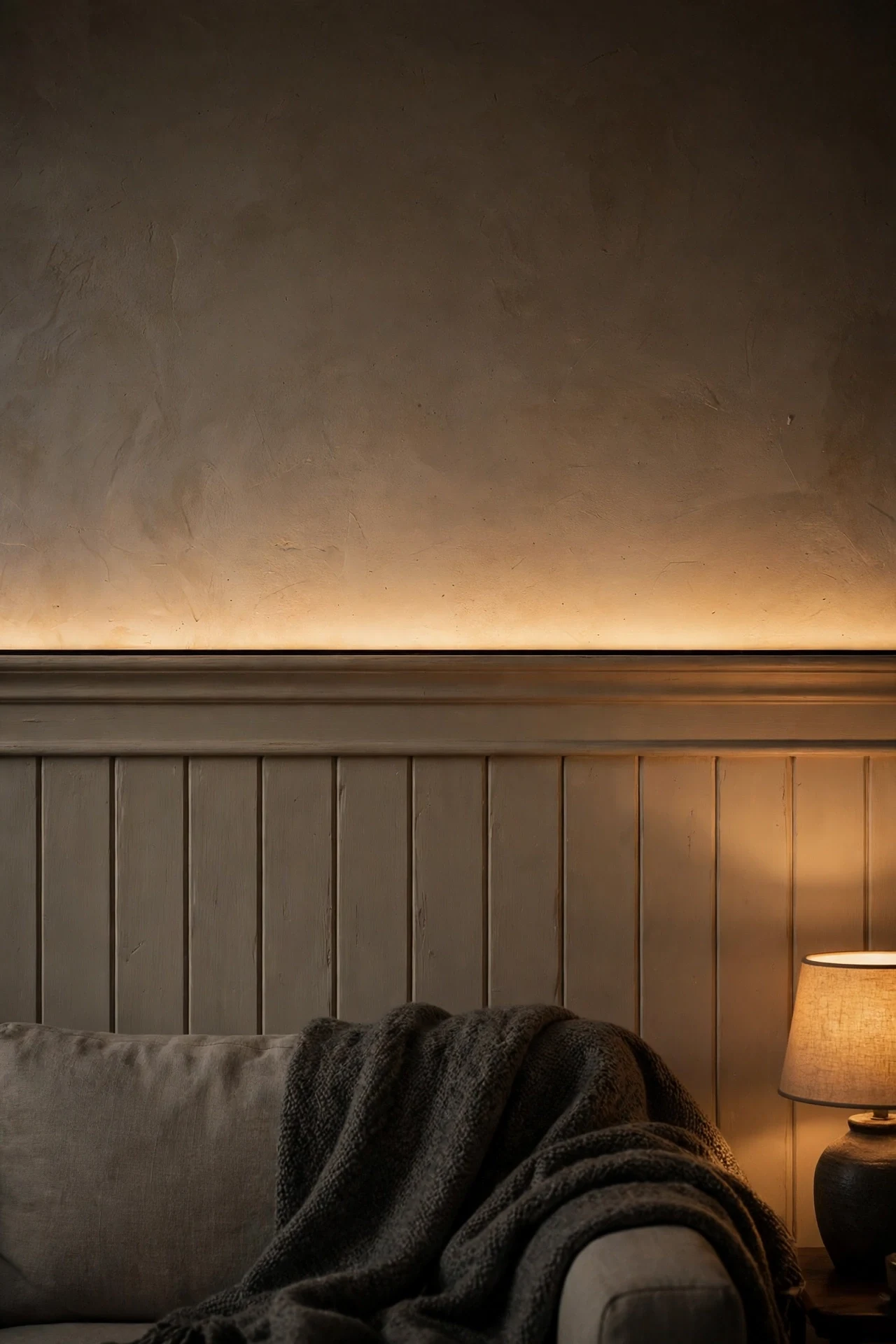
The wall looks lit from within. A concealed LED strip above the cap rail washes the upper wall in warm light, so the battens below read as a dark, grounded base — the whole room gains a horizon line. At 2700K the glow feels like late sun, never like office lighting, and it makes evening rooms feel finished without a single lamp on. Route a shallow channel into the top of the cap rail and set the LED strip back half an inch. Put it on a dimmer; full brightness kills the effect.
11. Camel Leather Chairs Against Greige Battens
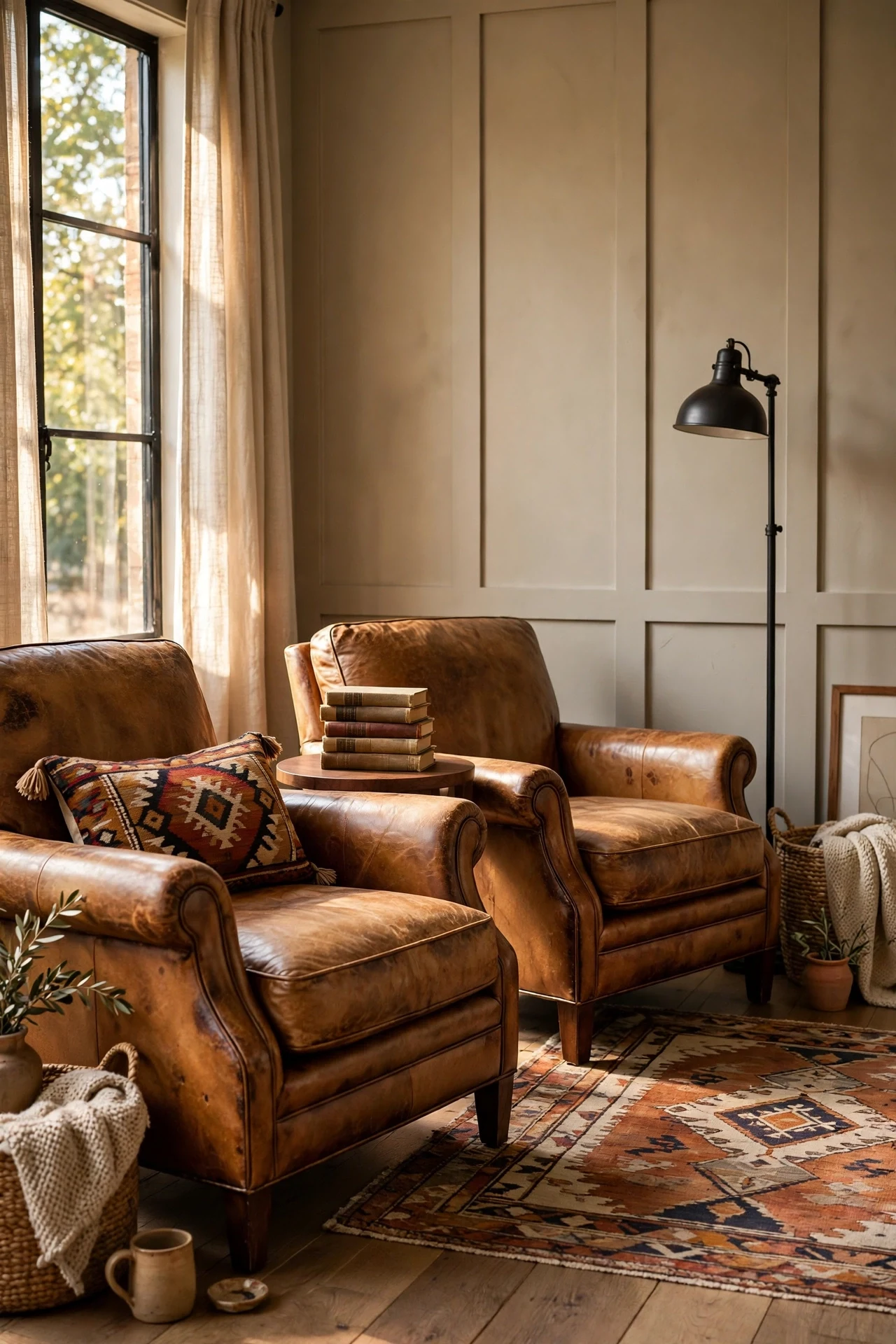
The corner feels storied, like it collected itself over years. Camel leather's amber patina warms the cool discipline of greige battens — organic shine against matte paint — and the pairing needs almost nothing else to look finished. Leather also forgives real life: scratches blend into the patina instead of reading as damage. Angle the chairs slightly toward each other, not the TV, to make a true conversation spot. Let the leather age; condition it twice a year and embrace the marks.
💡 Quick Win: *No budget for full-grain leather? A camel vegan-leather chair plus a $15 leather conditioner gives a convincing patina within a year.*
12. A Wool Rug Layered Over White Battens

The floor feels as considered as the walls. Layering a thick wool rug over jute doubles the softness underfoot and gives the white battens something textural to stand on — hard millwork below, cloud-soft above. The two rugs' differing weaves create the pattern the room needs without introducing a single printed motif. Size the jute to the seating zone and let the wool rug overlap it by a foot on two sides. Keep both in undyed neutrals so the battens stay the visual lead.
13. Living Room Wainscoting Ideas in Warm Greige: Tonal Layering Done Right
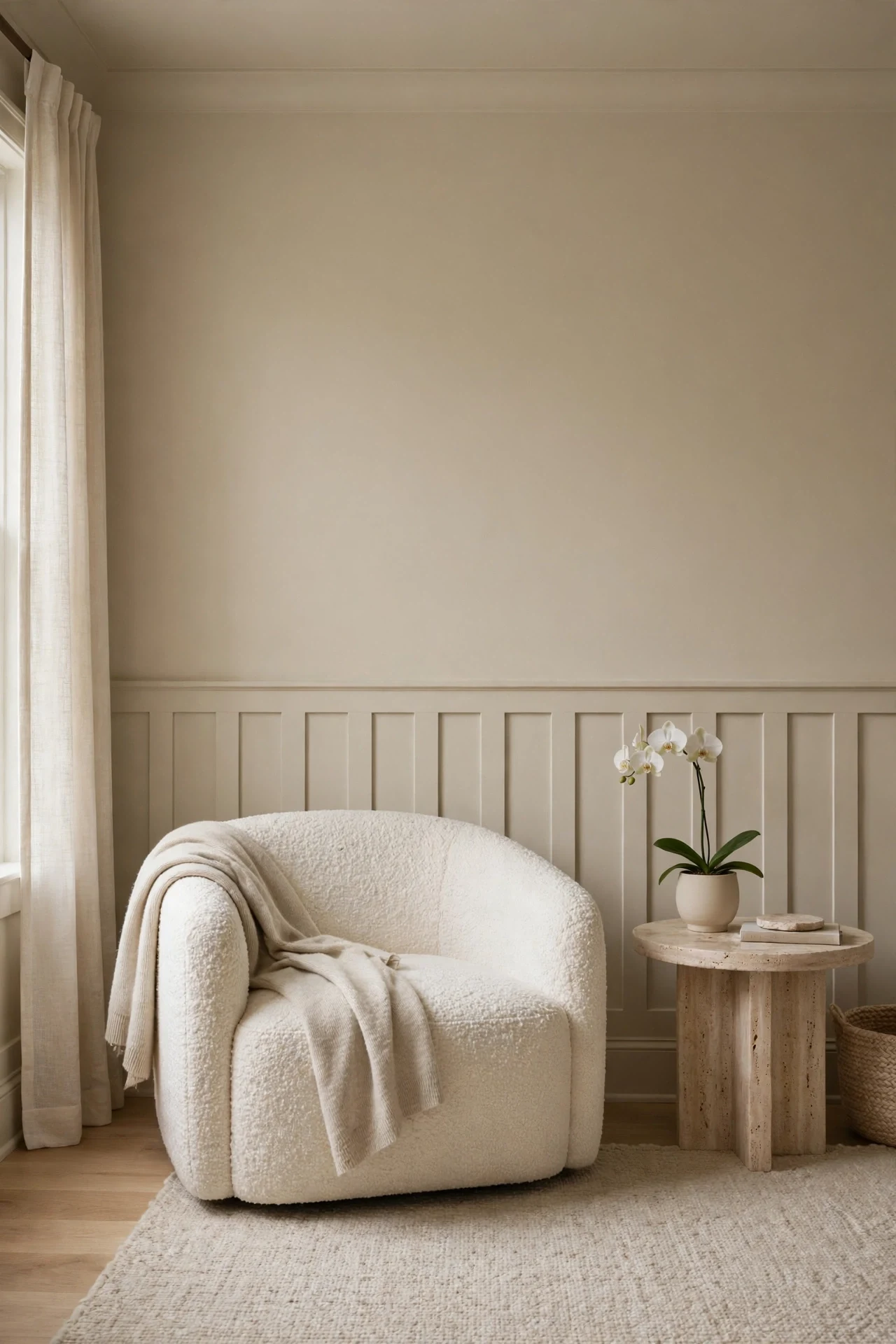
The room feels wrapped, like the walls exhale. Painting battens and upper wall the identical greige removes every hard edge, so the millwork reads purely as shadow and light — texture without color contrast. That restraint makes small living rooms feel larger, since the eye finds no line to stop at. Use one paint — Sherwin-Williams "Accessible Beige" in satin for battens, matte for the wall above — so sheen, not color, draws the lines. Add contrast only in furniture.
💡 Quick Win: *Already have white battens? Paint just the upper wall to match an existing greige — the tonal effect costs one gallon.*
14. Reeded White Oak in the Reading Corner
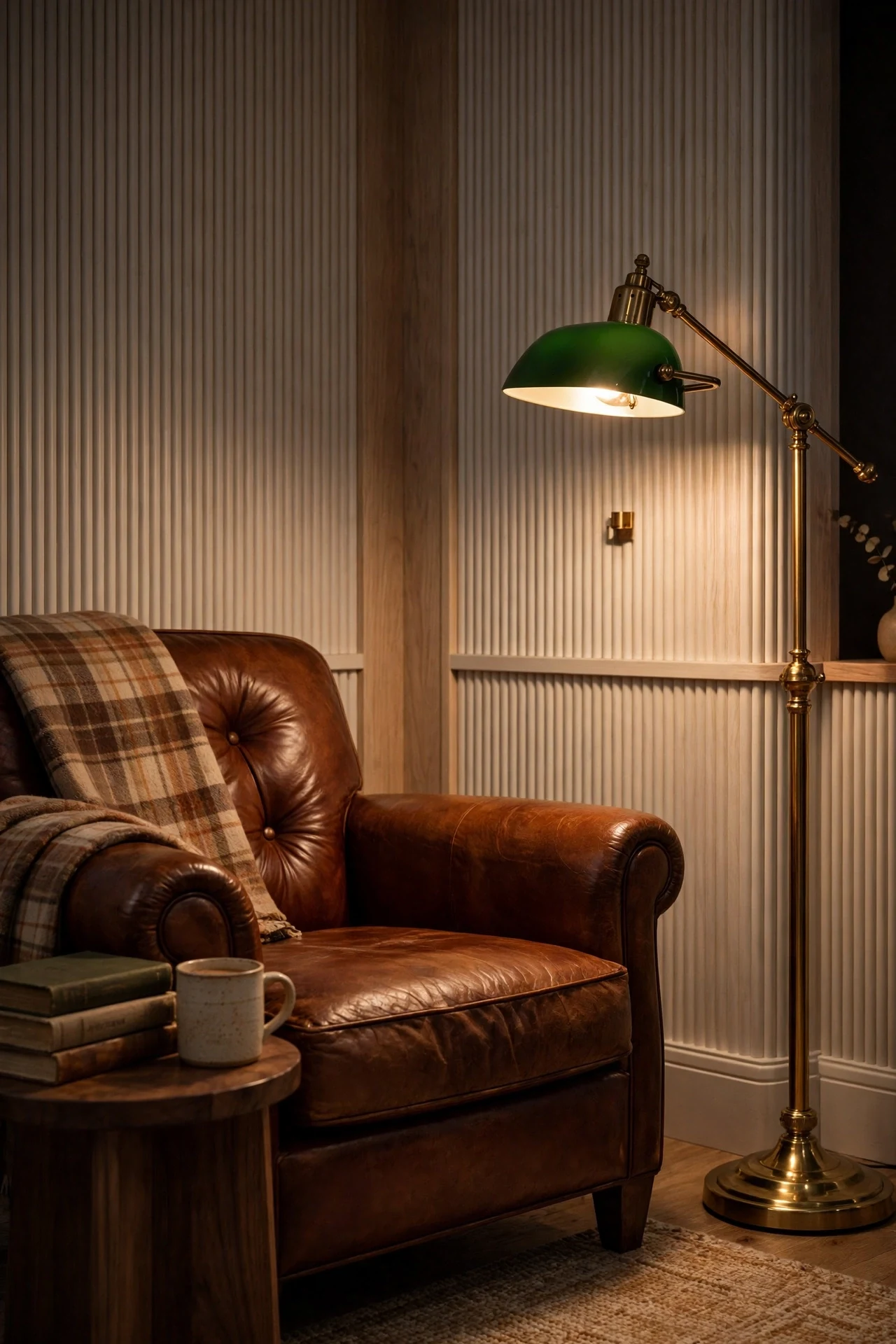
The corner feels like a library distilled to four feet. Reeded oak's fine vertical flutes catch lamplight in dozens of thin highlights, giving the small zone a crafted density flat panels can't match. That density is what makes a corner feel intentional rather than leftover — the material does the declaring. Line two walls of the corner with reeded white oak panels, running them to the ceiling. Finish the panels in matte hardwax oil so the flutes glow softly. Choose a pharmacy-style brass lamp whose shade throws light straight down the flutes.
15. An Arc Floor Lamp Pooling Light on Battens
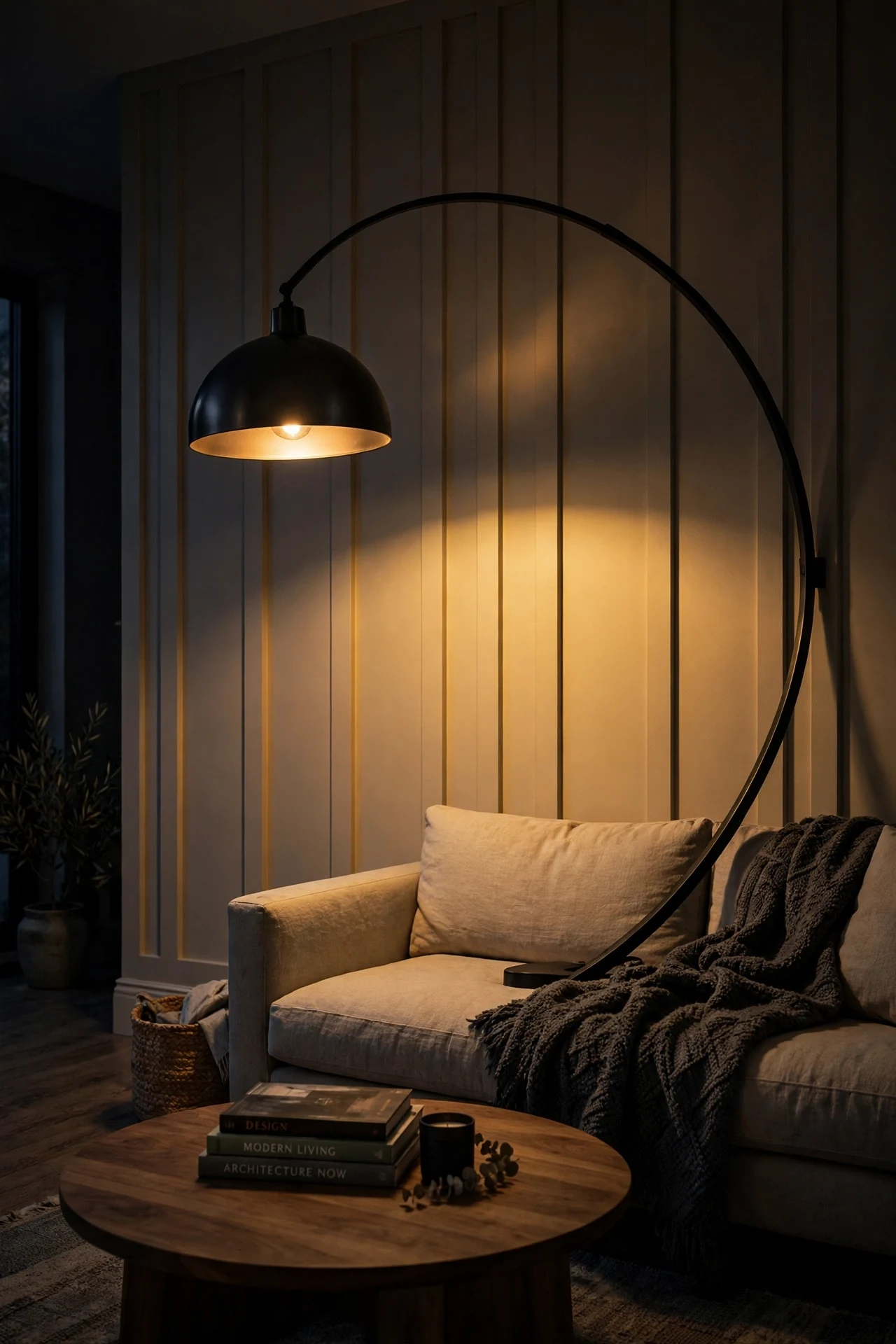
The light feels theatrical, like a stage cue. An arc lamp's downward pool rakes across the battens at a steep angle, stretching every shadow line long and dramatic — the wall becomes scenery, not background. That single directional source also flatters the whole seating zone, replacing the need for three smaller lamps. Position the arc so the shade hangs centered over the coffee table, about six feet off the floor. Choose a dome shade, not a drum, to focus the pool tightly.
💡 Quick Win: *Renters can fake it with a plug-in arc lamp — no hardwiring, and the dramatic shadows are identical.*
16. A White Oak Console Against Charcoal Shiplap
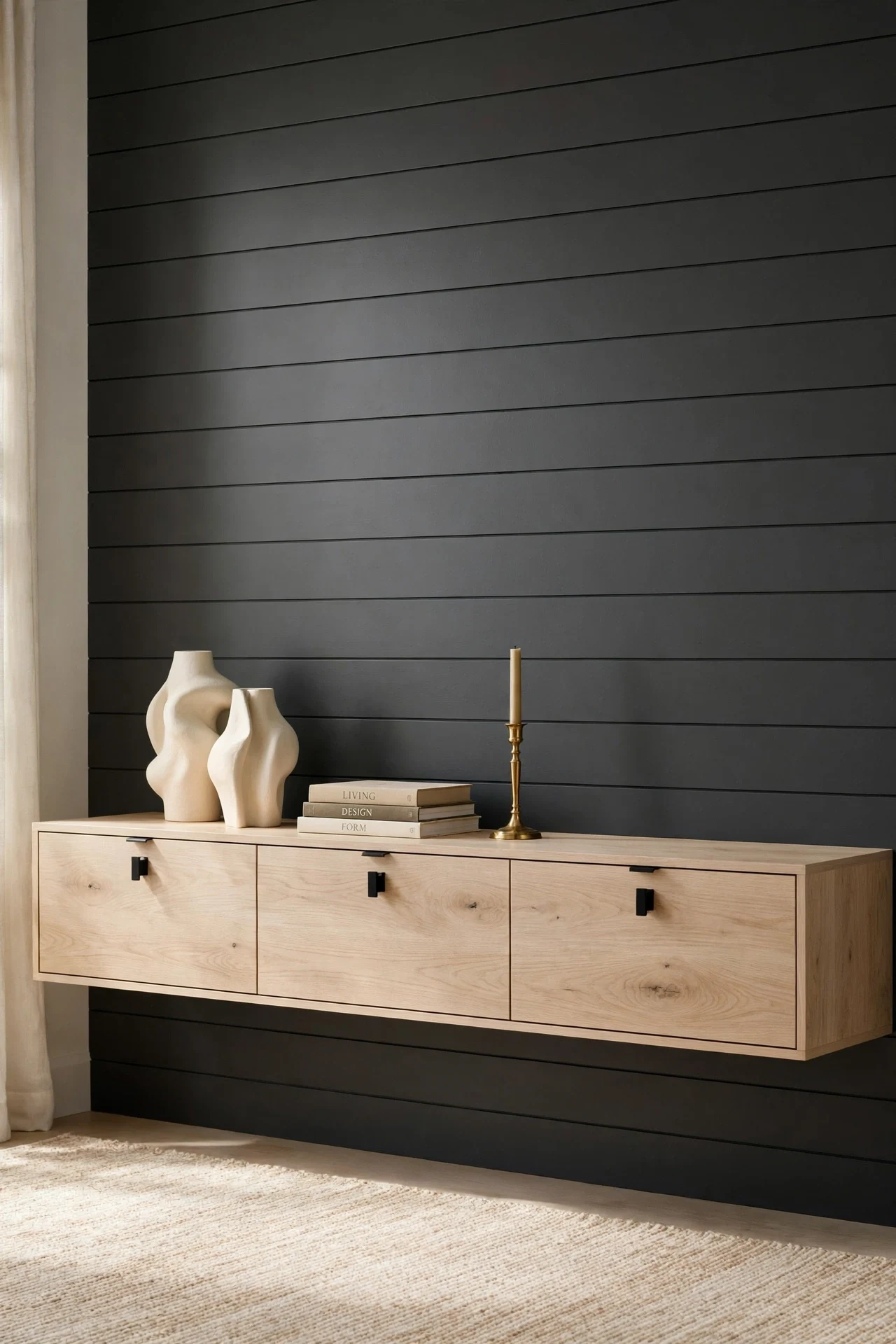
The wall feels tailored, like a good suit. Charcoal shiplap's horizontal lines widen the room while the pale oak console floats forward on the contrast — dark recedes, light advances, and the eye gets a clean depth read. Keeping the console long and low preserves the shiplap's horizontal rhythm instead of breaking it. Mount the console floating, twelve inches off the floor, in rift-sawn white oak with a matte finish. Hide cables in the wall before mounting. Style the top sparsely: three objects, varying heights, done.
17. A Brass Mirror Hung on Picture-Frame Molding

The mirror looks built into the architecture. Hanging it inside a molding panel — rather than over one — makes the millwork a frame for the reflection, doubling the room's light and depth in one move. Brass against soft white keeps the formality warm, never stiff. Size the molding box at least eight inches larger than the mirror on every side so the panel reads as a deliberate frame. Hang the mirror's center at 57 inches, gallery height, regardless of the console below.
💡 Quick Win: *No molding yet? A peel-and-stick molding kit around an existing mirror fakes the paneled-frame look in an afternoon.*
18. Double-Sided Wainscoting Between Living Room and Entry
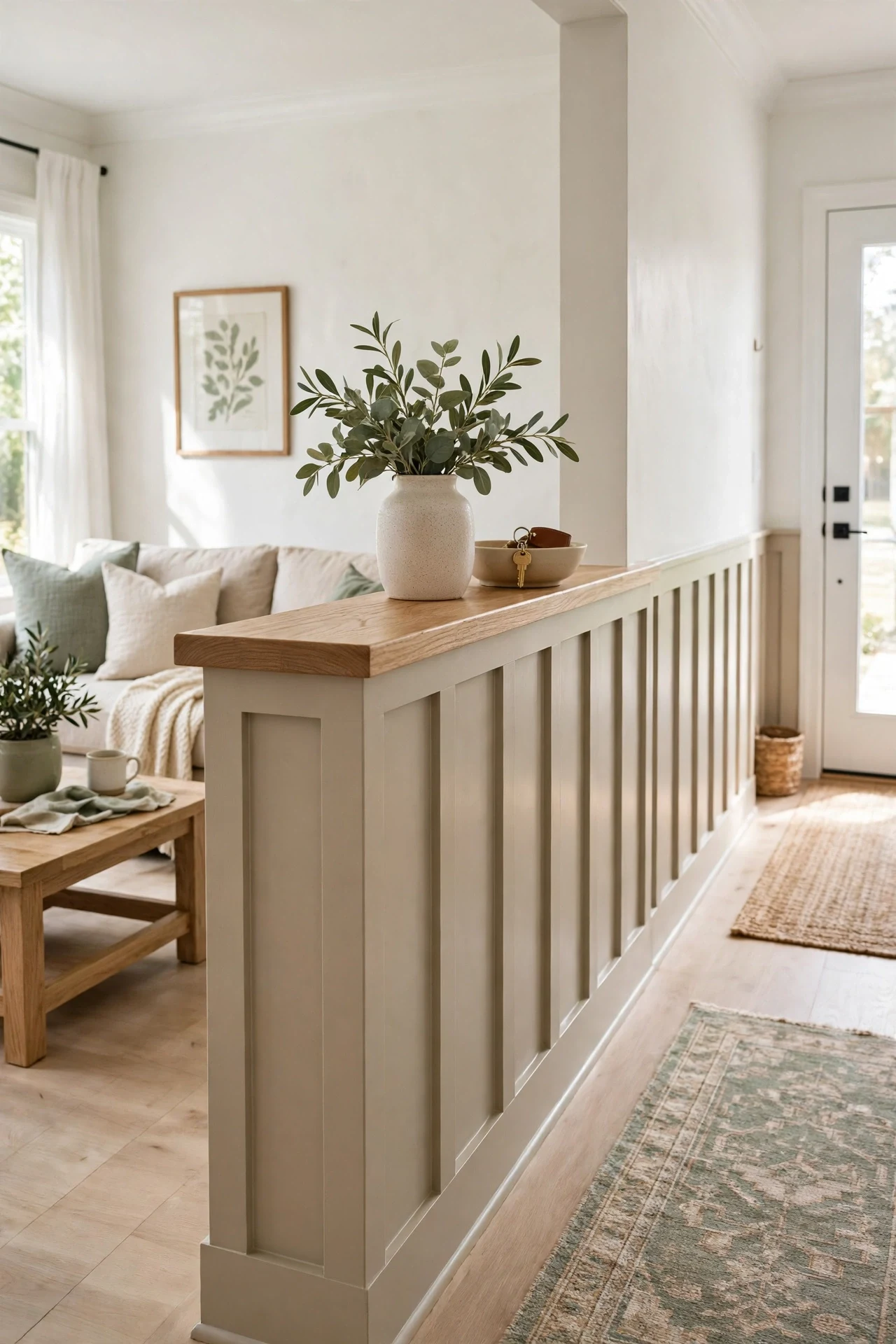
The threshold feels considered instead of abrupt. A double-sided wainscoted half-wall gives the entry a landing zone and the living room a back wall, while the open top keeps light and conversation flowing between them. Both faces finished identically means the divider reads as furniture-grade millwork, not a leftover stub of wall. Build the half-wall at 42 inches with battens on both faces and a six-inch oak cap, anchored to the floor plate so it feels permanent. Use the cap as a display ledge — it earns its footprint.
19. A Shiplap Half-Wall with a Ledge in a Small Living Room
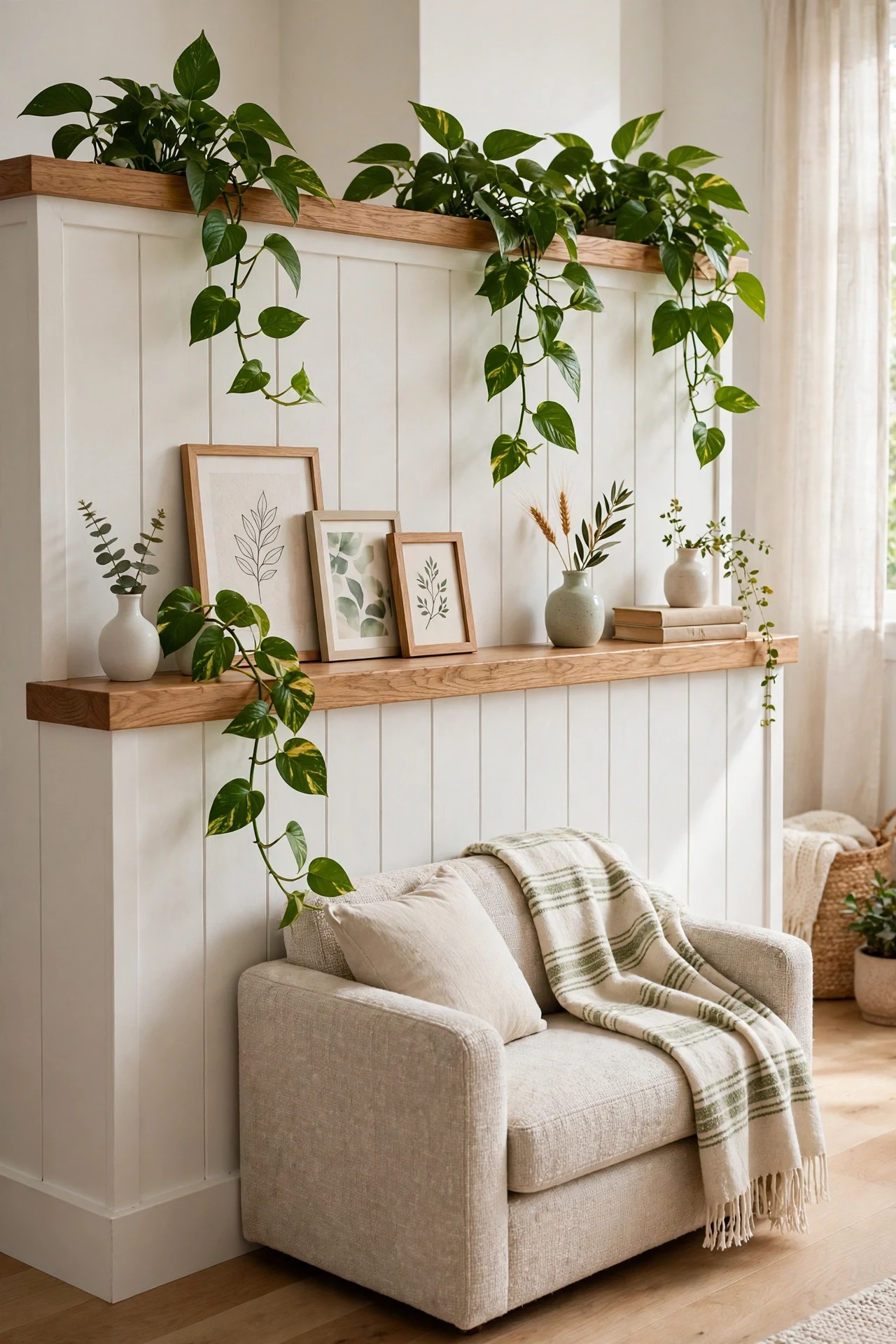
The little wall works triple duty. A shiplap half-wall with a deep ledge gives a small living room a sofa backstop, a display shelf, and architectural interest in one 48-inch move — no bookcase required. The ledge's styling can rotate seasonally, so the room refreshes without new furniture. Cap the half-wall with a white oak ledge at least eight inches deep, finished to take real weight. Keep the shiplap below and warm white above for an airy split.
💡 Quick Win: *Style the ledge with library rules: odd numbers, varying heights, one trailing plant — instant curated shelf.*
20. Soft White on Soft White Shiplap
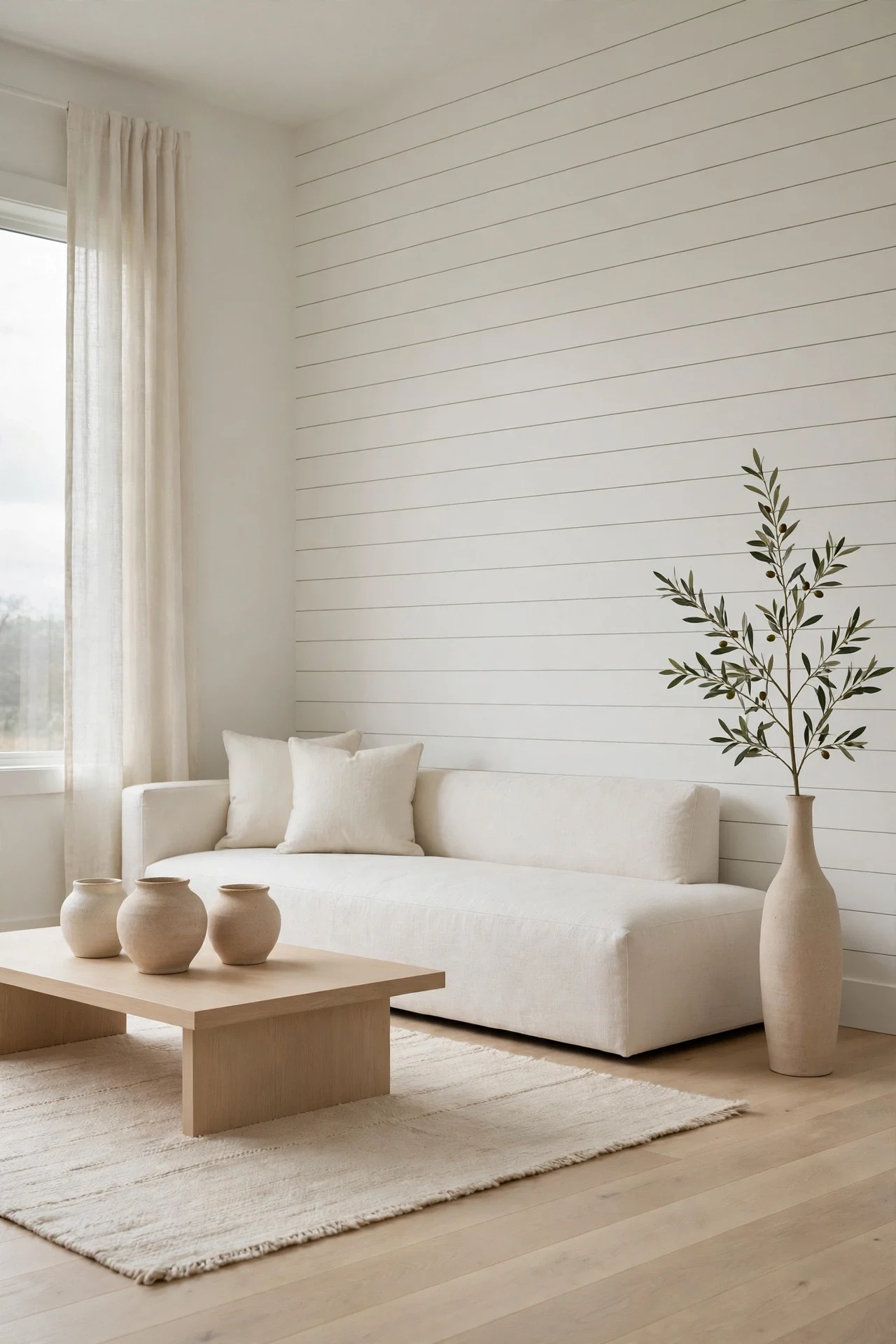
The room goes quiet in the best way. Soft white on soft white shiplap erases every visual interruption, so the space feels like one continuous breath — the paneling adds texture you feel more than see. That restraint makes it an ideal backdrop for handmade ceramics and natural fibers, which supply all the interest color normally would. Choose a warm white like Benjamin Moore "White Dove", never a blue-white, or the grooves read cold. Let natural materials carry the palette entirely.
21. Limewashed Board-and-Batten

The wood looks centuries old, in the loveliest way. Limewash settles into oak's open grain and leaves a clouded, translucent white that paint can never imitate — the battens keep their wood soul while going pale. That aged finish lets new millwork sit comfortably beside antiques instead of shouting its newness. Brush diluted limewash over raw oak battens, working it into the grain, then seal with matte wax. Practice on the back of one batten first; the clouding is gloriously unpredictable.
💡 Quick Win: *Test the look with one quart of premixed limewash on a single accent panel before committing to the room.*
22. Sconce-Washed Sage Panels Flanking the Fireplace
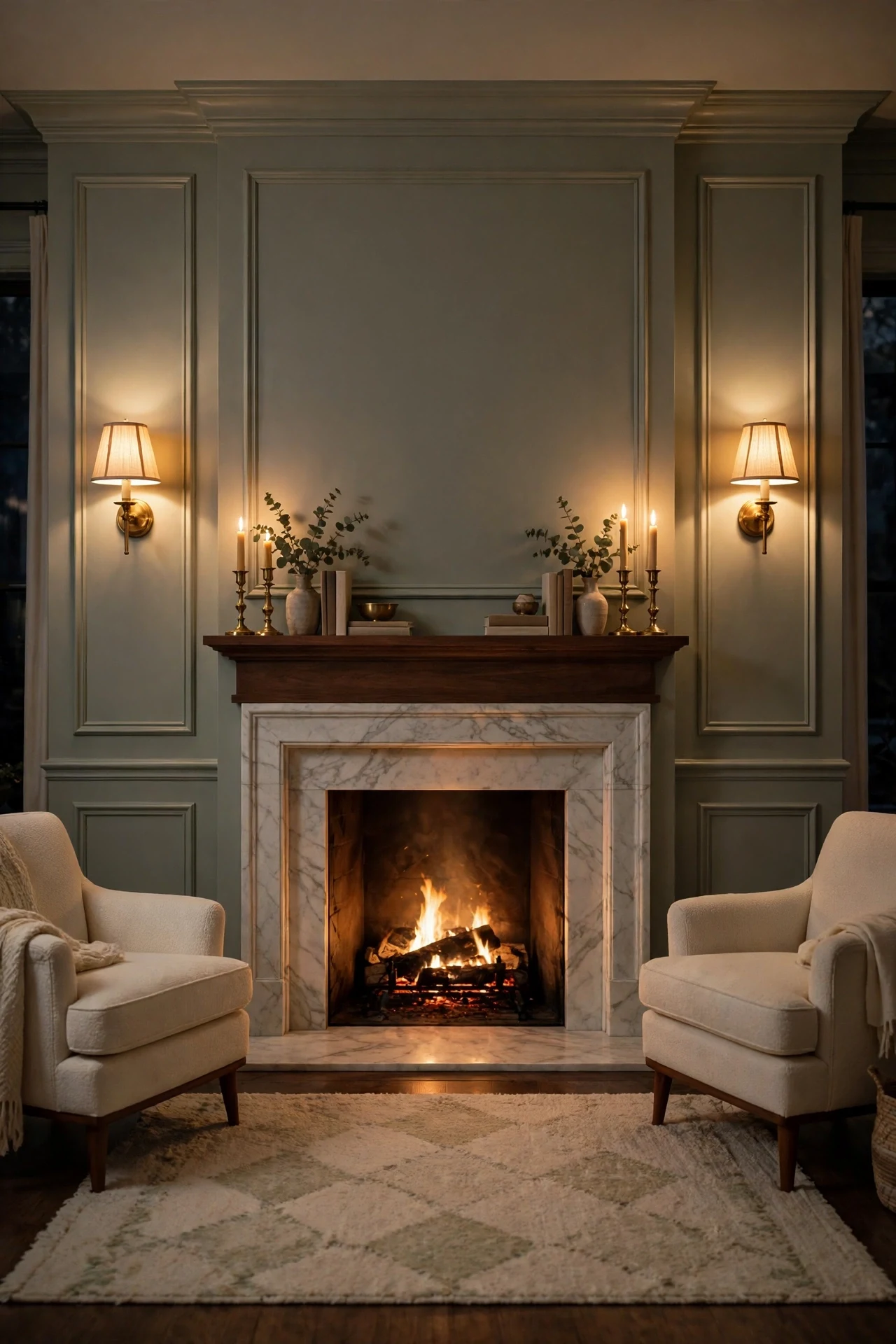
The fireplace wall feels balanced and ceremonial. Twin sconces washing sage panels in warm light create exact symmetry, and the green-gray panels make the brass glow richer — complementary undertones doing quiet work. Sconce light also flatters faces around the hearth in a way overheads never will. Mount the sconces centered on each flanking panel at 60 inches. Keep the molding boxes identical on both sides; asymmetry would break the ceremony. Wire both sconces to one dimmer so the pair rises and falls together.
23. A Curved Sofa Against Arched Picture-Frame Molding
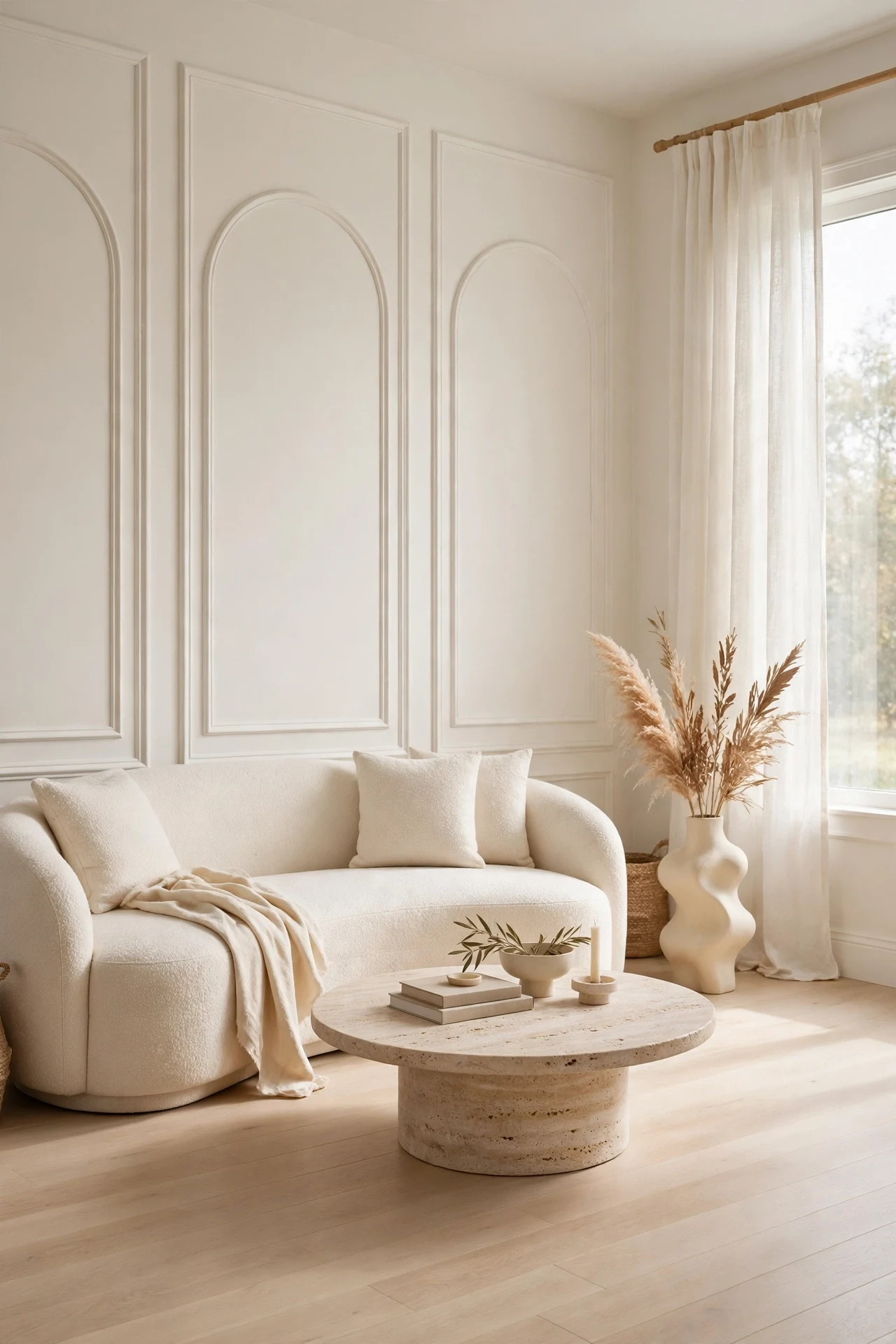
The wall and sofa seem to rhyme. Arched molding tops echo the curved sofa's silhouette, so furniture and architecture read as one continuous gesture instead of two separate decisions. That echo is what makes a room feel designed rather than assembled — repetition with variation. Have a trim carpenter cut the molding's top rails into gentle arches, or use flexible arch trim kits. Keep the sofa's curve soft and the arch radius generous; tight arches read fussy.
💡 Quick Win: *Echo the curve cheaply with an arched floor mirror leaning against straight molding — same rhyme, no carpentry.*
24. An Olive Tree in Ceramic Against Walnut Battens
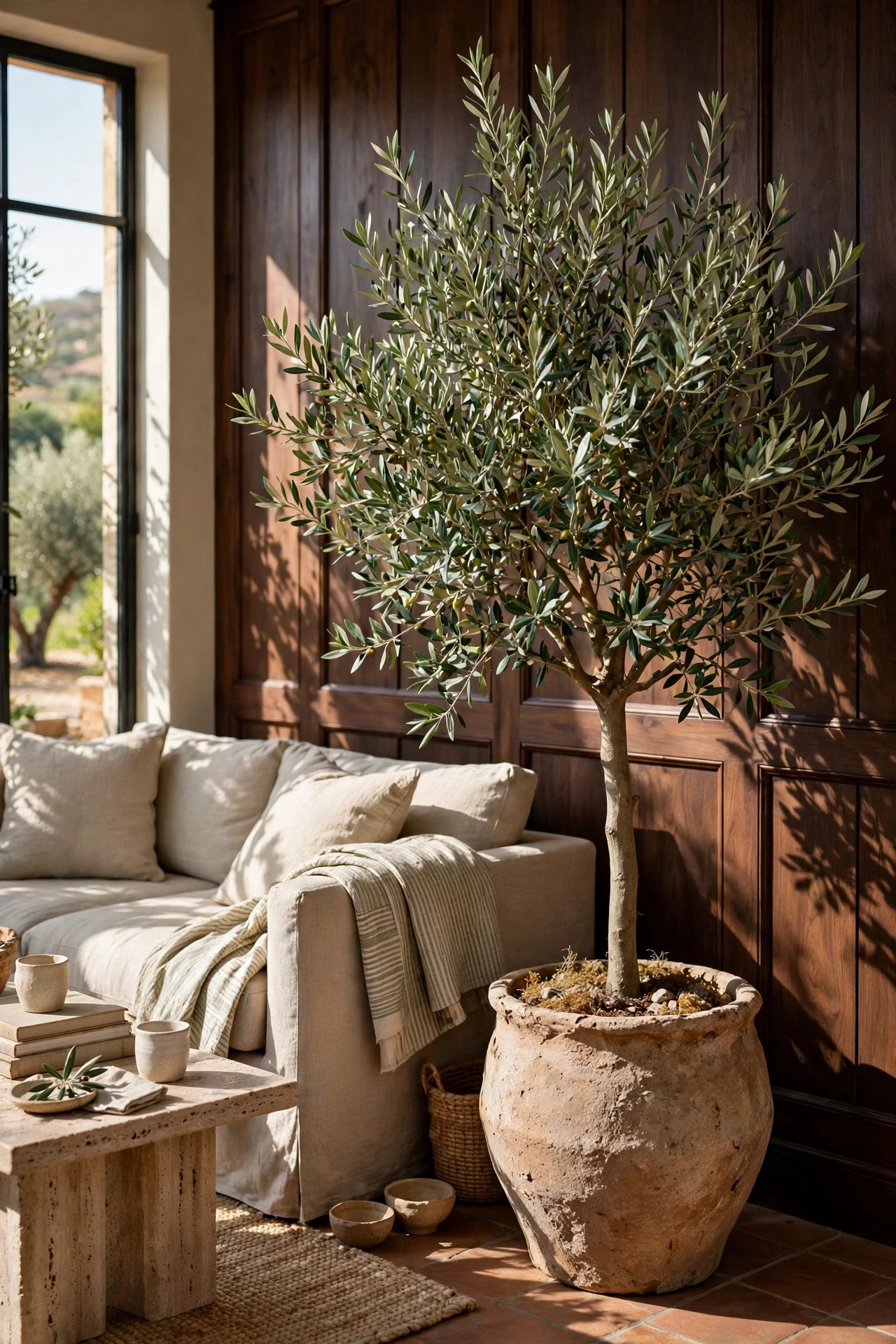
The corner feels like a courtyard wandered indoors. Silvery olive foliage against dark walnut is a study in contrast — cool gray-green leaves practically shimmer on the deep brown battens. Living greenery also softens millwork's geometry; the organic canopy breaks every straight line the battens draw. Choose a real olive tree for the silvery leaf color fakes never match, in a handmade ceramic pot with visible throwing rings. Give it your brightest corner; olives sulk in dim rooms. Rotate the pot monthly so the canopy grows evenly.
25. Charcoal-and-Greige Two-Tone: Living Room Wainscoting Ideas with Contrast
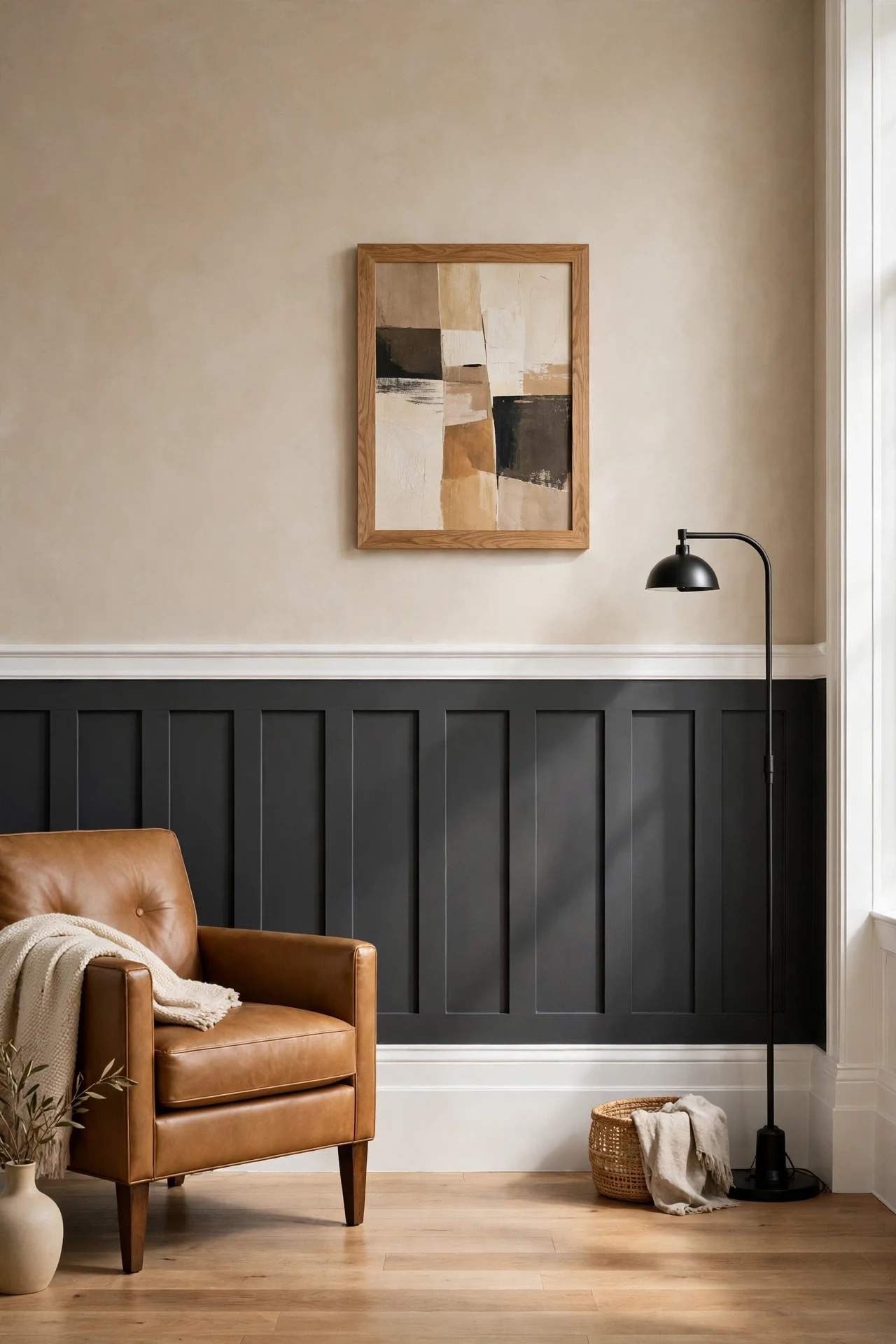
The split gives the room a tailored waistline. Charcoal below grounds the furniture while greige above keeps the ceiling feeling high — dark where you need anchoring, light where you need air. The white cap rail between them acts like a belt, making the two-tone split look intentional rather than indecisive. Paint below the rail in Farrow & Ball "Railings" and above in Sherwin-Williams "Accessible Beige", with a bright white rail. Hang art so its center sits in the greige zone.
💡 Quick Win: *Try the split with the rail at 36 inches first — lower rails make two-tone feel modern, higher rails feel traditional.*
26. Painted Battens with Thin Brass Inlay

The millwork reads as jewelry. Thin brass inlay set into painted battens catches light in hairline glints, giving traditional paneling a tailored, almost Savile Row precision. Against deep green the brass glows warmer — the complementary pairing makes both materials look more expensive than they are. Route a quarter-inch channel into each batten face and epoxy flat brass strips flush. Lacquer the battens in Farrow & Ball "Studio Green" for a glassy ground. Polish the brass once a year to keep the glints bright.
27. Wainscoting Wrapped Around a Bay Window
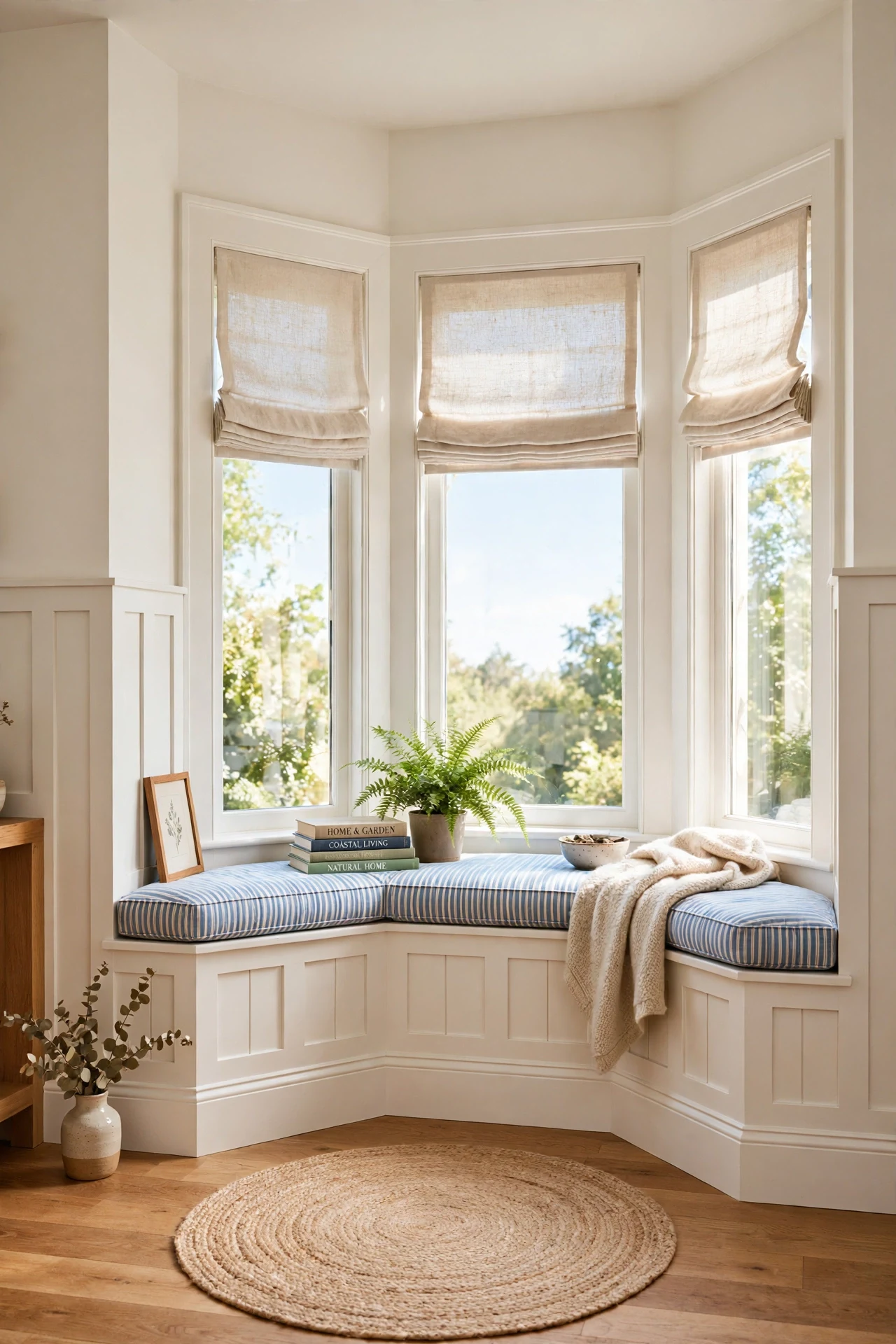
The bay feels built-in, not bolted on. Wrapping battens continuously around the bay's angles turns an awkward bump-out into the room's most architectural moment — the paneling literally embraces the light. A window seat cushion on the sill completes the transformation from window to destination. Miter the battens carefully at each bay angle and run the cap rail unbroken around all three faces. Top the sill with a three-inch ticking-stripe cushion for the classic seat.
💡 Quick Win: *No carpentry skills? Wrap just the flat wall sections beside the bay and paint the bay trim to match — the eye reads it as continuous.*
28. Swivel Chairs in a Wainscoted Reading Nook
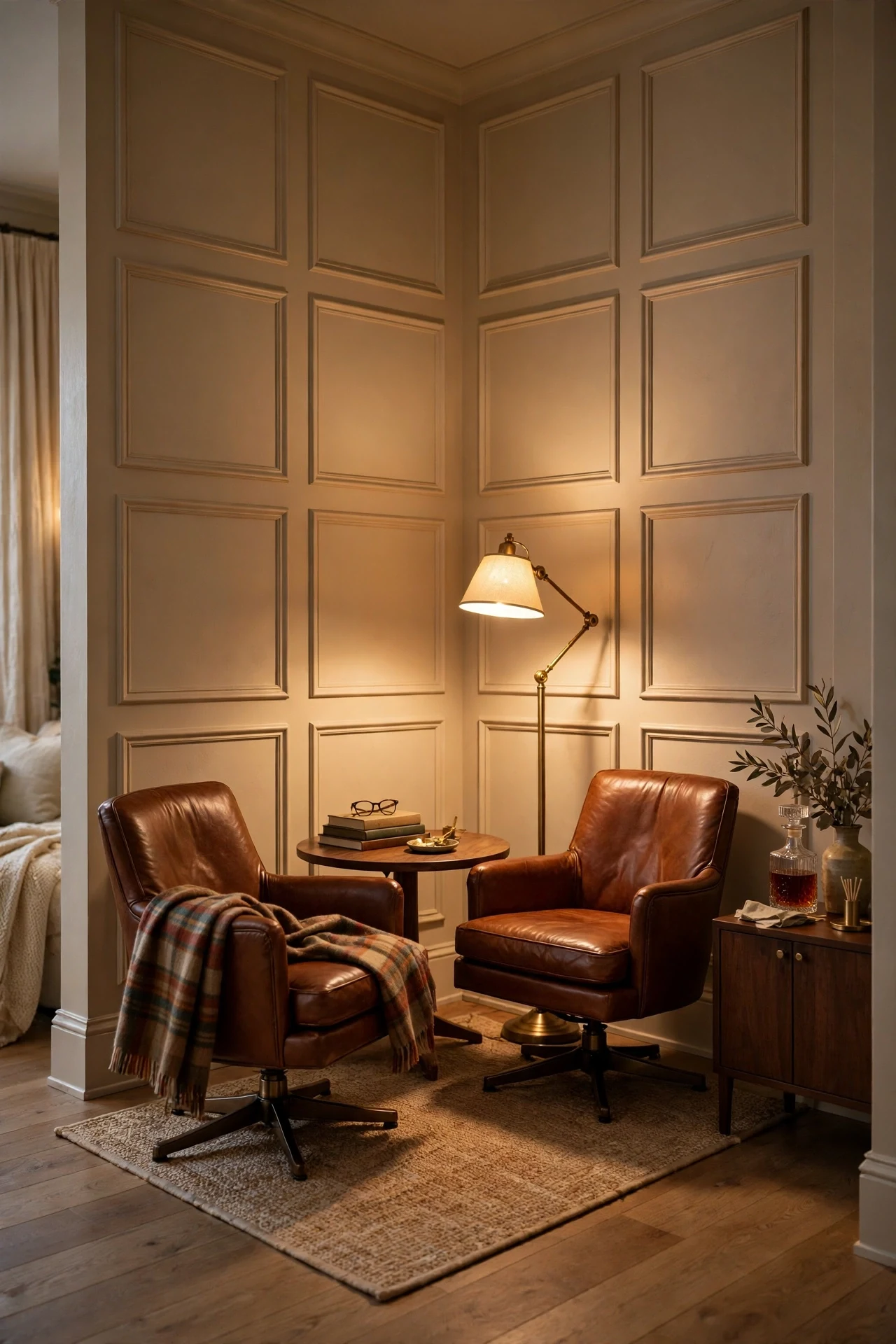
The nook invites lingering like a good pub corner. Swivel chairs let sitters turn toward the fire, the window, or each other — that small freedom makes a compact nook feel generous. Wrapping two walls in molding panels gives the zone its own architecture, a room within the room. Choose swivel chairs under 28 inches wide so two fit a six-foot nook. Angle them 45 degrees to the corner, never flat against walls, to keep the conversation posture natural. A small round table between them completes the setup.
29. A Gallery Wall Hung Inside the Molding Grid
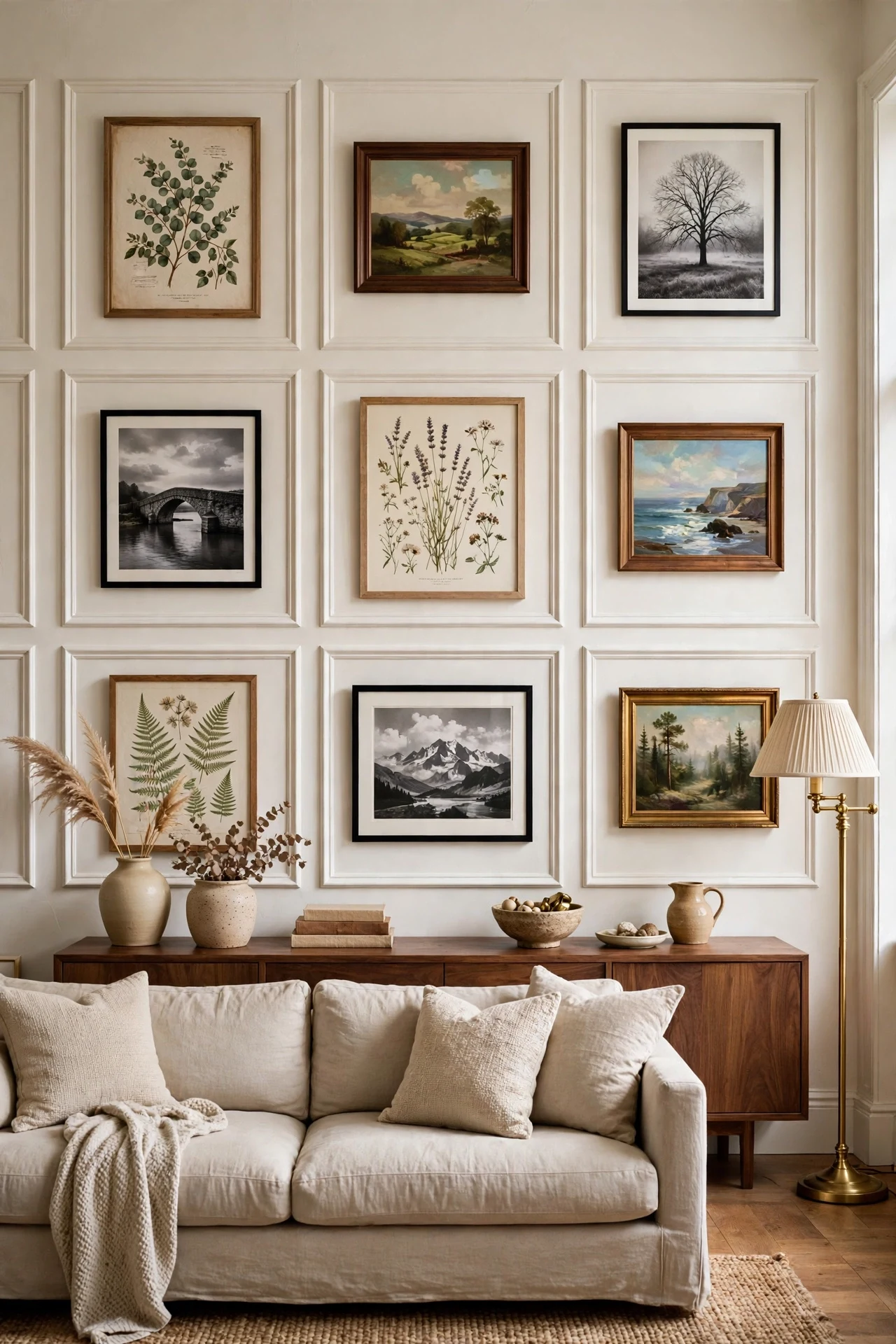
The art looks collected by a curator, not crowded by a decorator. Giving each piece its own molding panel turns a gallery wall into a series of framed moments — the millwork does the editing your eye normally has to do. Negative space inside each panel lets even small prints hold their own against the wall's scale. Plan the grid first, then buy or print art to fit the panels, not the reverse. Keep two inches of breathing room between frame and molding on all sides.
💡 Quick Win: *Start with just three panels filled and leave the rest empty — the restraint reads as confidence, not incompleteness.*
30. Muted Sage Panels with a Warm Walnut Rail
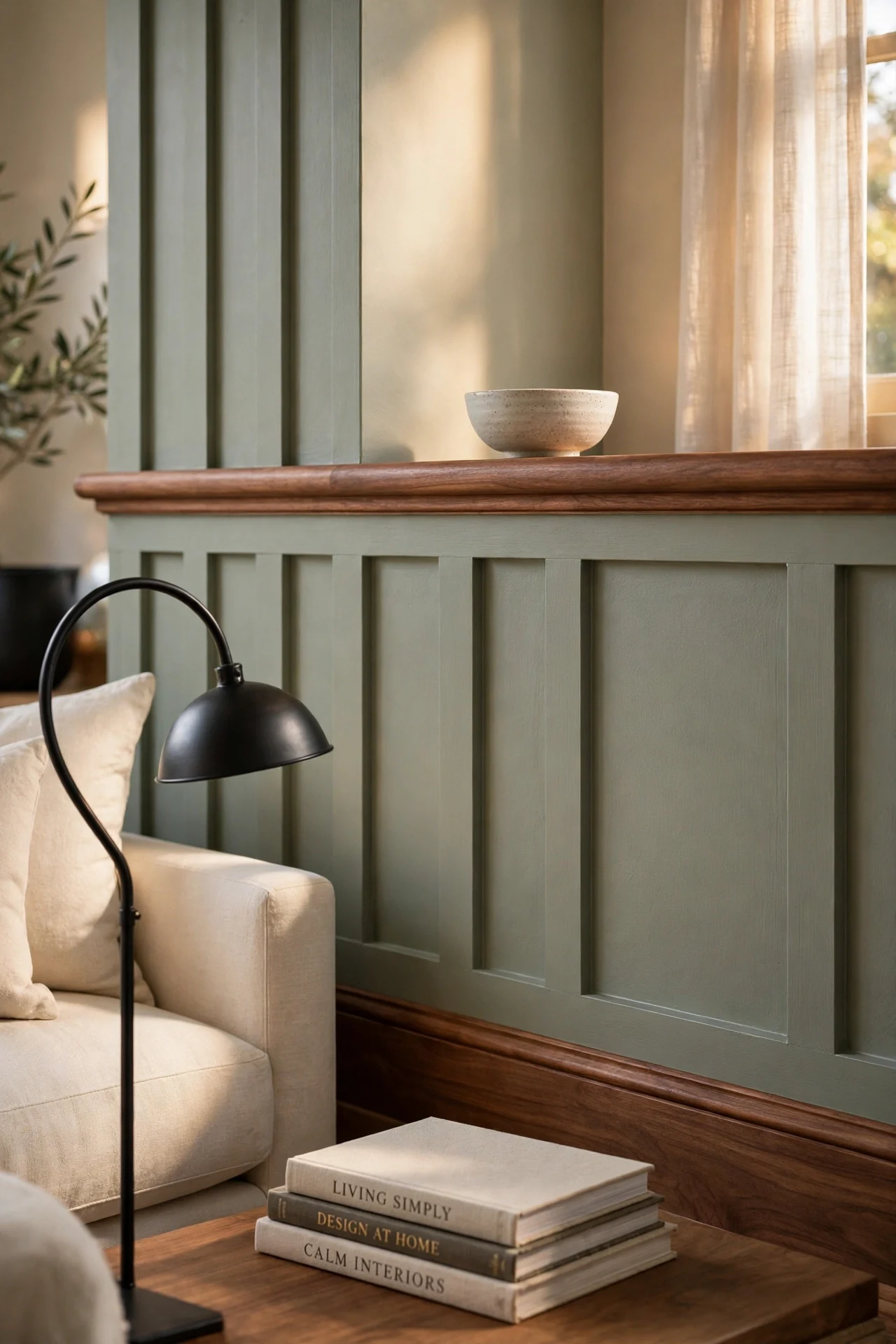
The wood rail feels like a hand resting on the wall's shoulder. A warm walnut cap over sage battens adds a furniture-grade line exactly at hand height — the room gains a crafted horizon you can actually touch. Sage's gray-green calm keeps the walnut from reading rustic; together they land squarely in warm modern. Install the cap rail in solid walnut, not veneer, with a softly eased edge and hardwax oil finish. Let the rail double as a narrow display ledge for small ceramics.
31. Fluted Panels Behind Floating Oak Shelves

The shelves float on rhythm. Fluted panels behind floating oak shelves give open storage a textured backdrop, so styled objects read against vertical lines instead of flat drywall — everything on the shelf looks more deliberate. The flutes' repetition also hides the visual clutter of book spines, unifying the display. Mount the fluted panels first, then anchor the shelf brackets through them into wall studs. Style shelves with the two-thirds rule: two-thirds objects, one-third air.
💡 Quick Win: *Fake the flutes with half-round dowels glued in rows to MDF — from sofa distance the rhythm is identical.*
32. Greige-on-Greige Wainscoted Window Seat
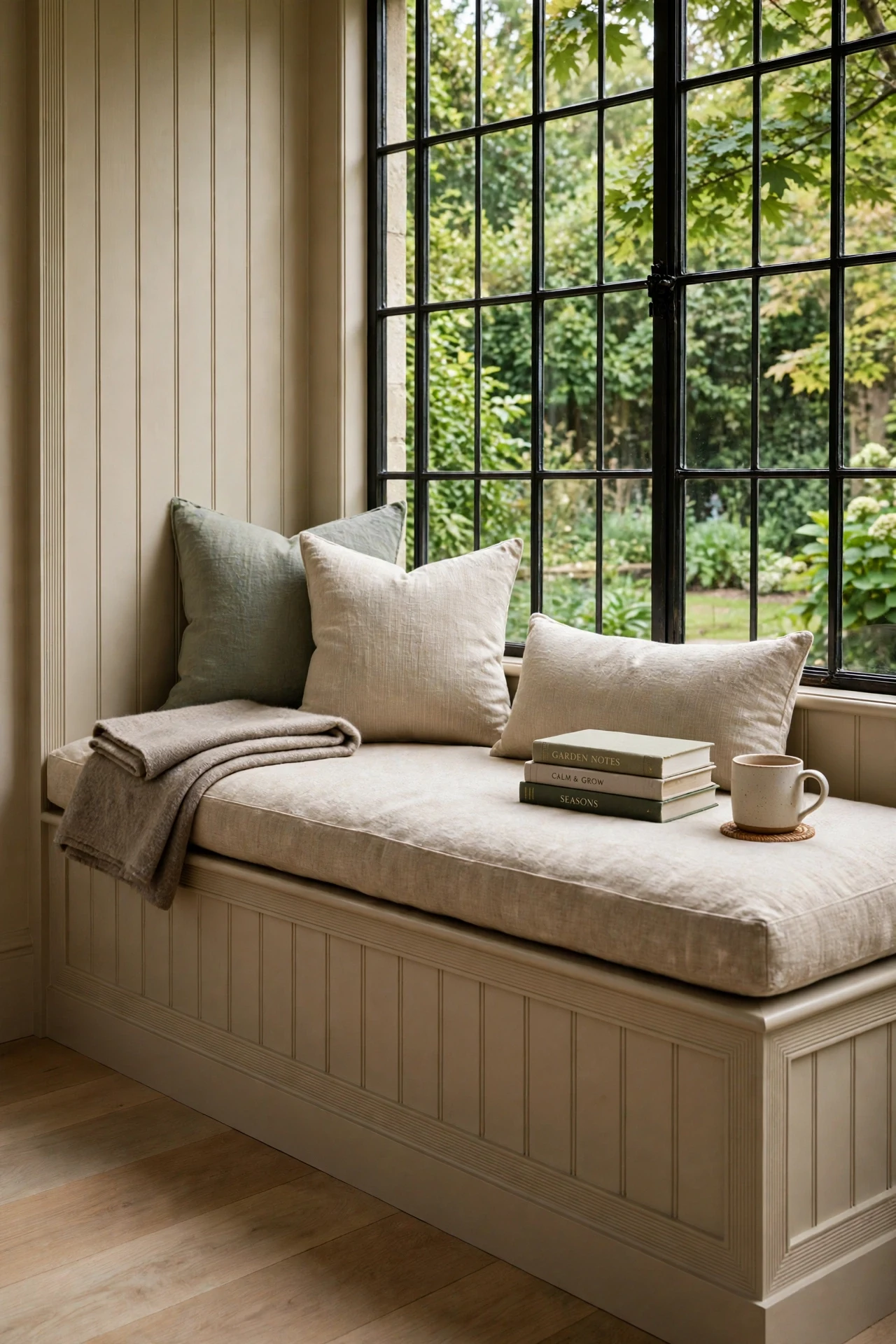
The seat feels like a nest with a view. Wrapping the window seat base in tonal greige battens makes the built-in read as one sculpted piece with the wall — no visual seam where furniture ends and architecture begins. That continuity is what turns a window into a destination you'll actually use daily. Build the seat base from the same batten stock as the walls, painted identically. Top it with a four-inch linen cushion in natural flax, piped for structure. Add a hinged top for hidden blanket storage.
33. Rift-Sawn White Oak Around a Skylight Wall
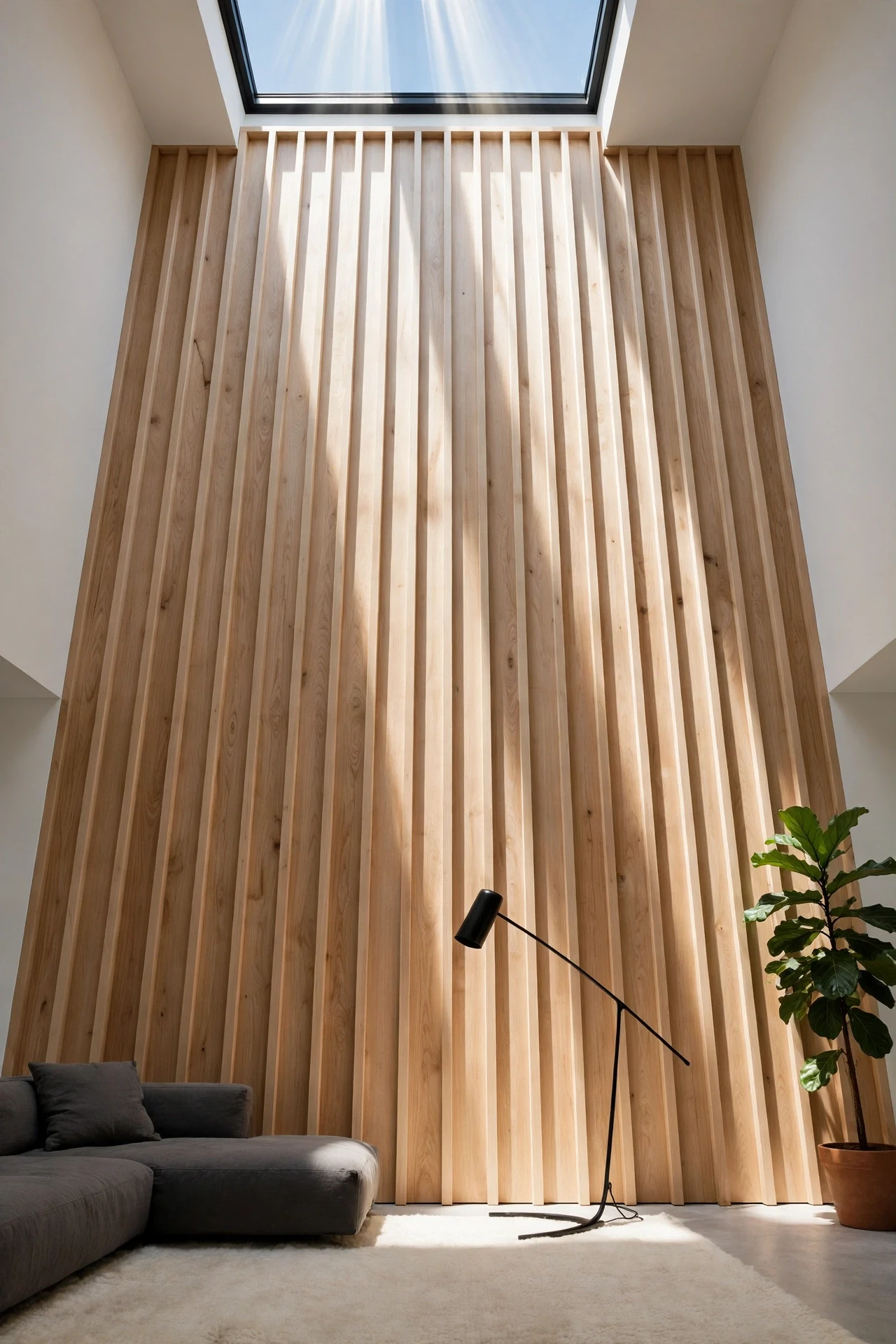
The wall becomes a waterfall of light and grain. Skylight daylight streaming down rift-sawn oak battens animates the straight grain all day — the wall changes hourly, brightest at noon, honeyed by evening. Rift-sawn cuts keep the grain straight and quiet, so the drama comes from light, not figure. Clad the full height in rift-sawn white oak with a clear matte finish, never stain. Keep furniture low and minimal so the light-washed wall dominates.
💡 Quick Win: *No skylight? A tall picture light aimed up the battens fakes the downwash glow convincingly after dark.*
How to Start Your Living Room Wainscoting Transformation
Start with paint. Benjamin Moore "Revere Pewter" in a satin finish creates the tonal greige foundation that makes every batten, textile, and wood tone you add afterwards feel intentional rather than random — it is warm enough for walnut, calm enough for sage, and forgiving under every light.
The most common mistake is choosing battens that are too chunky for the room. Oversized trim in an eight-foot living room presses the ceiling down and makes the millwork look like a costume; the fix is proportion — keep battens under three inches wide and the cap rail slim unless your ceilings clear nine feet.
Three high-impact items under $50: a quart of Benjamin Moore "Revere Pewter" to test your greige on the actual wall, a laser level that keeps batten spacing honest across long walls, and a single unlacquered brass picture light to trial the warm-wash effect before wiring a whole room.
A single accent wall takes one weekend and roughly $200–$400 in paint-grade MDF, adhesive, and paint. A full living room in oak or walnut runs $2,000–$5,000 and two to three weekends. Start with the wall behind the sofa — it teaches you the rhythm before you commit further.
Frequently Asked Questions About Living Room Wainscoting Ideas
What is the difference between board-and-batten and shiplap wainscoting in a living room?
Board-and-batten layers narrow vertical battens over flat boards or drywall, creating bold shadow lines and a crafted, tailored rhythm — it reads architectural and works beautifully painted in deep tones like charcoal or sage. Shiplap uses horizontal or vertical boards with small grooves between them, giving a quieter, more continuous texture that leans casual and coastal. For a formal living room, board-and-batten's stronger lines usually win; for relaxed or small living rooms, shiplap's subtlety keeps things airy.
What colors work best for living room wainscoting?
Warm greige like Sherwin-Williams "Accessible Beige" is the most forgiving — it flatters both walnut and white oak and shifts gracefully between daylight and lamplight. Soft whites such as Benjamin Moore "White Dove" keep small living rooms open, while muted sage (Farrow & Ball "Lichen") adds color without shouting. Charcoal, like Farrow & Ball "Railings", turns a media or fireplace wall into a dramatic focal point. Always sample on the actual wall: undertones change dramatically between north and south facing light.
Is wainscoting expensive to add to a living room?
A painted MDF board-and-batten accent wall costs $200–$400 in materials and one weekend of DIY labor — it is among the cheapest ways to add real architecture. Hiring a carpenter for the same wall runs $800–$1,500 depending on your market. Full rooms in stain-grade white oak or walnut climb to $2,000–$5,000 installed. The budget lever is material, not design: the same batten layout looks custom in MDF or magnificent in oak.
Can I mix wainscoting with a modern or minimalist style?
Absolutely — modern rooms love wainscoting when the profiles stay slim and the palette stays quiet. Think narrow battens in warm greige or rift-sawn white oak with minimal grain, paired with low-profile furniture and plenty of negative space. The trick is restraint elsewhere: one paneled wall, simple textiles like Belgian linen, and no competing patterns. Scandinavian and Japandi living rooms use this formula constantly — the millwork supplies warmth while the minimalism supplies calm.
What lighting works best with wainscoted living room walls?
Warm directional light is the answer — it rakes across battens and molding to double every shadow line. Brass picture lights mounted over each panel wash the millwork in a gallery glow, while a concealed 2700K LED strip above the cap rail creates a soft upwash. Arc floor lamps and adjustable sconces let you aim light exactly where the texture is. Avoid cool overheads: anything above 3000K flattens the millwork's depth and makes painted panels look chalky.
Ready to Create Your Dream Living Room?
These 33 living room wainscoting ideas span color stories, materials, lighting tricks, furniture pairings, and small-space solutions — a full toolkit, not just a gallery. Transformation is incremental, and starting with a single wall is not a compromise; it is how the best rooms actually get built. This week, paint one sample board in your chosen greige and lean it against the sofa wall — watch it at morning, noon, and lamplight before you commit. Once the battens are up, the room will hold you the way only layered, tactile spaces can: settled, warm, and unmistakably yours. Save the ideas that stopped your scroll — the charcoal media wall, the sage panels, the oak fireplace — and start with the one you keep picturing.