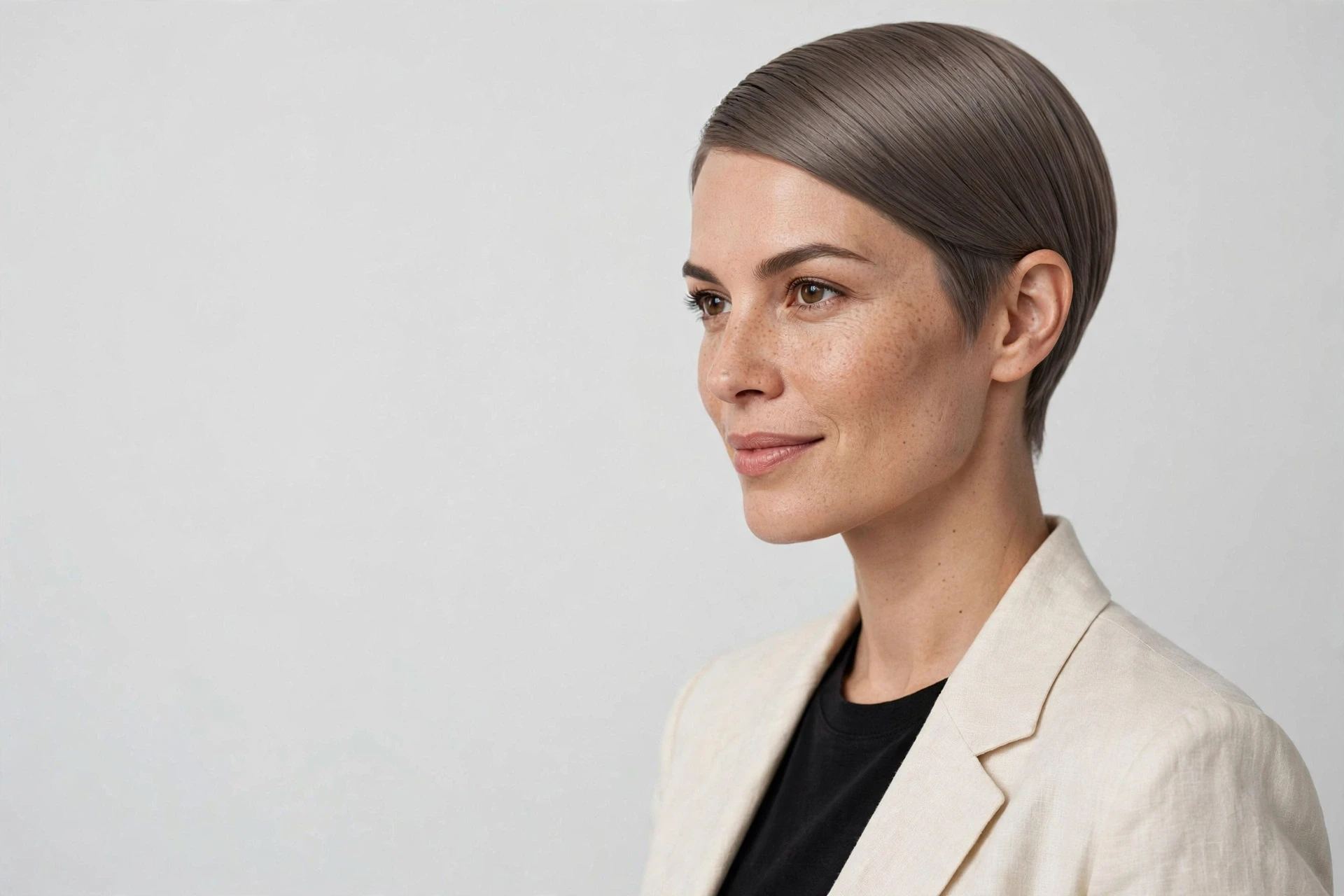
A feminine pixie cut for straight hair is a precision-sculpted short style that uses length, layering, and clean lines to create shape, movement, and softness from hair that doesn't have natural curl or texture to do the work for it. This article gives you exactly 27 variations: from sleek tapered crops and side-swept styles to textured quiffs and razor-sharp undercuts, with image prompts, technique notes, product picks, and tips for every one.
Straight hair at pixie length is one of the most deliberately architectural looks available — every line the stylist cuts stays exactly where it's placed, and that precision is the whole point. There's a particular kind of confidence that comes with wearing a well-cut straight pixie: the face is fully open, the neckline is clean, and there's nothing to hide behind. These are feminine pixie cuts for straight hair built on that clarity — each one shaped to make the most of what straight hair does best. Here are 27 ideas worth saving — and showing your stylist.
Why Feminine Pixie Cuts for Straight Hair Work So Well
The pixie cut traces its modern feminine form to the early 1960s, popularised by Vidal Sassoon's geometric precision cutting and worn by cultural icons who made short hair a declaration rather than a default. What distinguishes a pixie cut on straight hair from the same cut on textured hair is absolute precision dependence — straight hair has no curl pattern to create or disguise shape, so the cut itself must do all the work. Every angle, layer weight, and graduation shows exactly as the stylist intended it, which makes straight-hair pixies simultaneously the most technically demanding and the most visually precise short cuts available.
The core techniques for straight pixie cuts are scissor-over-comb for graduated lengths, razor cutting for texture and softness at the ends, and clipper work (0–3 guard) for clean nape and temple definition. For sleek, polished finishes, a fine-tooth comb and a small amount of pomade or wax worked through dry hair is standard. For textured finishes, a matte clay or paste applied to towel-dried hair and worked in with fingers before blow-drying creates separation and movement. The blow-dryer and a round brush are the primary styling tools for straight pixie maintenance.
Feminine pixie cuts for straight hair are at a particular high point culturally right now — the return of clean, intentional minimal styling (partly a reaction to the maximalist era of the mid-2010s) has placed precise short cuts back in editorial favour. Straight pixies have appeared consistently on fashion week runways for four consecutive seasons, and the "clean girl" aesthetic that dominates Pinterest and Instagram has elevated sleek, close-cropped short styles to aspirational status.
Straight hair is the most technically forgiving texture for a pixie in terms of cutting — the stylist can see exactly what the cut produces in real time. However, straight hair pixies suit oval, heart, and oblong face shapes most naturally. Round faces require strategic volume and length adjustments. Fine straight hair actually benefits from a pixie cut more than it suffers — removing bulk and weight allows fine hair to appear fuller and more substantial at short lengths than it ever does long.
| Element | Sleek/Polished Approach | Textured/Movement Approach |
|---|---|---|
| Philosophy | Precision line and surface | Lived-in texture and separation |
| Technique | Scissor-over-comb, pomade finish | Razor cut, matte clay finish |
| Best for | Oval, heart, oblong faces | Fine, medium straight hair |
27 Feminine Pixie Cuts for Straight Hair
1. Classic Sleek Taper Pixie
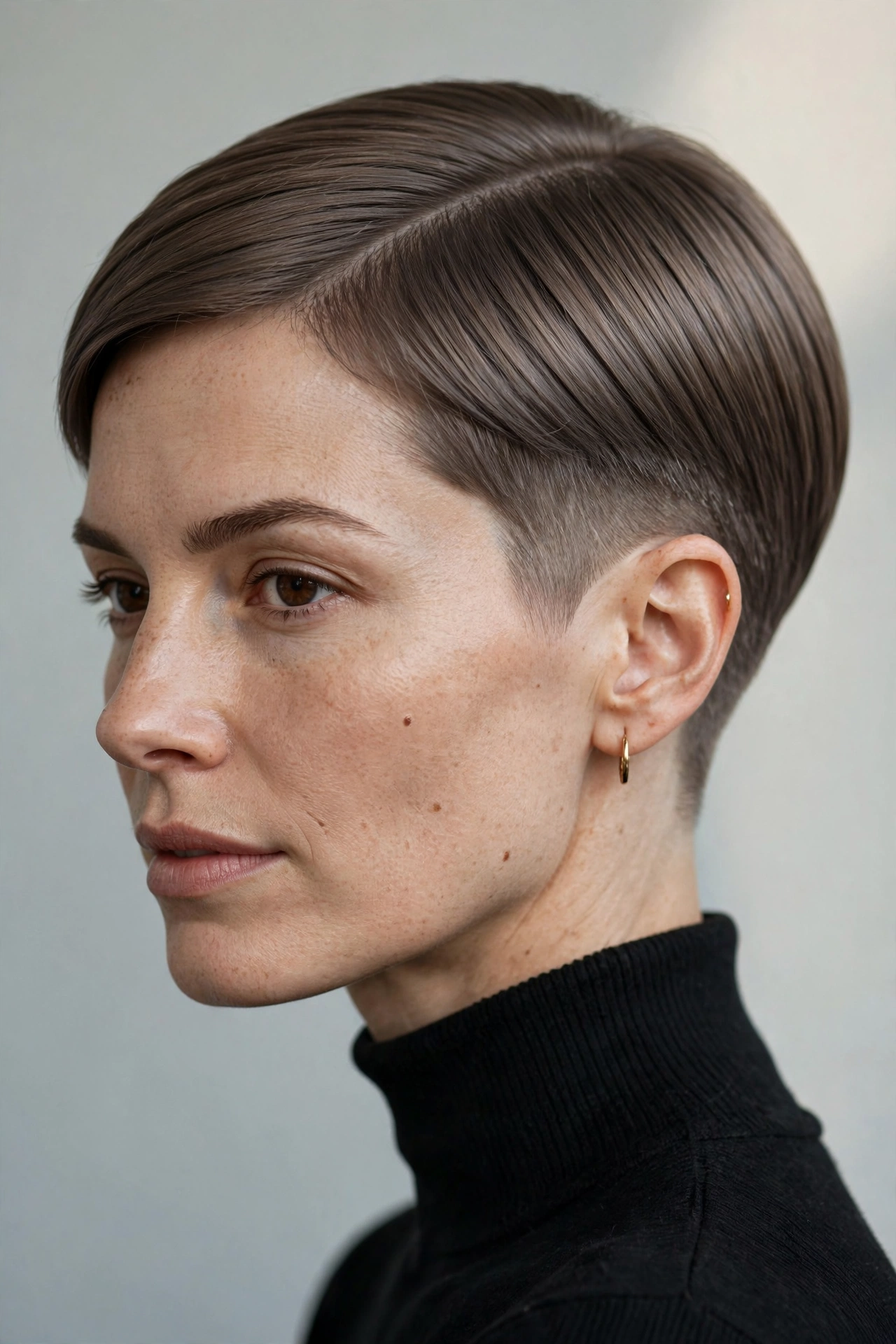
Vibe: Polished — the classic sleek taper is precision embodied, every line deliberate and flat.
The sleek taper pixie works by using a 1–2 guard at the nape and temples to create a close, graduated base, then allowing the crown section (cut with scissors at 2–2.5 inches) to lie flat and smooth over the top. The contrast between the tight taper below and the smooth crown above creates the cut's architectural quality. Straight hair is the ideal texture for this — it lies exactly as directed, holding the flat crown shape without product intervention on clean, healthy hair.
Ask for "a classic taper pixie — tight nape with a 1–2 guard, crown smooth and flat at about 2.5 inches, scissor cut on top." Finish with a tiny amount of high-shine water-based pomade — work between palms, smooth over the crown in the direction of growth, and finish with a fine-tooth comb.
💡 Quick Win: Run a fine-tooth comb through the crown section after applying pomade in the direction of your natural growth pattern — following the hair's existing direction rather than fighting it produces a consistently neater result with less product.
Shop The Look
| Product | Type |
|---|---|
| High-shine water-based pomade | Styling |
| Fine-tooth styling comb | Tool |
| Blow-dryer with concentrator nozzle | Tool |
| Clarifying shampoo (removes pomade buildup) | Haircare |
| Round brush for smooth blow-dry | Tool |
2. Textured Crop Pixie
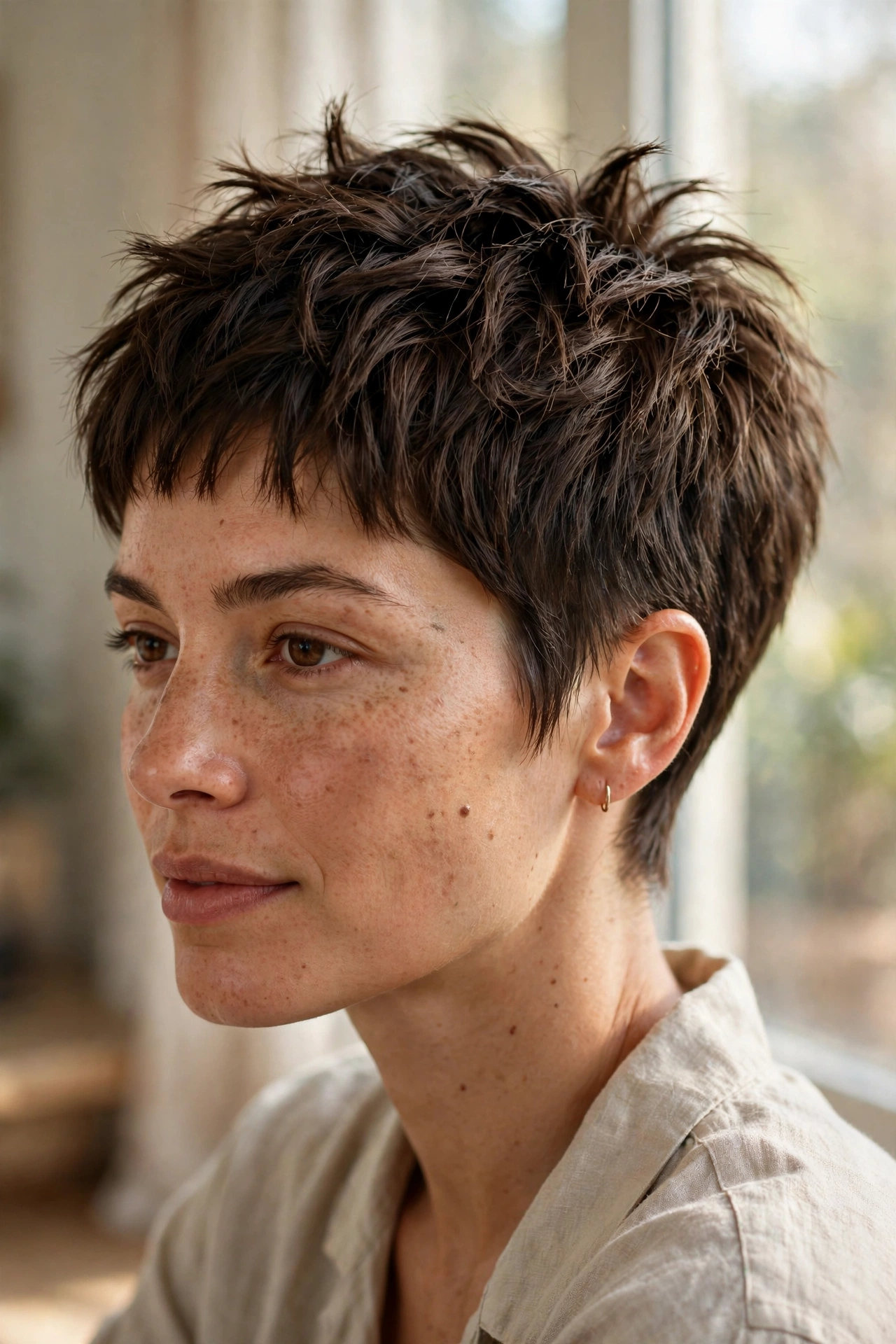
Vibe: Modern — textured without being dishevelled, the point-cut crop is casual precision.
The textured crop uses point-cutting throughout the crown section to remove weight and create ends that separate naturally rather than lying flat as a unit. This technique — holding sections vertically and cutting upward at an angle with scissors — creates irregular end lengths that catch light differently and produce the lived-in texture that straight hair can't achieve through curl alone. Combined with a soft 2-guard taper at the sides, the cut has structure without severity.
Ask for "a textured pixie crop with point-cut ends — I want separation and movement on top, not a flat smooth finish." Apply a matte clay the size of a pea to towel-dried hair, work through with fingers using a scrunching motion, then blow-dry on medium heat using fingers only — no brush, no direction, just movement.
Shop The Look
| Product | Type |
|---|---|
| Matte styling clay medium-strong hold | Styling |
| Texturising paste for straight hair | Styling |
| Lightweight blow-dryer (fast-dry) | Tool |
| Sulphate-free volumising shampoo | Haircare |
| Thinning scissors for at-home texture | Tool |
3. Side-Swept Straight Pixie
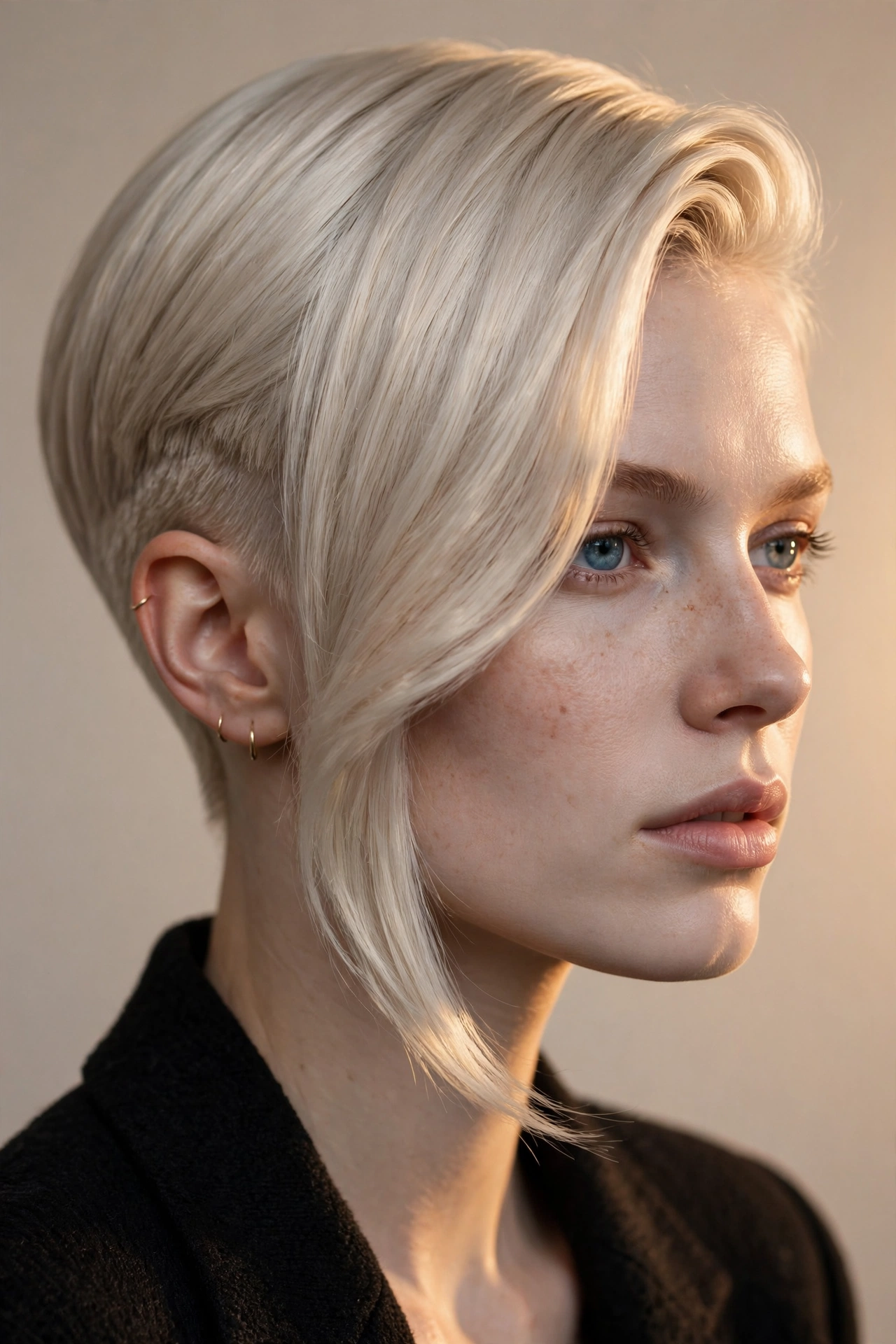
Vibe: Feminine — the side sweep introduces movement and softness that a symmetric cut cannot.
A side-swept pixie uses asymmetric cutting — one side left deliberately longer (3 inches) to create a directional sweep, the other side cut closer (1 guard taper) to reinforce the direction of movement. On straight hair, the sweep lies exactly as trained because there's no curl pattern pushing back against the direction. The stylist cuts the longer side with a slight graduation (longer at the front, shorter toward the back of the sweep) so the sweep has natural directional flow rather than a blunt fall.
Ask for "an asymmetric pixie with a side sweep — longer on the left side with a sweep, 1-guard taper on the right." To set the sweep, blow-dry it in the desired direction using a medium round brush from root to tip, finishing with a small amount of light-hold shine spray pressed flat with one hand.
💡 Quick Win: After styling the sweep, use a flat palm to press it gently into place for 10 seconds — the warmth from your hand slightly softens the product and makes the hair remember the direction faster than a comb alone.
Shop The Look
| Product | Type |
|---|---|
| Light-hold directional shine spray | Styling |
| Medium round brush for blow-dry sweep | Tool |
| Smoothing serum for anti-frizz flat finish | Styling |
| Straight hair-safe silk pillowcase | Accessory |
| Small flexible-hold hair clip (overnight sweep training) | Tool |
4. Razor-Cut Wispy Pixie
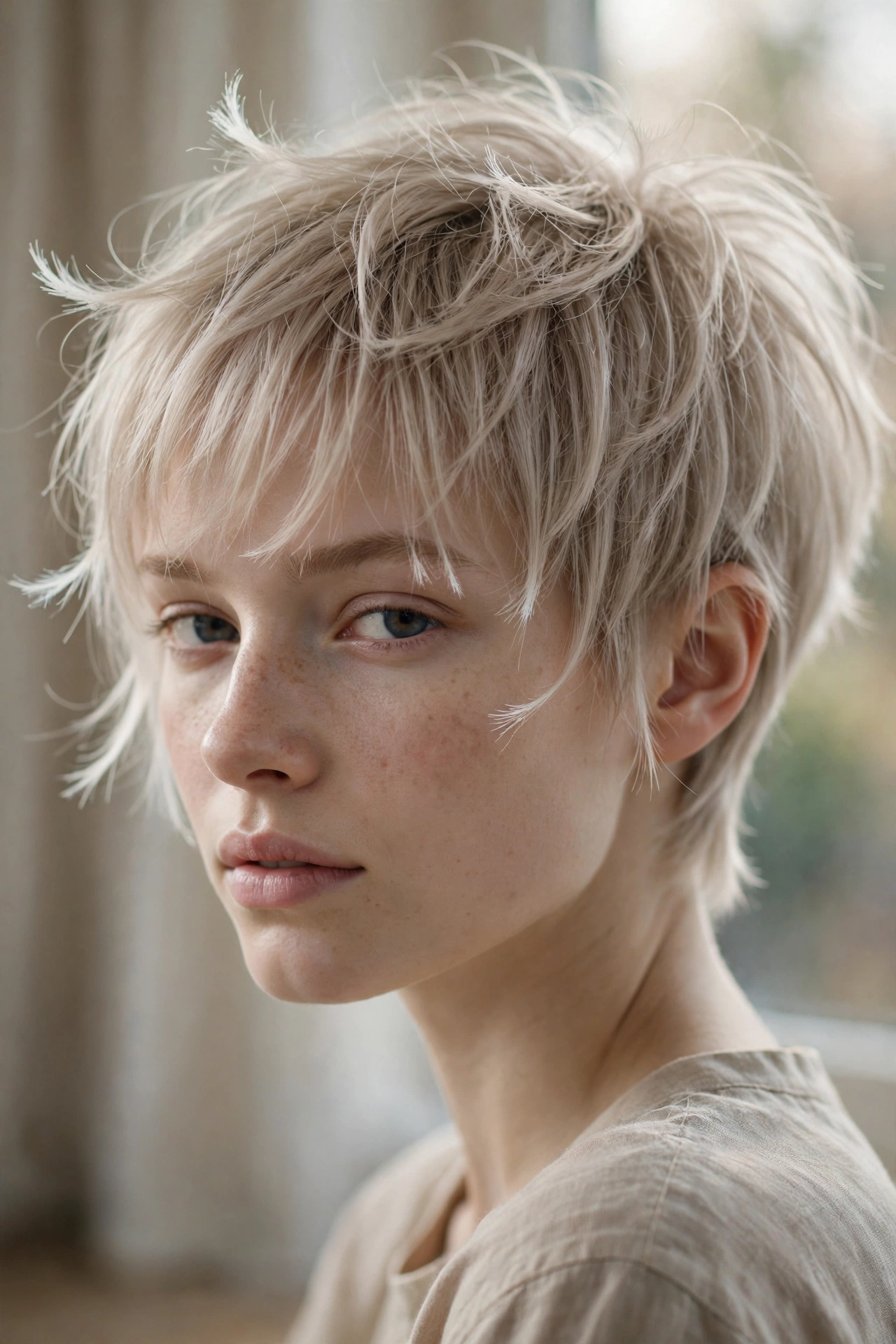
Vibe: Soft — the razor turns a geometric cut into something closer to a pencil sketch than a line drawing.
Razor cutting on a straight pixie uses a straight razor or razor comb to slice through the ends at an angle, creating feathered, tapered tips that the scissors cannot produce. On fine straight hair in particular, razor ends create the appearance of weight and volume — each wispy tip catches light separately, making sparse hair look more abundant. The technique requires the hair to be damp (not wet) and the razor angle to be steep (almost parallel to the hair section) for the finest, most tapered ends.
Ask for "a razor-cut pixie — I want wispy, feathered ends throughout, not blunt lines." Apply a single pump of lightweight thermal protectant serum to damp hair, then blow-dry with a small round brush using rolling motions to lift the wispy ends away from the head for maximum airy movement.
Shop The Look
| Product | Type |
|---|---|
| Lightweight thermal protectant serum | Styling |
| Small round boar bristle brush | Tool |
| Volumising mousse fine straight hair | Styling |
| Razor styling comb at-home finish | Tool |
| Dry shampoo for volume refresh | Styling |
5. Skin Fade Temple Pixie
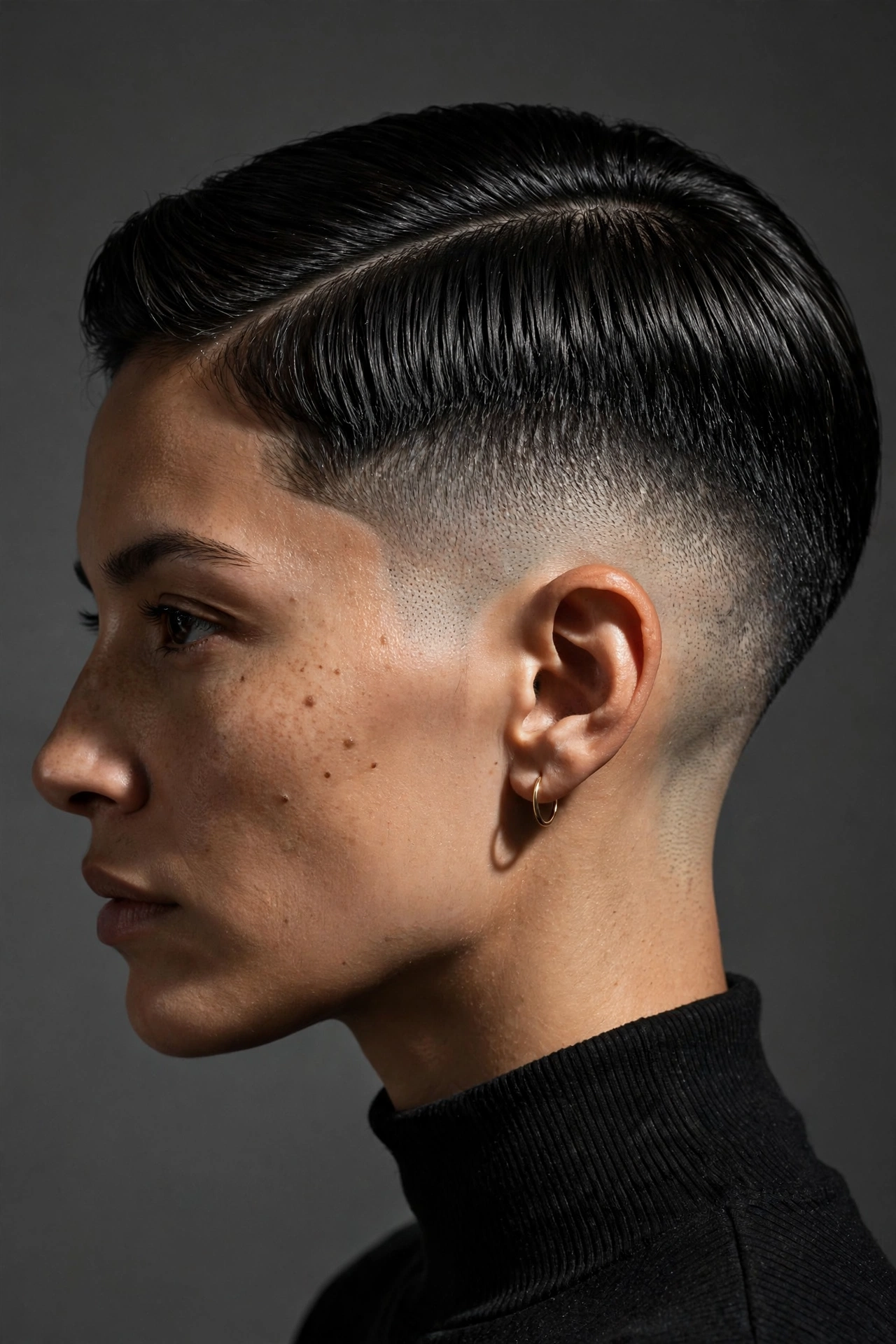
Vibe: Sharp — the skin fade temple gives a straight pixie its most precisely defined face frame.
A skin fade at the temple starts with a 0 guard at the lowest temple point and blends through 1 and 2 upward over approximately 2–3 centimetres, ending where the natural hair begins. On straight hair, this creates a particularly graphic contrast — the skin at the temple is clean and smooth, and the transition into the straight hair above is visible and precise. The technical challenge is feathering the blend at the 1-guard line so the transition reads as intentional gradient rather than a stepped line.
Request "a skin fade both temples — 0 at the temple hairline blending to a 2, then into my natural hair." Keep temple fades sharp every 2–3 weeks; straight hair growth at the temple shows new growth faster than curly textures because it lies flat and uniform.
Shop The Look
| Product | Type |
|---|---|
| Cordless precision hair trimmer set | Tool |
| Pomade for crown styling post-fade | Styling |
| Neck duster brush after trim | Tool |
| Bump-free temple shaving gel | Grooming |
| Clarifying scalp scrub (weekly) | Haircare |
6. Pixie Cut with Blunt Fringe
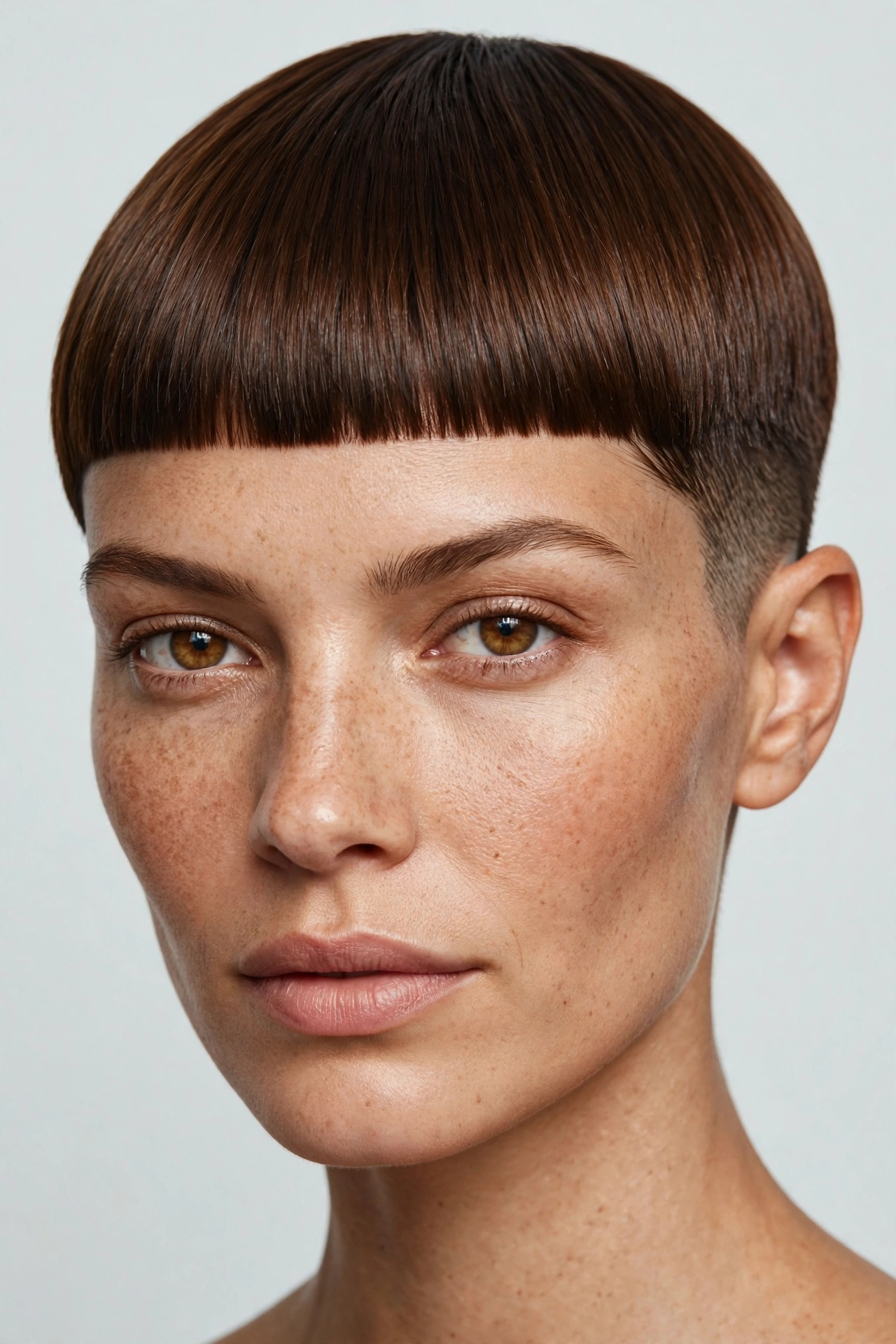
Vibe: Graphic — a blunt fringe on a straight pixie turns the forehead into a deliberate focal point.
A blunt, straight-across fringe on a pixie cut uses a one-length horizontal cut across the forehead at mid-brow to brow level, creating a clean geometric line. On straight hair, the blunt fringe holds its edge and lies flat without product — this is a style that only works as cleanly on straight hair as it does here. The technical requirement is cutting the fringe on completely dry, straight hair (never wet) so the stylist sees exactly where the line will fall, since straight hair doesn't spring like curly does.
Ask for "a blunt fringe at mid-brow — please cut it dry so I can see the exact final length." To maintain the fringe at home, trim it straight across using nail scissors or small hair scissors against a comb held horizontally — cut at the comb, not above it.
💡 Quick Win: Use a flat iron on just the fringe section on high-humidity days — 3 seconds per small section from root to tip is enough to keep the blunt line intact without overheating fine straight hair.
Shop The Look
| Product | Type |
|---|---|
| Mini flat iron for fringe touch-ups | Tool |
| Anti-humidity finishing spray | Styling |
| Small sharp haircutting scissors | Tool |
| Smoothing shampoo for fringe control | Haircare |
| Fine-tooth fringe comb | Tool |
7. Layered Pixie with Volume
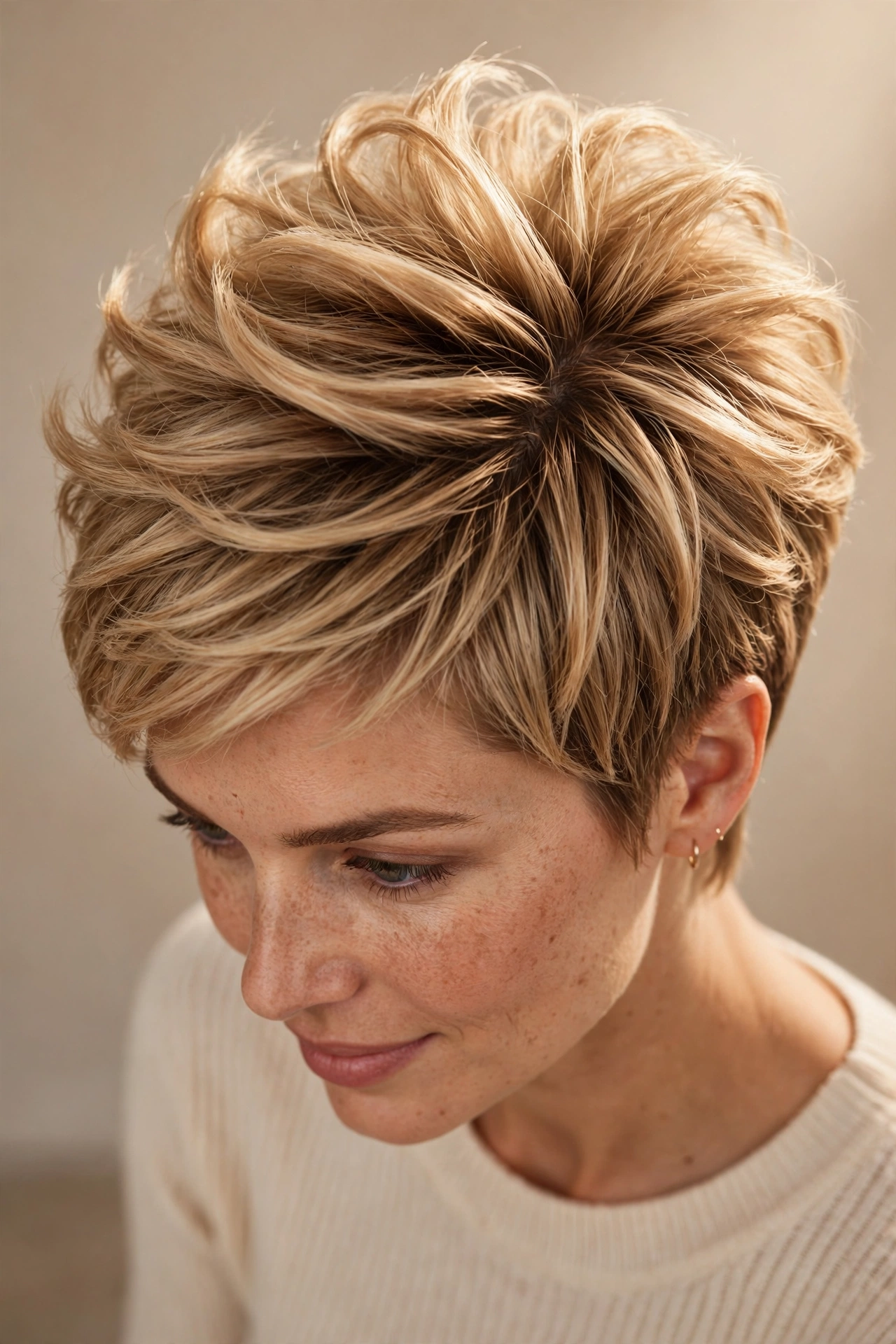
Vibe: Feminine — internal layers in a straight pixie create the volume that straight hair otherwise refuses to provide.
Layered volume in a straight pixie is achieved through internal graduation: the stylist cuts the underlayer of the crown shorter than the top layer, creating a shelf of hidden volume that pushes the top layer upward. This technique — often called a stacked interior or elevation cut — works specifically against straight hair's natural tendency to lie flat. The layers are cut at a 90-degree elevation from the head, creating maximum internal lift without the layers becoming visible at the surface.
Ask for "a layered pixie with internal graduation for volume — I want lift at the crown, my hair is naturally flat." Apply a volumising mousse from roots to mid-lengths, blow-dry with a round brush using an upward lifting motion from underneath, then use a tiny amount of light-hold wax to define the top surface.
Shop The Look
| Product | Type |
|---|---|
| Root-lifting volumising mousse | Styling |
| Ceramic round brush medium size | Tool |
| Light-hold hair wax for separation | Styling |
| Thickening shampoo fine straight hair | Haircare |
| Flexible-hold hairspray for volume hold | Styling |
8. Pixie Cut for Round Faces
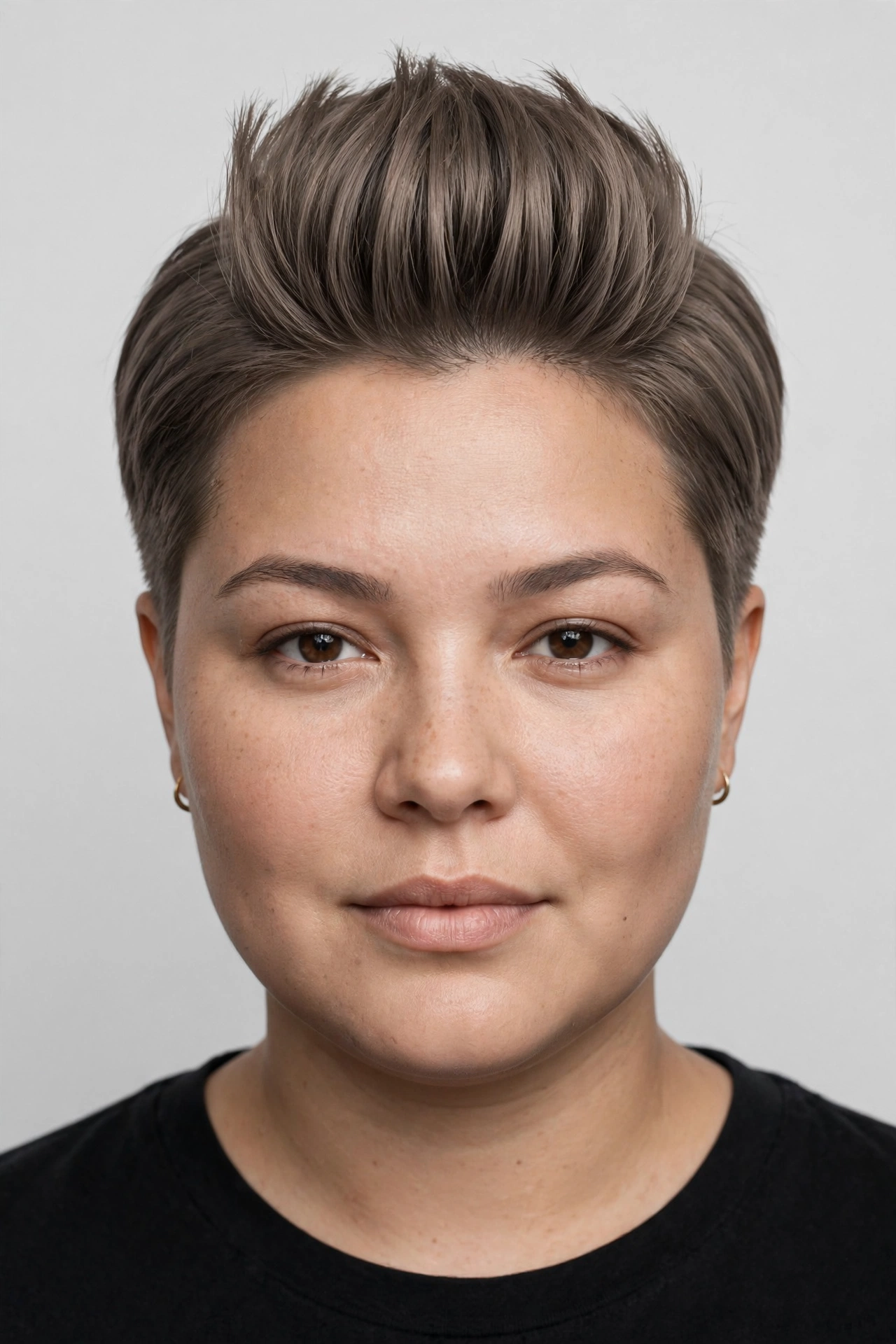
Vibe: Balanced — this version is architecturally engineered to create the vertical length a round face benefits from most.
For round face shapes, a straight pixie works best when it deliberately builds height at the crown and eliminates width at the sides. The principle is elongation: a taller crown creates a visual vertical axis that counterbalances the face's horizontal width. This means a 1-guard taper at the temples and sides, a crown length of at least 2.5–3 inches, and blow-drying the crown upward rather than flat to maximise the height differential. Side-parted or side-swept styles for round faces add width exactly where it isn't needed — the centrally lifted crown is the correct choice.
Ask for "a pixie optimised for a round face — close sides, taller crown, I want length not width." Blow-dry the crown section by directing the dryer upward from the root while lifting with a round brush from underneath — this trains the root to lift away from the scalp.
Shop The Look
| Product | Type |
|---|---|
| Root-lifting root spray for volume | Styling |
| Large round brush for crown lift | Tool |
| Lightweight flexible-hold spray | Styling |
| Volumising dry shampoo for root lift | Styling |
| Hair dryer with high heat/low speed setting | Tool |
9. Undercut Pixie with Grown-Out Top
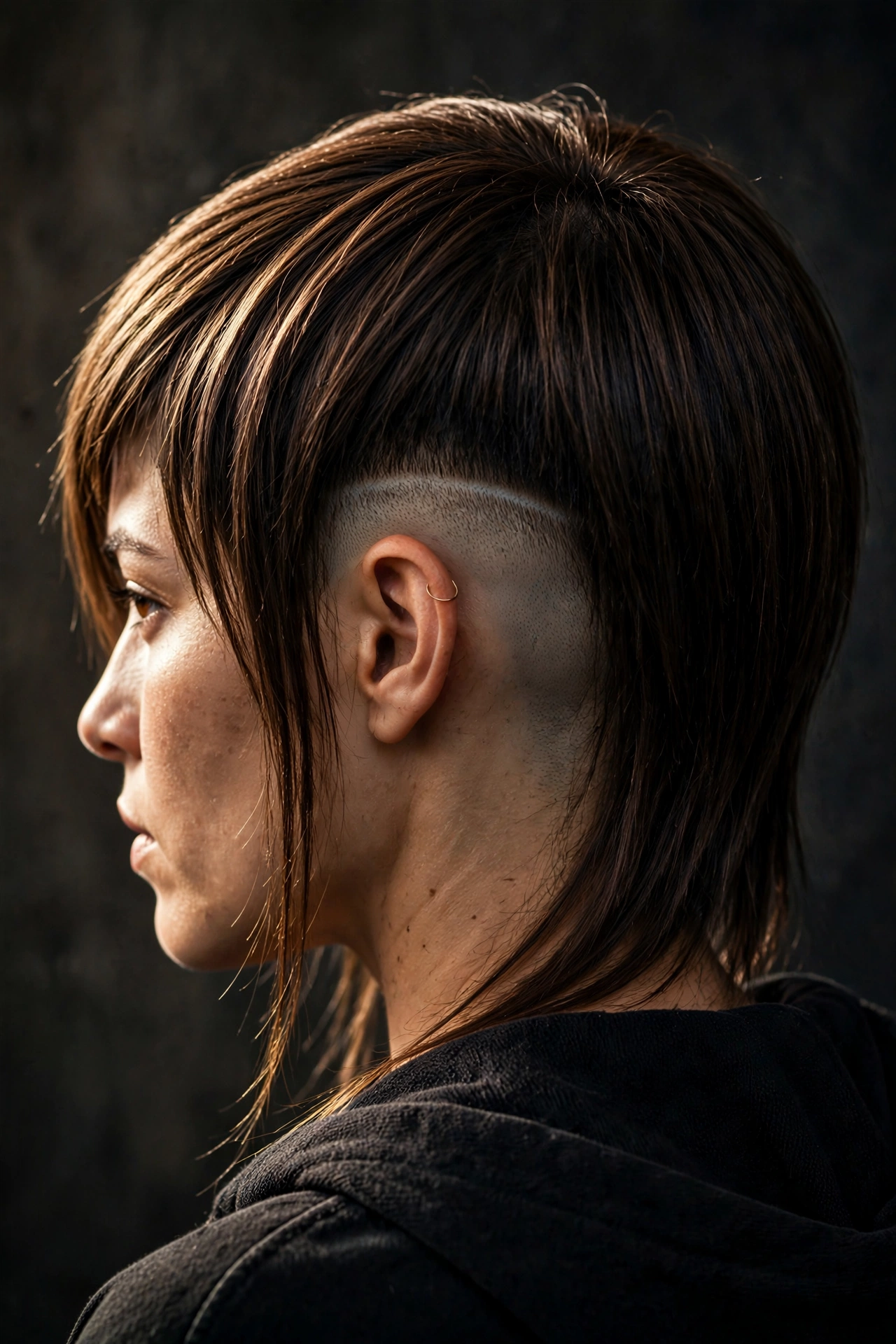
Vibe: Edgy — the undercut is a hidden structure that the top reveals only in the right light or angle.
An undercut pixie uses a disconnected cut: the under-layer (from the nape to approximately crown level) is buzzed to a 0 or 1 guard while the top section is left at 3–4 inches to fall naturally over it. On straight hair, the top section lies flat over the undercut and the shaved section is visible from the back and sides when the top layer moves. The technical key is setting the dividing line cleanly — it should trace a horizontal arc from temple to temple at crown level, not creep upward or downward unevenly.
Ask for "a disconnected undercut — skin-close from the nape to crown level, top left long to fall over it, no blend." The undercut section needs maintenance every 3 weeks; the top section only needs trimming every 8–10 weeks.
💡 Quick Win: Use a handheld hair clip to lift the top section away and check the undercut cleanness in a back mirror — any uneven areas are much easier to see and address before product is applied.
Shop The Look
| Product | Type |
|---|---|
| Foil head shaver for undercut maintenance | Tool |
| Smooth-finish pomade for top section | Styling |
| Handheld mirror set for back visibility | Tool |
| Clarifying shampoo for scalp cleanliness | Haircare |
| Edge-defining serum for smooth top | Styling |
10. Platinum Blonde Sleek Pixie
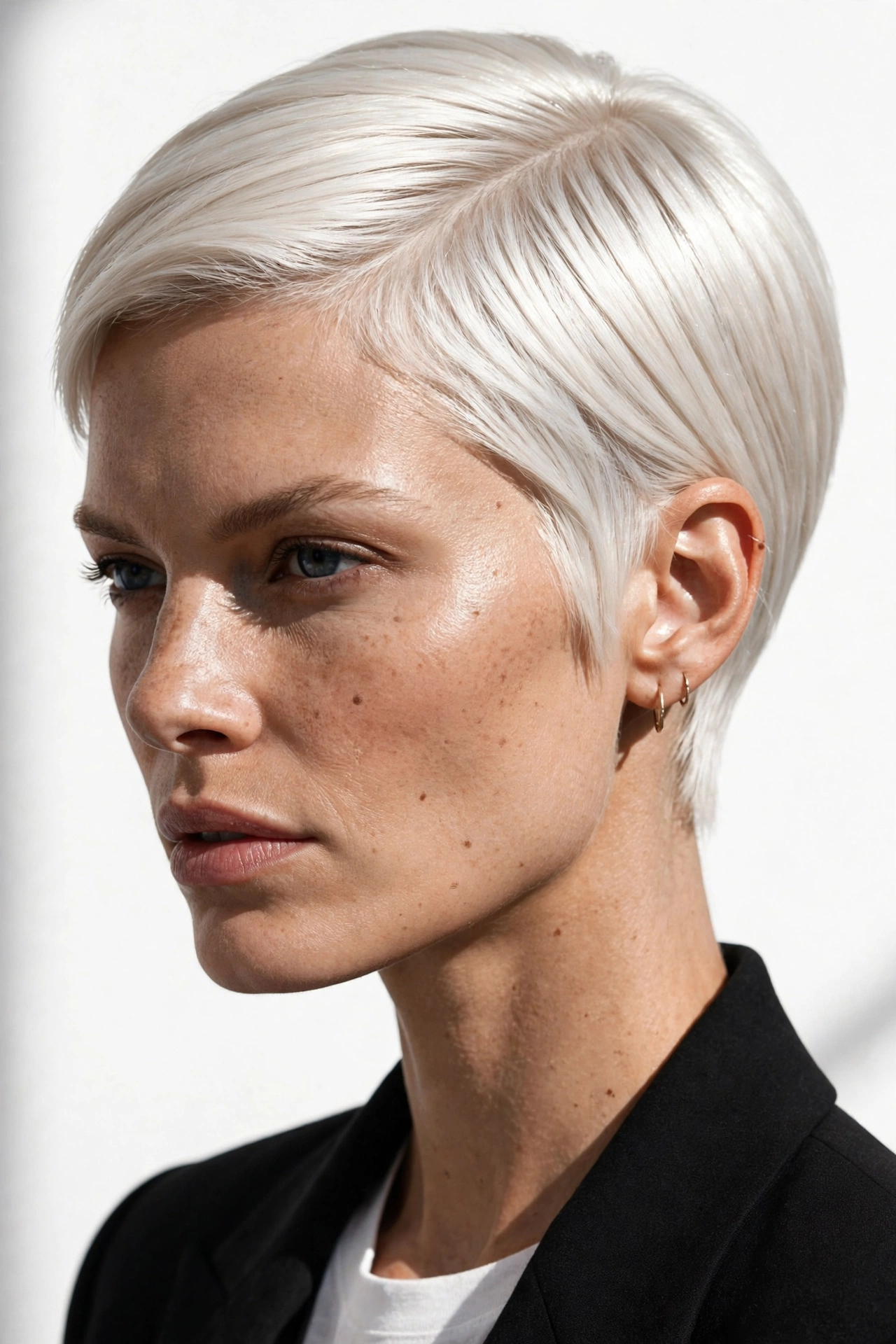
Vibe: Bold — platinum blonde on a straight sleek pixie is the most graphic, attention-commanding colour choice available.
Platinum blonde on straight hair requires a two-stage colour process: a bleach lift to remove natural pigment followed by a toner to achieve the white-platinum finish without residual yellow or orange undertones. On a pixie length, the bleach service is significantly less damaging than on long hair — there's less total hair mass and the colour can be refreshed every 6–8 weeks without accumulating damage. The sleek finish of a straight pixie maximises the platinum's visual impact because every strand lies flat, reflecting light uniformly.
Request from your colourist "full bleach lift to platinum with a cool toner — I'm wearing it sleek so I want zero yellow at the surface." Use a purple shampoo twice a week (not every wash) to neutralise brassiness as the toner fades between appointments.
Shop The Look
| Product | Type |
|---|---|
| Purple/violet toning shampoo platinum | Haircare |
| Bond-strengthening treatment bleached hair | Haircare |
| Smooth-finish serum for platinum shine | Styling |
| Moisturising conditioner for bleached hair | Haircare |
| UV protecting hair mist for platinum tone | Styling |
11. Pixie with Hard Side Part
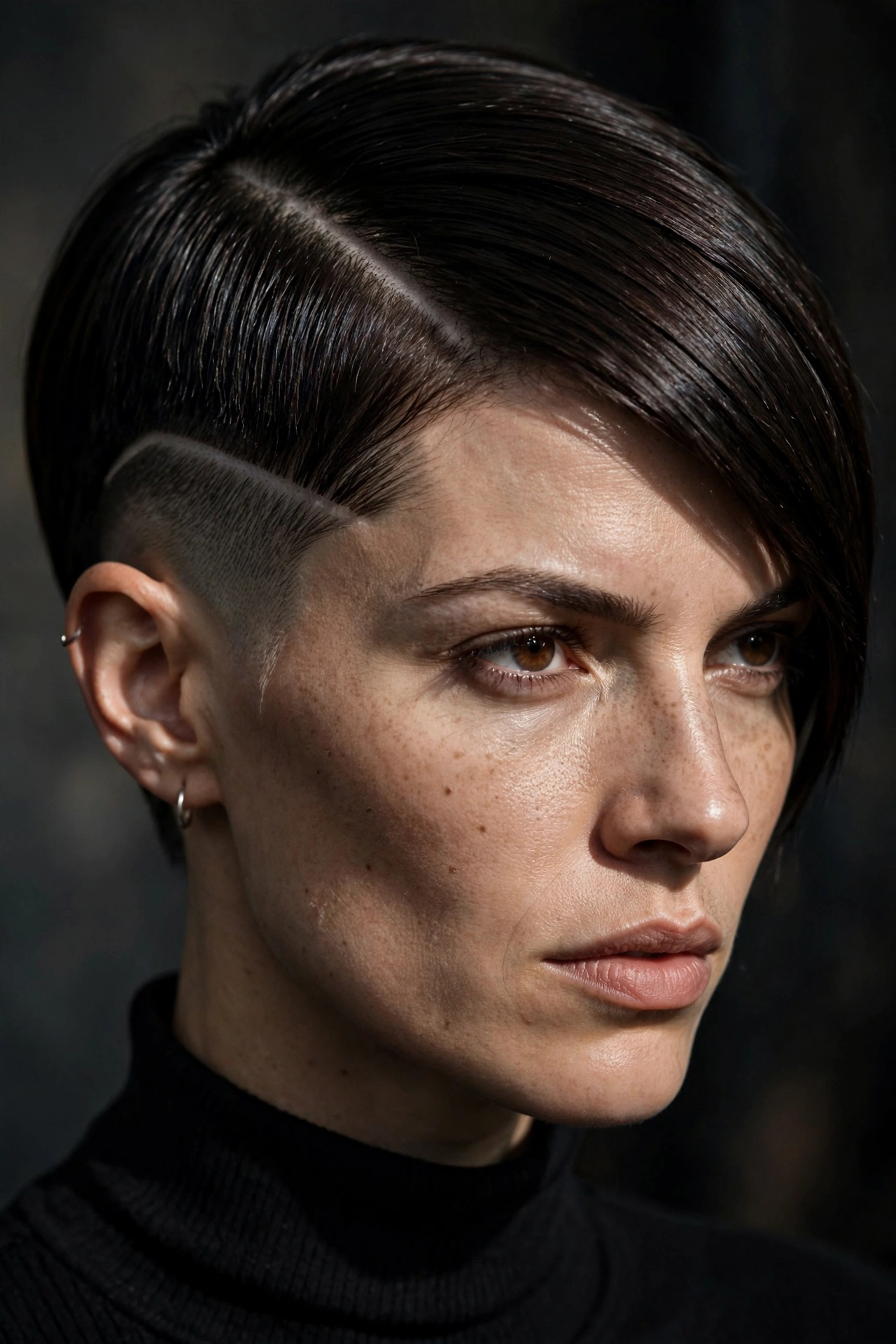
Vibe: Sharp — the hard part is a single line that gives the entire cut its graphic authority.
A shaved hard part on a straight pixie uses a liner trimmer to carve a clean, crisp line through the hair at a natural part position, then tightly tapers the smaller side while leaving the larger side to be styled over. On straight hair, the comb-over side lies perfectly flat — straight hair's compliance to direction is what makes the hard part comb-over cleaner than any other texture. The liner creates approximately a 1–2mm clean shave line; a wider part looks less precise on a pixie scale.
Ask for "a shaved hard part on the left — liner-clean, about 1mm wide, right side combed over." Use a high-hold water-based pomade worked through damp hair on the comb-over side, comb in direction with a fine-tooth comb, and allow to set. The result holds for 24+ hours on straight hair.
Shop The Look
| Product | Type |
|---|---|
| High-hold water-based pomade | Styling |
| Professional T-blade liner trimmer | Tool |
| Fine-tooth pomade styling comb | Tool |
| Alcohol-free setting spray for hold | Styling |
| Boar bristle brush for finish smoothing | Tool |
12. Pixie Cut with Nape Taper and Defined Hairline
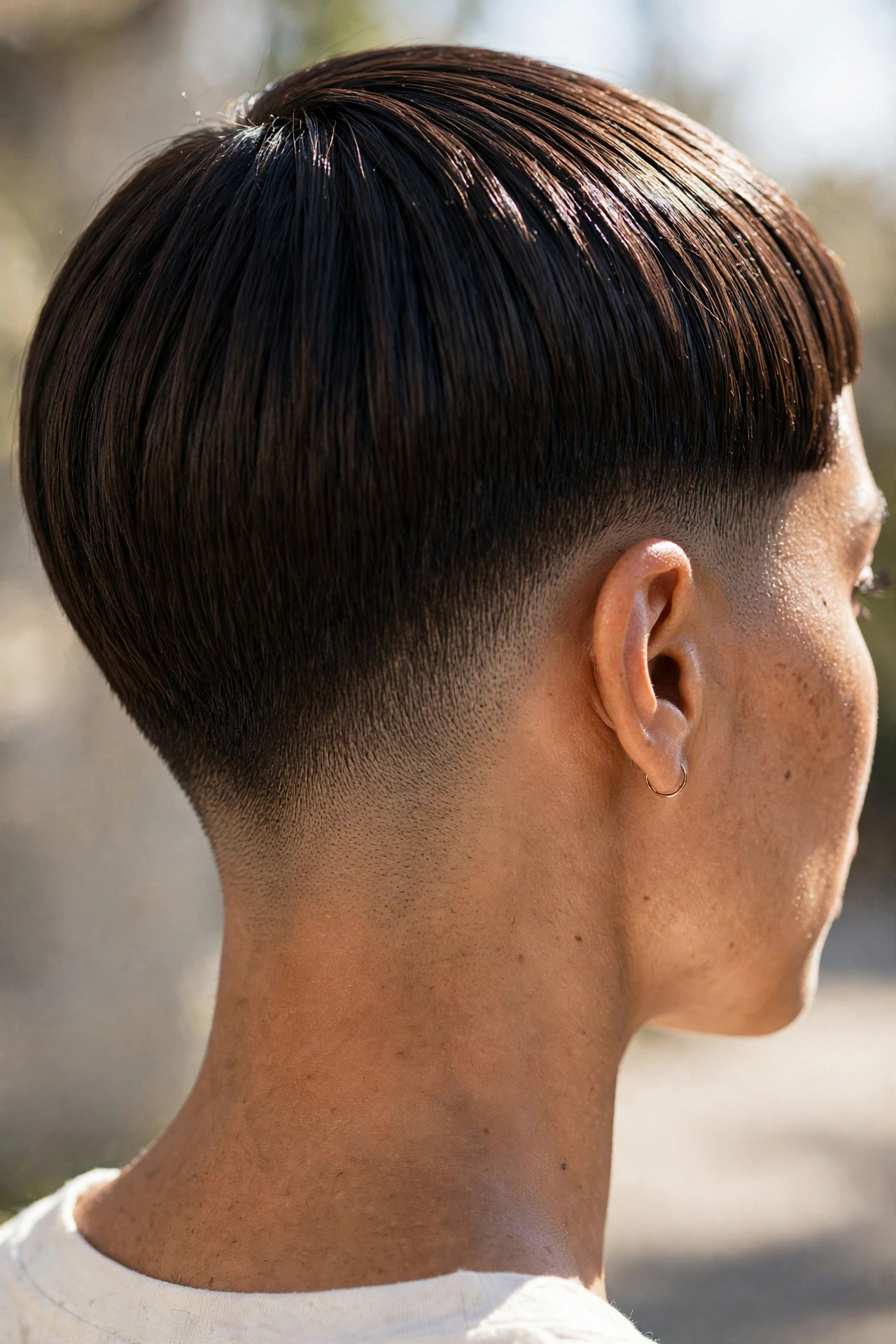
Vibe: Precise — the defined hairline makes a straight pixie look permanently just-cut.
A clean nape taper combined with a liner-defined hairline creates the most finished possible version of a straight pixie. The nape taper uses a 0 guard blending through 1 to 2 over approximately 2 centimetres; the hairline is then traced with a liner following the natural hairline shape, removing any wispy irregular growth at the forehead and temples. On straight hair, these elements are particularly visible — the clean geometric quality of the defined hairline reads sharply because straight hair frames it without softening frizz.
Ask for "a tapered nape from 0 to 2, and a clean lined hairline — trace what's already there, don't change the shape." Maintain the hairline with a personal trimmer on the 0 guard setting every 10–14 days between salon appointments.
Shop The Look
| Product | Type |
|---|---|
| T-blade personal trimmer for hairline | Tool |
| Clear edge gel for line definition | Styling |
| Nape bump-free aftershave balm | Grooming |
| Smoothing finishing pomade | Styling |
| Double handheld mirror set | Tool |
13. Grown-Out Soft Pixie
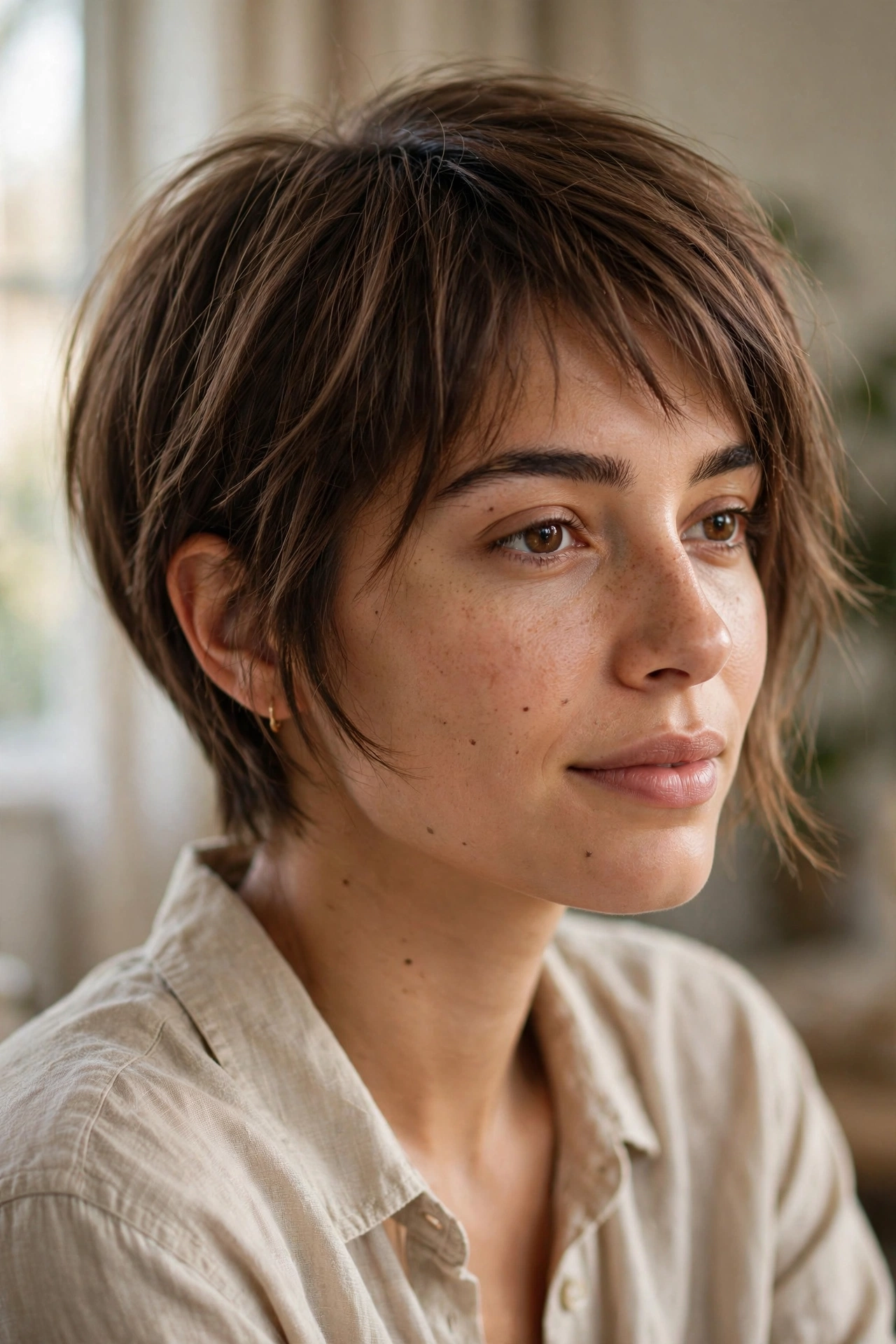
Vibe: Relaxed — a grown-out straight pixie has an intentional ease that a freshly cut version doesn't.
The grown-out soft pixie is the style for the phase between a tight short cut and a longer style — 3–4 inches all over, where the straight hair has enough length to fall naturally and enough weight to move. The key maintenance technique is a dusting trim (removing no more than ½ inch from the ends every 8–10 weeks) to keep the shape from becoming visually shapeless while allowing overall length progress. No hard fade or taper — keeping the shape soft means each subsequent trim simply extends the existing style.
Ask for "just a dust — remove dry ends and keep the shape soft, I'm growing it out." A dime-sized amount of lightweight styling cream through dry hair gives enough texture and separation to make grown-out straight hair look styled rather than simply untrimmed.
💡 Quick Win: On days the grown-out length looks shapeless, apply a volumising dry shampoo to roots, massage in, then blow-dry with a round brush for 2 minutes — it transforms flat growing-out straight hair into a deliberately loose style immediately.
Shop The Look
| Product | Type |
|---|---|
| Volumising dry shampoo for root lift | Styling |
| Lightweight styling cream for separation | Styling |
| Small round brush for home styling | Tool |
| Split-end treatment serum | Haircare |
| Microfibre quick-dry hair towel | Accessory |
14. Pixie with Curtain Fringe
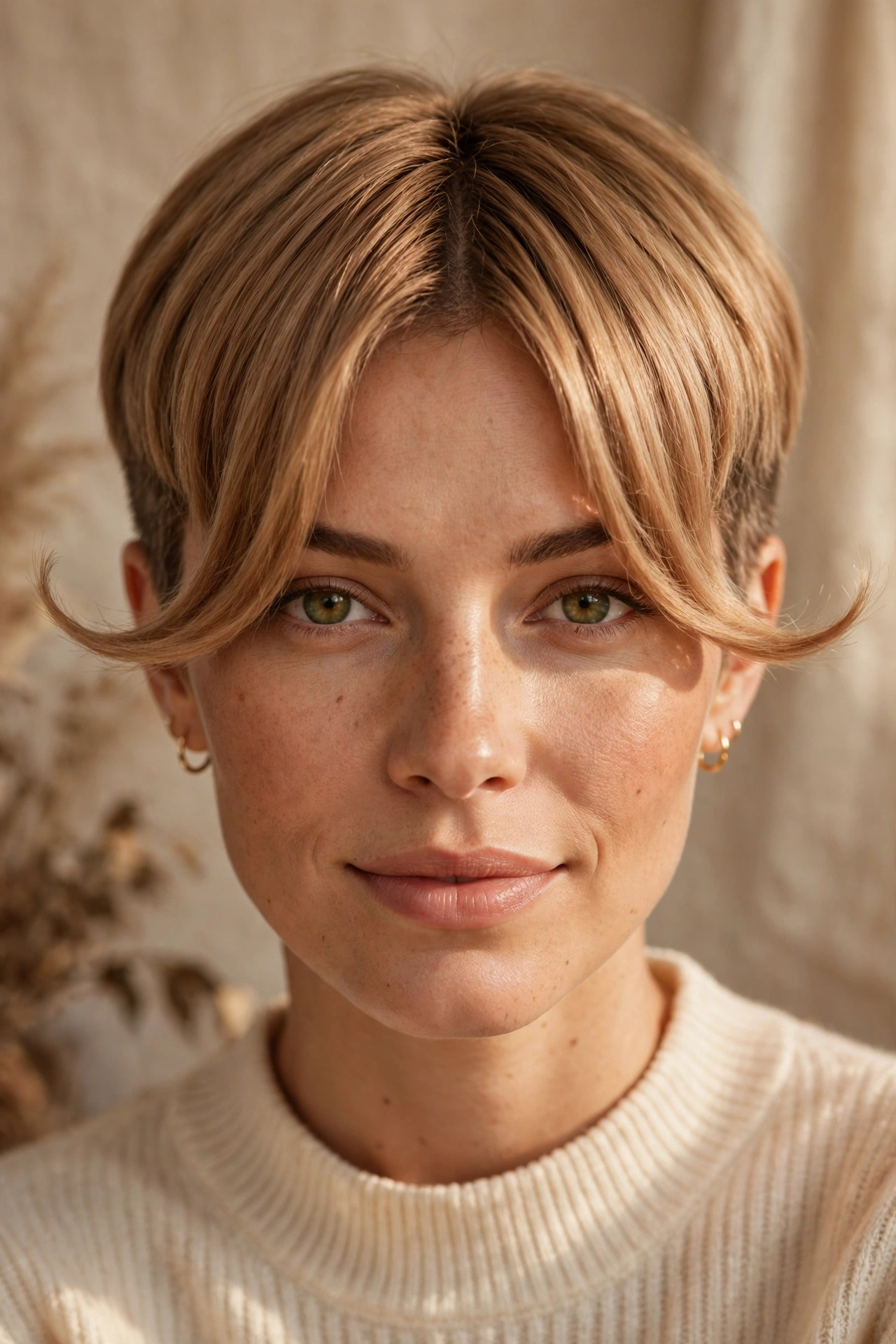
Vibe: Feminine — the curtain fringe softens the face frame in a way that blunt cuts don't, adding a retro warmth to a modern short cut.
A curtain fringe on a pixie is cut longer at the centre (falling to approximately brow level) and graduated shorter toward the temples where it connects to the side taper, creating the characteristic parted curtain shape. On straight hair, the curtain fringe's soft inward curve at the ends is achieved during blow-drying: a small round brush curls the ends slightly inward as it dries, creating the fringe's signature gentle face-framing fall. The technique requires damp hair and a small round brush held at 45 degrees below the fringe section.
Ask for "a curtain fringe on my pixie — centre-parted, longer in the middle, I want the ends to curve in slightly." Blow-dry the fringe in two sections (left and right of centre part) separately, rolling the round brush inward at the ends for the last 5 seconds of each section.
Shop The Look
| Product | Type |
|---|---|
| Small round brush for fringe styling | Tool |
| Light-hold finishing serum (anti-frizz) | Styling |
| Flat iron mini for fringe shape | Tool |
| Featherweight blow-dryer for fringe control | Tool |
| Flexible-hold fringe hairspray | Styling |
15. Choppy Disconnected Pixie
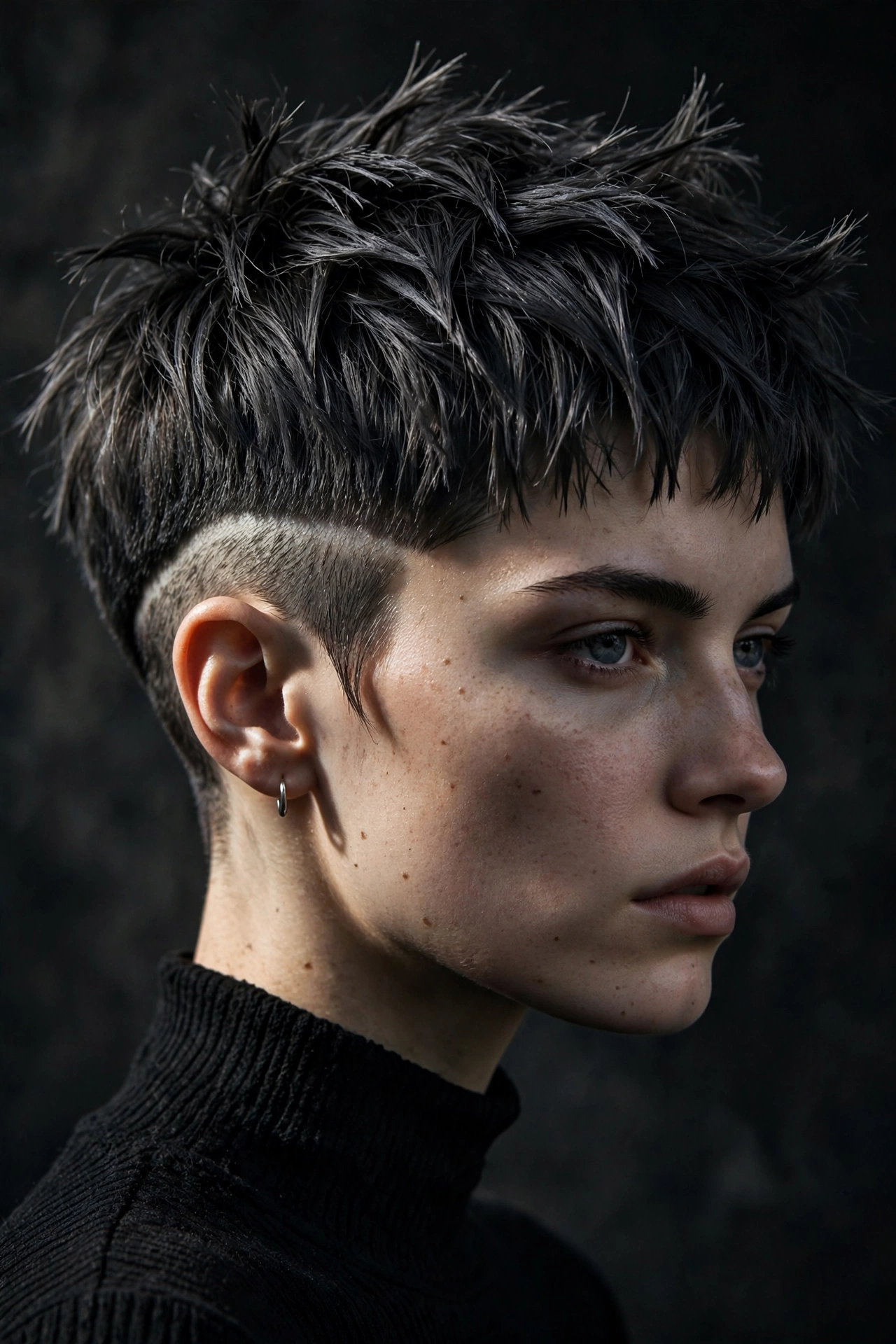
Vibe: Edgy — disconnection as a design decision rather than an oversight.
A disconnected pixie deliberately avoids any blending between the crown and side lengths — the transition from 3–4 inches on top to a 1-guard side is abrupt and visible, creating a graphic length contrast that reads as architectural rather than unfinished. The crown section is point-cut for texture so the longer pieces have separated, choppy ends rather than a blunt mass. On straight hair, this disconnection is maximally visible — straight strands show the length differential starkly.
Ask for "a disconnected pixie — no blend between the sides and crown, I want the contrast visible." Work a matte paste through dry crown sections with fingertips using a pushing-and-separating motion, directing pieces forward and sideways for maximum choppy definition. Never brush or comb after applying paste to a disconnected style.
Shop The Look
| Product | Type |
|---|---|
| Strong-hold matte paste for separation | Styling |
| Texturising dry spray | Styling |
| Thinning scissors for choppy technique | Tool |
| Sulphate-free daily shampoo | Haircare |
| Flexible-hold wax for re-work | Styling |
16. Low-Maintenance Natural Part Pixie
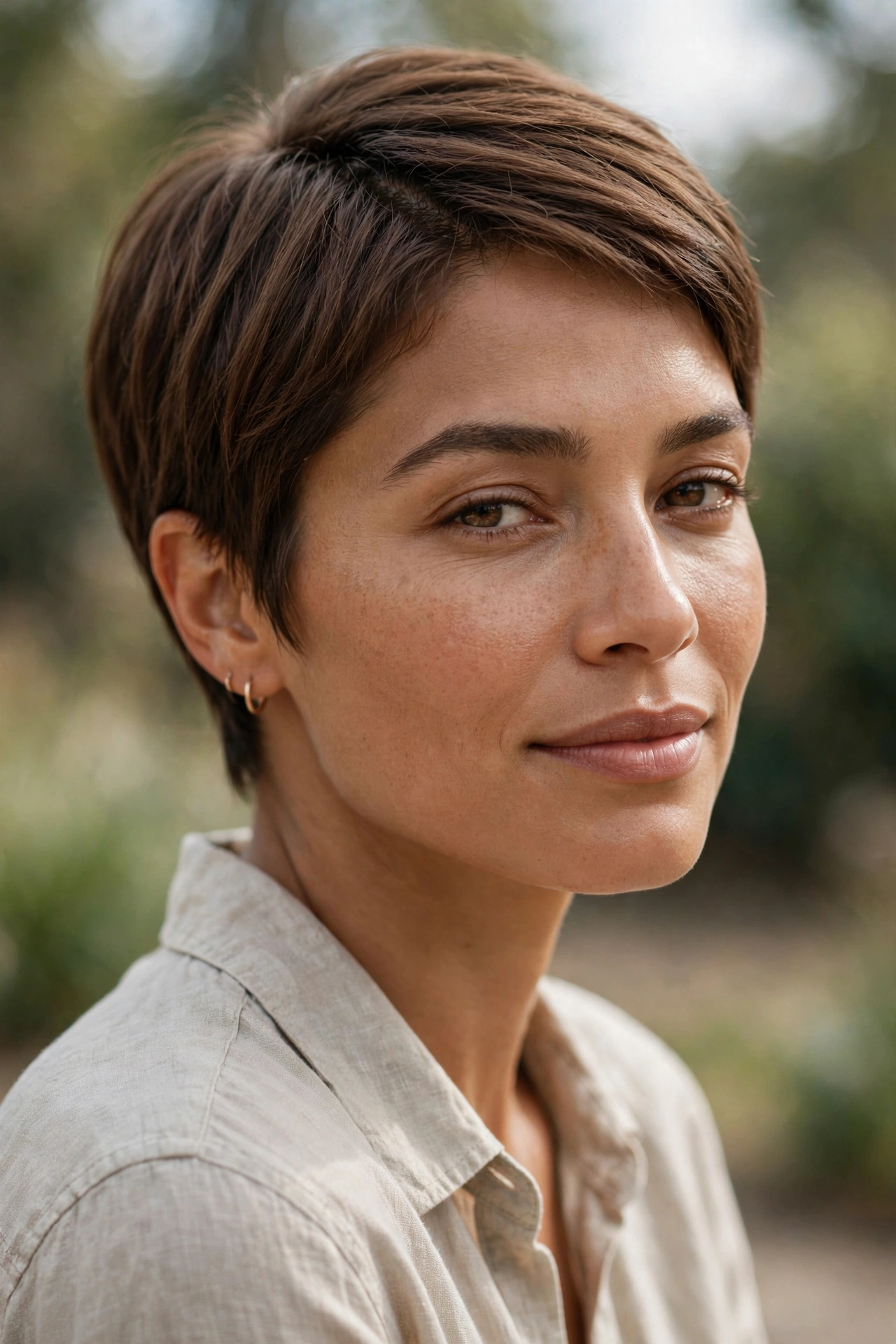
Vibe: Effortless — this is the version for people who want to wash, lightly dry, and go.
A natural part pixie is cut specifically to work with the hair's own growth pattern — the stylist identifies the natural part and shapes the entire cut around it, so the hair falls in its intended direction without needing to be trained or directed. On straight hair with a consistent growth pattern, this produces a clean, reliable shape that re-forms after every wash with minimal styling. The cut avoids fades and hard lines that would require maintenance, focusing on scissor-only shaping that grows out softly.
Ask for "a pixie that works with my natural part — cut it to fall naturally, no hard lines, easy to manage." After washing, apply a pea-sized amount of anti-frizz serum through damp hair, comb with a natural part, and allow to air dry completely without touching.
Shop The Look
| Product | Type |
|---|---|
| Anti-frizz lightweight serum | Styling |
| Wide-tooth styling comb | Tool |
| Fragrance-free sulphate-free shampoo | Haircare |
| Moisturising conditioner for straight hair | Haircare |
| Cotton-free quick-dry hair towel | Accessory |
17. Pixie Cut with Colour-Blocked Sections
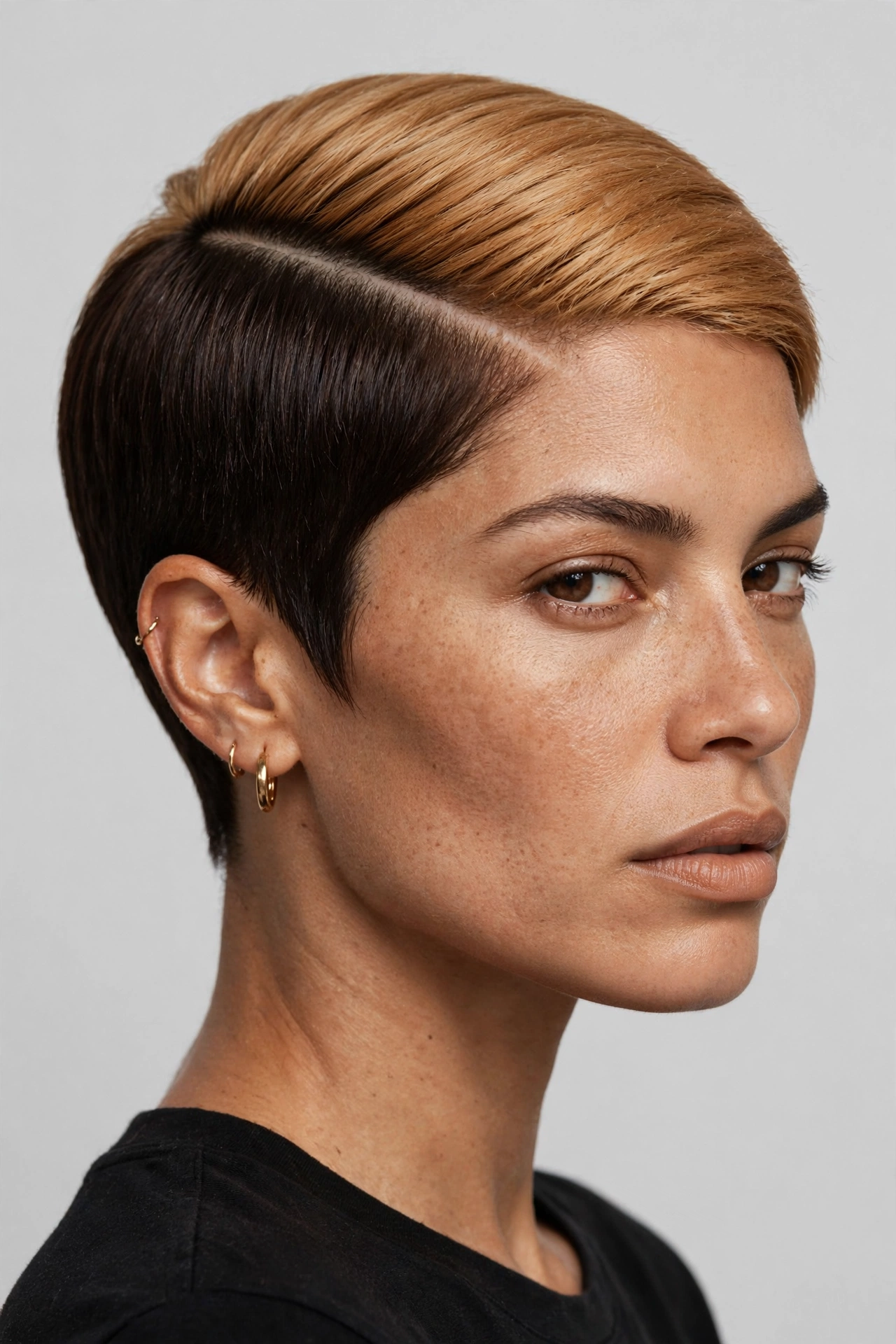
Vibe: Bold — a colour block on a straight pixie uses the cut's existing geometry as the canvas.
Colour-blocking on a straight pixie places two distinctly different colours in adjacent sections — typically the crown in a lighter or contrasting tone and the sides and nape in a darker or complementary colour. On straight hair, the colour division is maximally sharp because the hair lies flat and the section line is geometric rather than softened by curl. The colourist must use clean foil sections to keep the two zones separate during the colouring process, with a hard demarcation line at the transition.
Ask your colourist for "a colour-block section on my pixie — crown in [colour A], sides in [colour B], I want a clean line between them." Maintain the division with a colour-protecting shampoo and avoid mixing the two zones during styling — the contrast line is the style's entire point.
Shop The Look
| Product | Type |
|---|---|
| Colour-protecting sulphate-free shampoo | Haircare |
| Colour-depositing tinted conditioner | Haircare |
| UV-protective colour sealer spray | Styling |
| Smooth-finish pomade for flat colour display | Styling |
| Deep conditioning mask colour-treated hair | Haircare |
18. Textured Quiff Pixie
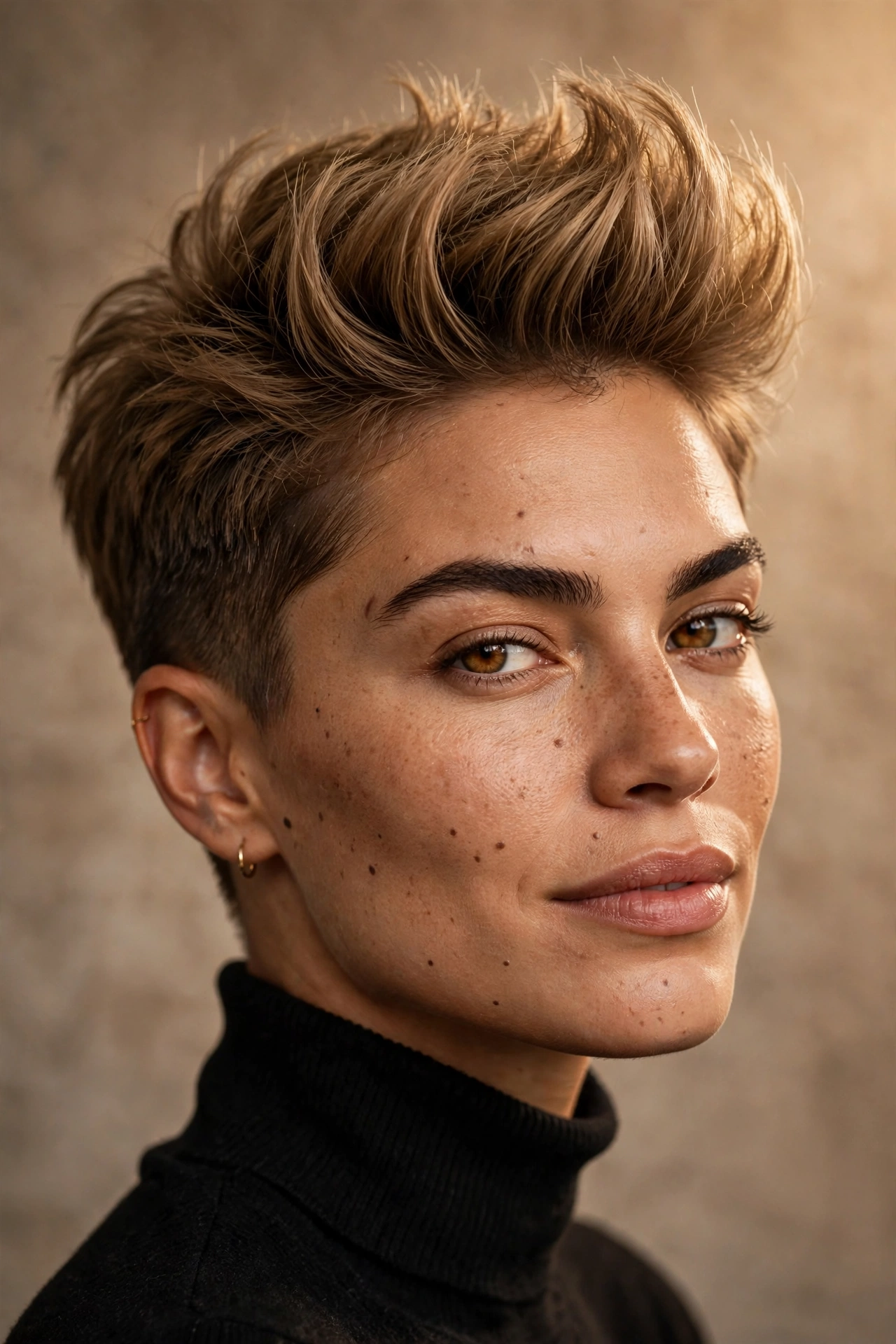
Vibe: Confident — the quiff is a small structural decision that changes the entire energy of a short cut.
A textured quiff on a straight pixie uses the front crown section (approximately 3 inches) directed forward and upward, creating a soft mound of volume at the forehead. On straight hair, the quiff is achieved entirely through blow-drying — directing the root forward and upward with a medium round brush as the dryer follows, then setting with a matte clay or pomade while still warm. Straight hair holds a blow-dried quiff shape through the day without additional product because the heat sets the direction into the shaft.
Ask for "a pixie with a front quiff section — leave the front longer for volume and direction." Blow-dry the front section last, directing it forward and upward from the root; apply a pea-sized matte clay to the warm, just-dried front section and shape with your fingers before it cools.
💡 Quick Win: Press a warm (not hot) dryer against the root of the quiff section for 10 seconds after styling — the focused heat at the root sets the direction in straight hair and the quiff holds through the full day without reapplication.
Shop The Look
| Product | Type |
|---|---|
| Matte clay medium-hold for quiff | Styling |
| Medium round brush for quiff blow-dry | Tool |
| Dual-temperature blow-dryer | Tool |
| Volumising root spray for quiff lift | Styling |
| Flexible hairspray for quiff setting | Styling |
19. Pixie Cut for Fine Straight Hair
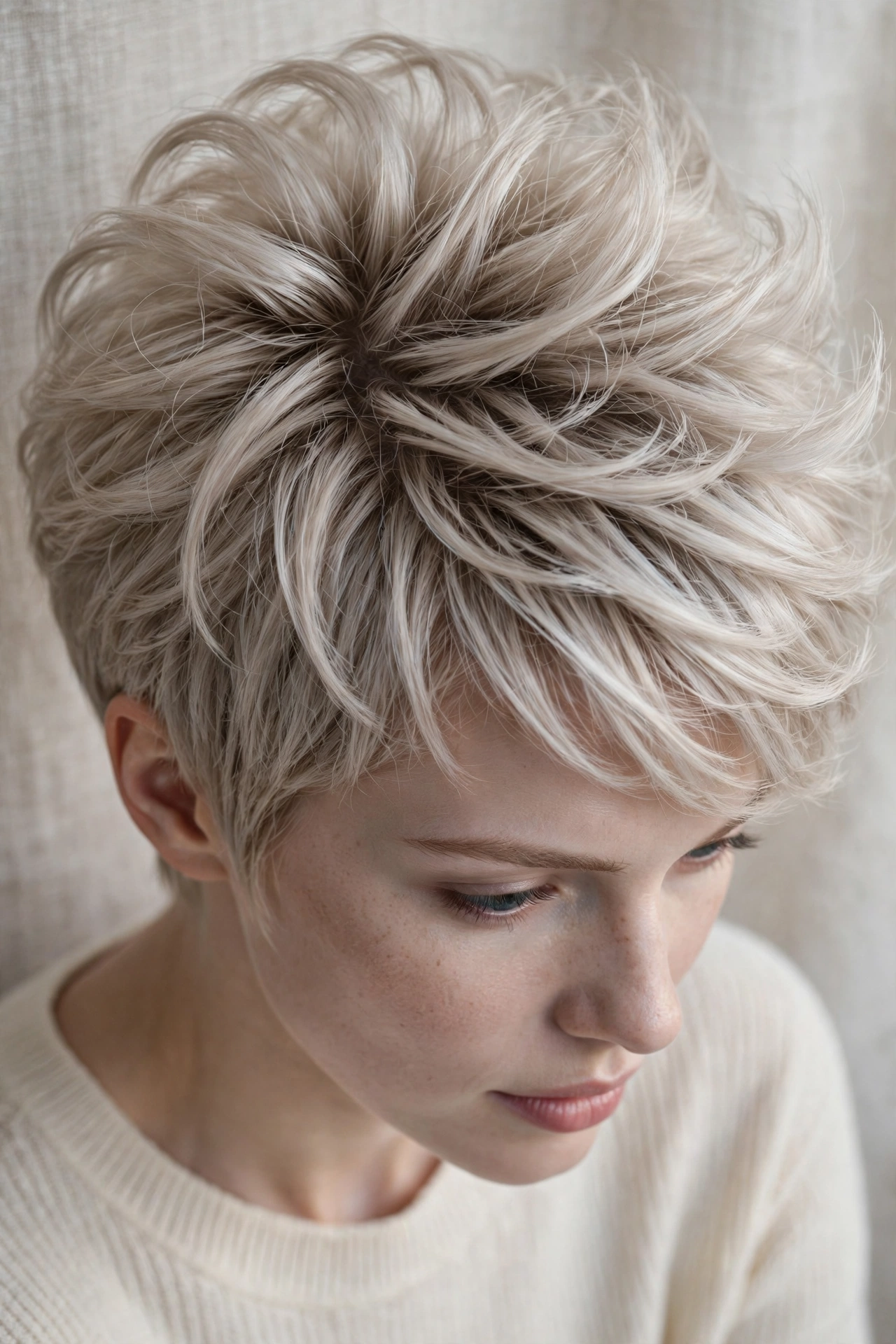
Vibe: Feminine — fine straight hair at pixie length actually appears fuller and more substantial than at any longer length.
Fine straight hair benefits from a pixie cut more than almost any other style because short length removes the weight that pulls fine hair flat and limp. A layered pixie with internal graduation creates the illusion of density — the under-layers cut shorter push the top layers upward, and with no length to pull everything down, even very fine hair achieves visible volume. The blow-dry technique is the finishing multiplier: root-lift spray on damp roots, round brush lifting from underneath, and the dryer directed upward doubles the perceived volume.
Ask for "a pixie with internal layers for fine hair — I want volume, my hair is very thin." Add a root-lift volumising spray to damp roots before blow-drying, then use a medium round brush to roll sections upward from underneath, drying each section completely before moving to the next.
Shop The Look
| Product | Type |
|---|---|
| Root-lift volumising spray fine hair | Styling |
| Thickening shampoo and conditioner set | Haircare |
| Ceramic barrel round brush | Tool |
| Lightweight volumising mousse | Styling |
| Buildable-hold finishing spray | Styling |
20. Pixie Cut with Auburn Highlights
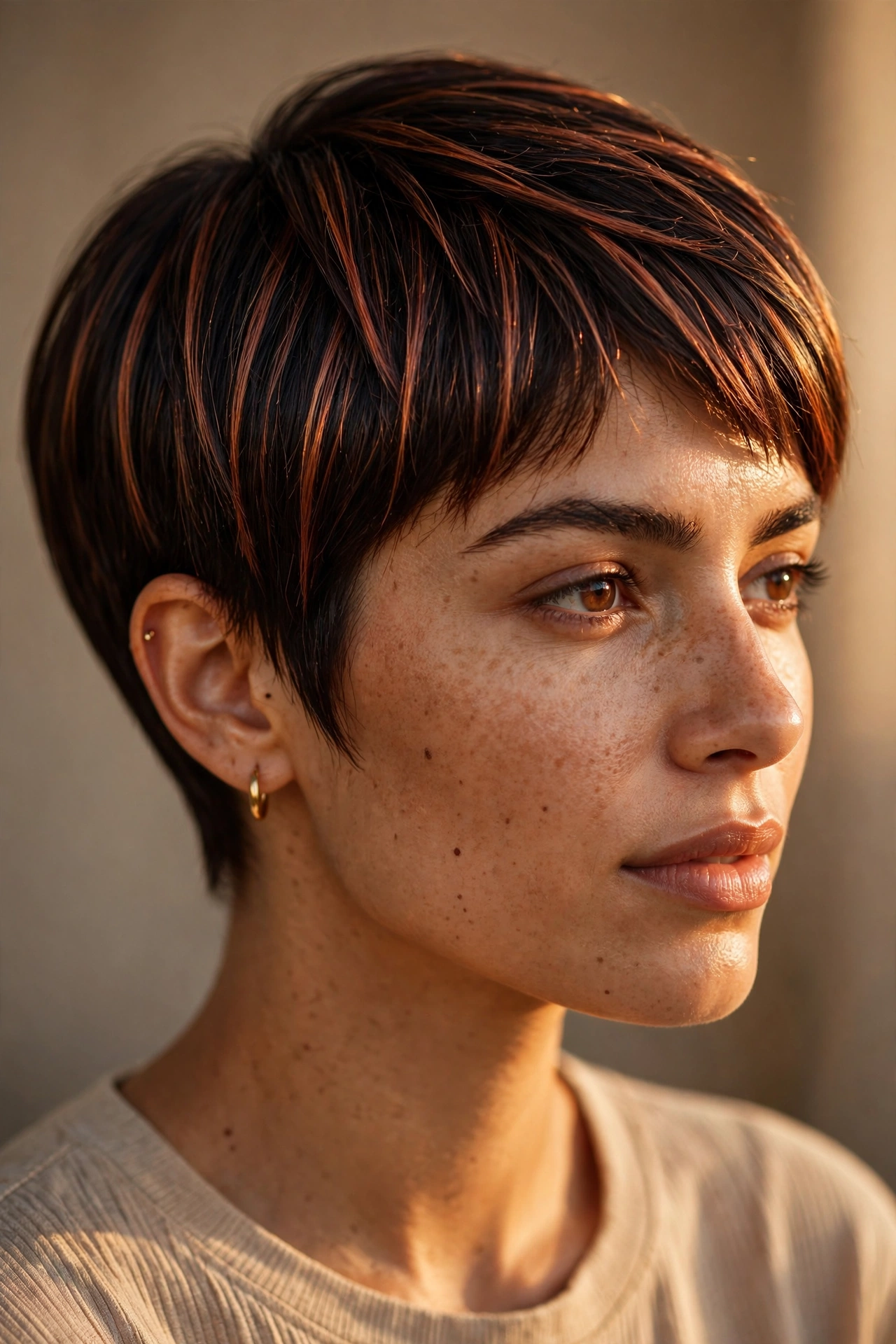
Vibe: Warm — auburn highlights on straight dark hair catch every light source differently as the head moves, creating a liveliness that flat colour can't.
Auburn highlights on straight hair are best applied as foil highlights at the crown and top sections where they're most visible during everyday movement. On straight hair, highlights read as individual luminous strips when the hair lies flat — this is the most graphic and visible way to experience colour on straight hair, more so than on curl where highlights can disappear into the spiral. A balayage application (painting highlights freehand on the surface of sections) creates a more natural, graduated result on straight pixie lengths.
Ask your colourist for "warm auburn highlights through my top section — balayage application, I want them visible when my hair is flat." Use a colour-safe serum with heat protection on highlighted sections before any blow-drying — highlighted straight hair is more porous than virgin hair and benefits from the serum's surface protection.
Shop The Look
| Product | Type |
|---|---|
| Colour-safe heat protecting serum | Styling |
| Sulphate-free colour-protecting shampoo | Haircare |
| Colour-depositing warm brunette conditioner | Haircare |
| Shine-enhancing gloss spray | Styling |
| Weekly repair mask for highlighted hair | Haircare |
21. Pixie with Long Face-Framing Pieces
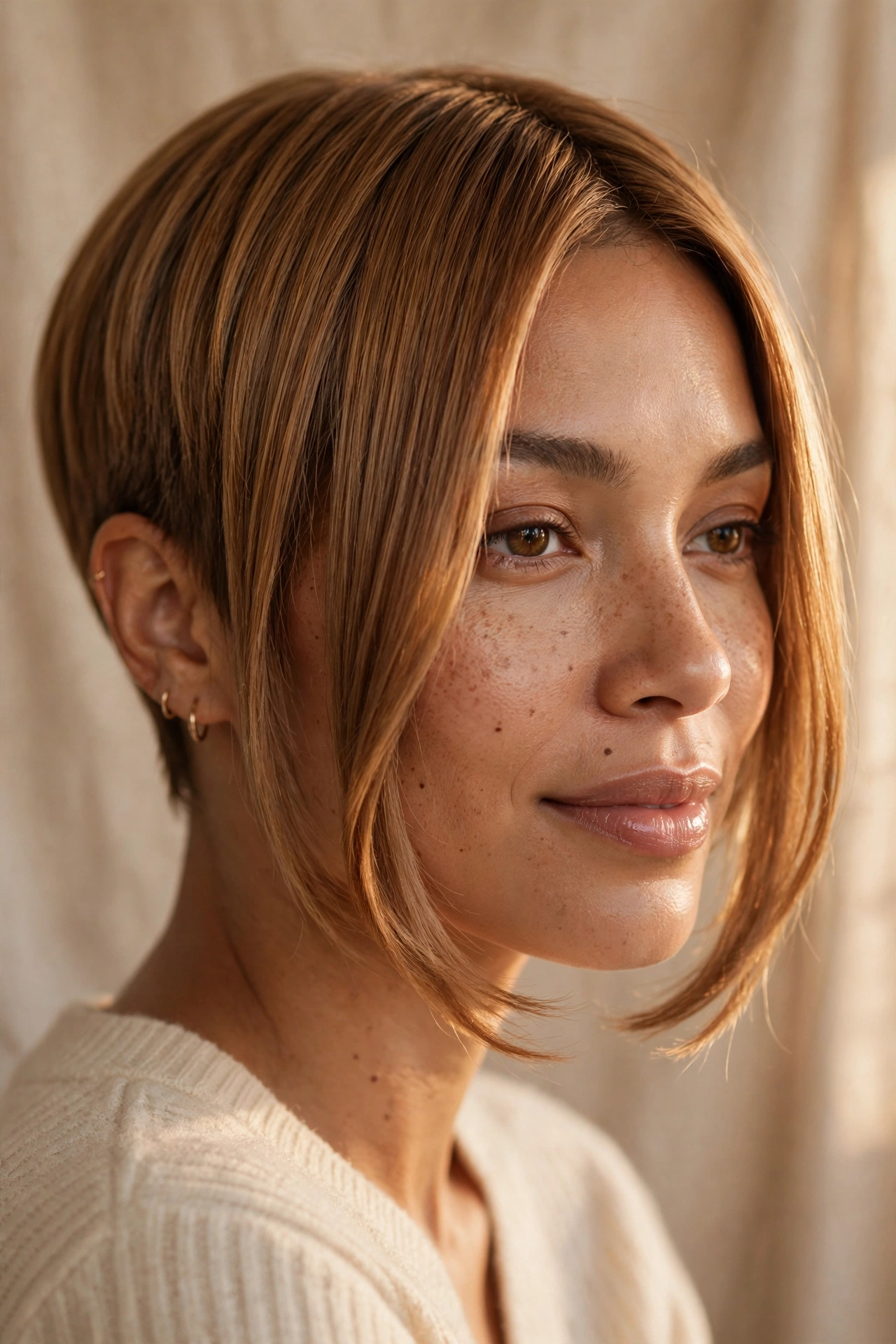
Vibe: Feminine — the face-framing pieces are the element that makes a very short cut feel immediately softer.
Face-framing pieces on a pixie are created by leaving the front sections intentionally longer than the rest of the cut — approximately 3.5–4 inches against a 1.5–2 inch crown and nape. This is a disconnected technique: the length division between the framing pieces and the body of the cut is abrupt rather than graduated. On straight hair, these pieces can be styled flat to frame the cheeks, curled slightly inward with a mini flat iron, or pushed back for a different effect entirely — one cut producing multiple looks.
Ask for "long face-framing pieces on my pixie — keep the front longer, everything else short." To style: apply a tiny amount of smoothing serum to the face-framing pieces only, draw through with a fine-tooth comb, and finish with a mini flat iron tilted inward at the tips for a slight inward curve.
Shop The Look
| Product | Type |
|---|---|
| Mini flat iron for face-framing pieces | Tool |
| Smoothing serum for straight pieces | Styling |
| Fine-tooth tail comb for piece precision | Tool |
| Shine spray for face-framing finish | Styling |
| Heat protectant spray for flat iron use | Styling |
22. Natural Silver Straight Pixie
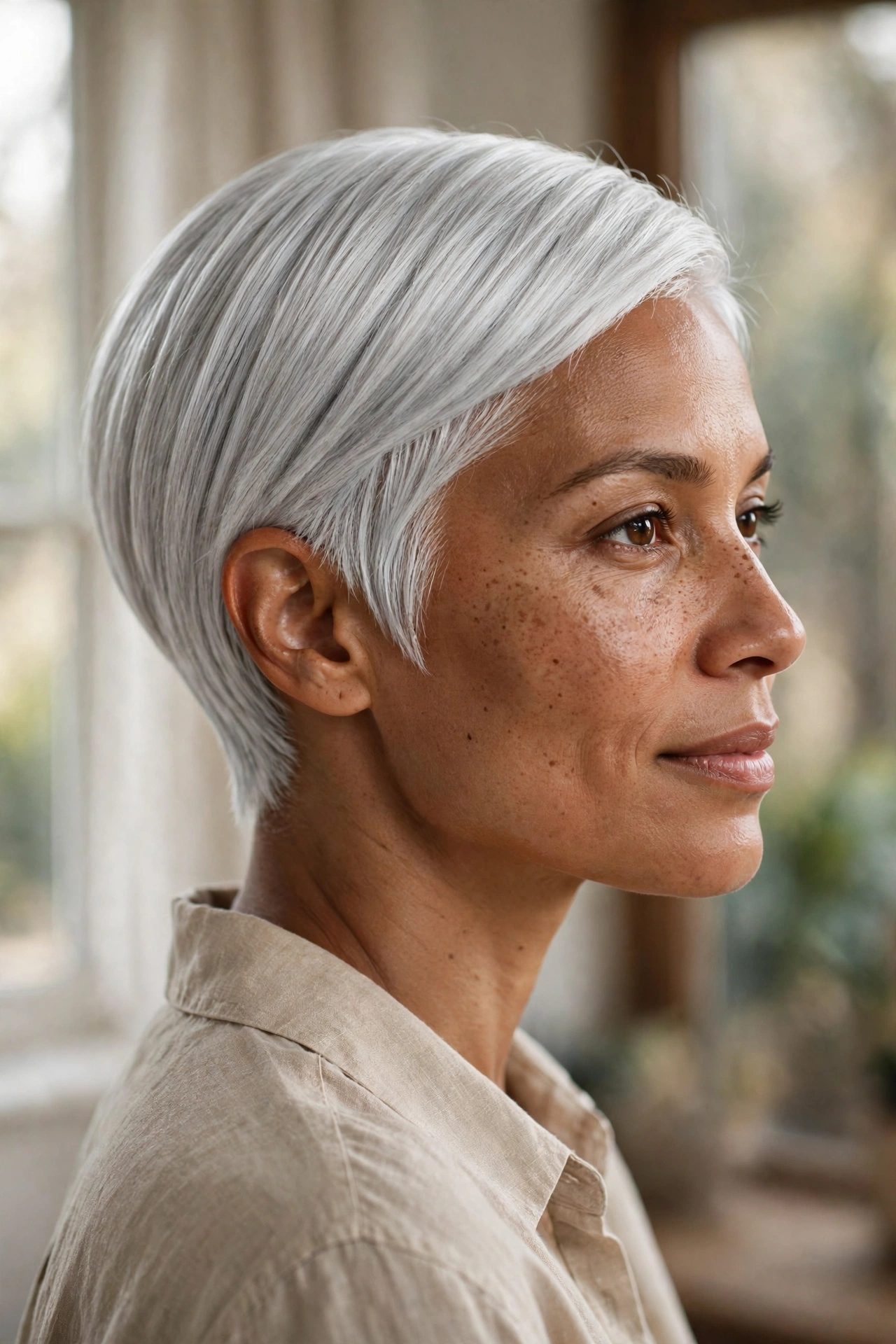
Vibe: Elegant — natural silver straight hair at pixie length is one of the most architecturally precise and visually striking combinations available.
Natural silver straight hair on a pixie cut is a complete aesthetic statement — the high contrast between the bright silver and any darker complexion, and the extreme clarity of colour and line that straight hair produces, creates a look that requires nothing else. Technically, silver and white straight hair tends toward dryness and can develop a yellowish cast, particularly near the ends. A weekly purple-toning shampoo neutralises brassiness, and a silicone-free smoothing serum applied to dry hair maintains the high-shine finish that makes silver straight pixies read as intentional.
Ask for "a sleek silver pixie — smooth taper, I want the cut to show off the silver colour." Apply a silicone-free smoothing serum to dry hair, run a fine-tooth comb through the direction of growth, and finish with a cool shot from the blow-dryer to seal the surface and maximise shine.
💡 Quick Win: A cool water rinse as the final step when washing silver straight hair seals the cuticle completely flat, producing more surface shine than any product — the cooler the rinse water, the higher the reflectivity of the strand.
Shop The Look
| Product | Type |
|---|---|
| Purple/silver toning shampoo | Haircare |
| Silicone-free smoothing serum | Styling |
| Shine-enhancing fine mist spray | Styling |
| Silver-enhancing purple conditioner | Haircare |
| Boar bristle smoothing brush | Tool |
23. Pixie Cut with Peek-a-Boo Colour Underneath
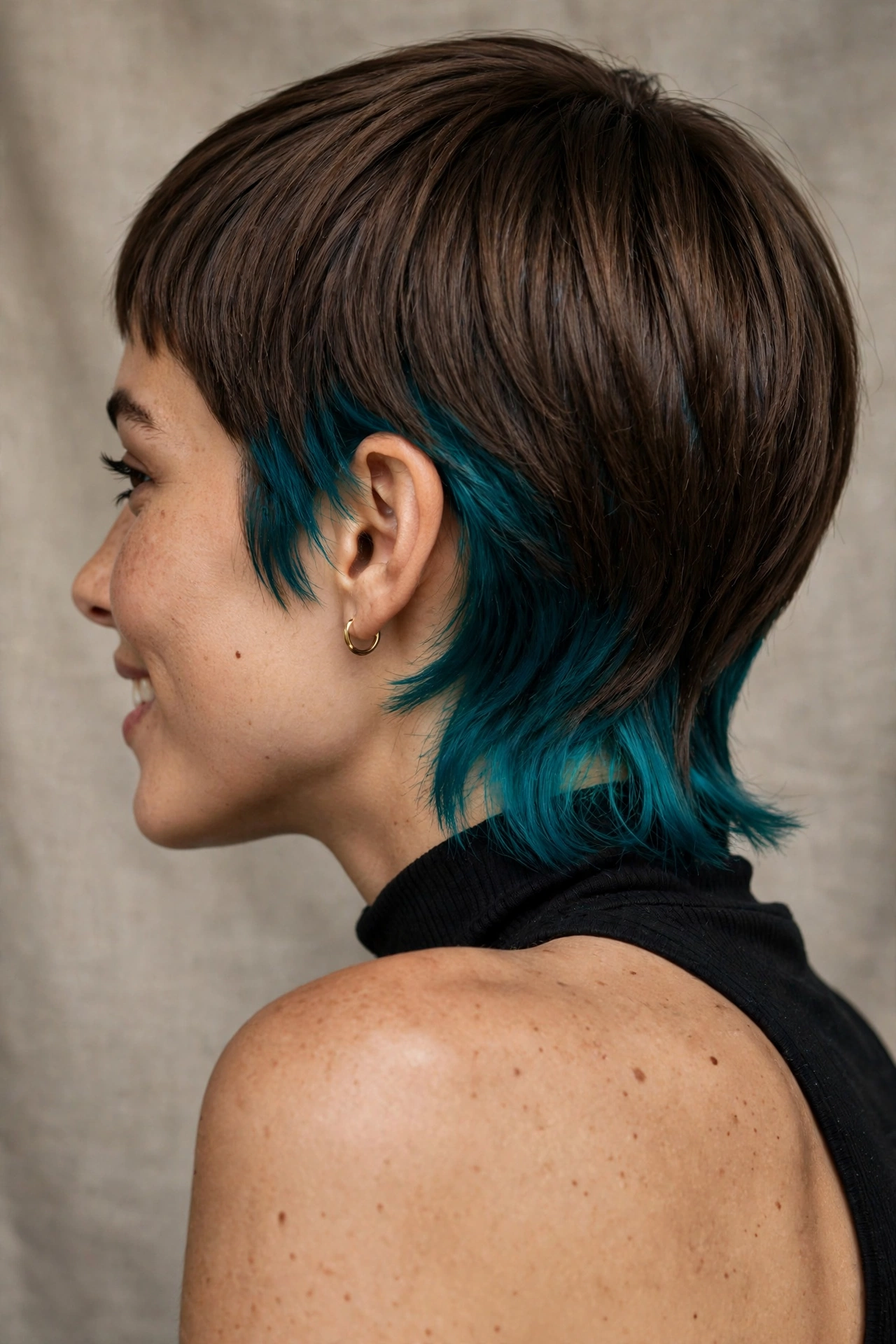
Vibe: Playful — a hidden colour is a secret the cut keeps until the light or angle reveals it.
Peek-a-boo colour on a straight pixie places a vivid or contrasting colour on the under-layer (the section that would be buzzed in an undercut) while leaving the top layer in the natural or base colour. On straight hair, the top layer lies flat over the coloured section at rest, but the colour becomes visible when the head moves, the wind blows, or the hair is pushed aside. The contrast between natural and vivid reads as deliberate editorial choice rather than a full commitment to bright colour — it's removable, low-commitment, and surprising.
Ask your colourist for "peek-a-boo colour on my underlayer — [vivid colour] under my natural base, I want it to show only when my hair moves." Vivid under-colours need refreshing every 4–6 weeks as they fade faster than natural-toned colours, particularly on the porous under-section.
Shop The Look
| Product | Type |
|---|---|
| Vivid colour-depositing conditioner (teal/burgundy) | Haircare |
| Colour-safe sulphate-free shampoo | Haircare |
| Colour-sealing shine spray | Styling |
| Deep conditioning mask for vivid-treated hair | Haircare |
| UV colour-protect hair mist | Styling |
24. Pixie Cut for Square Face Shapes
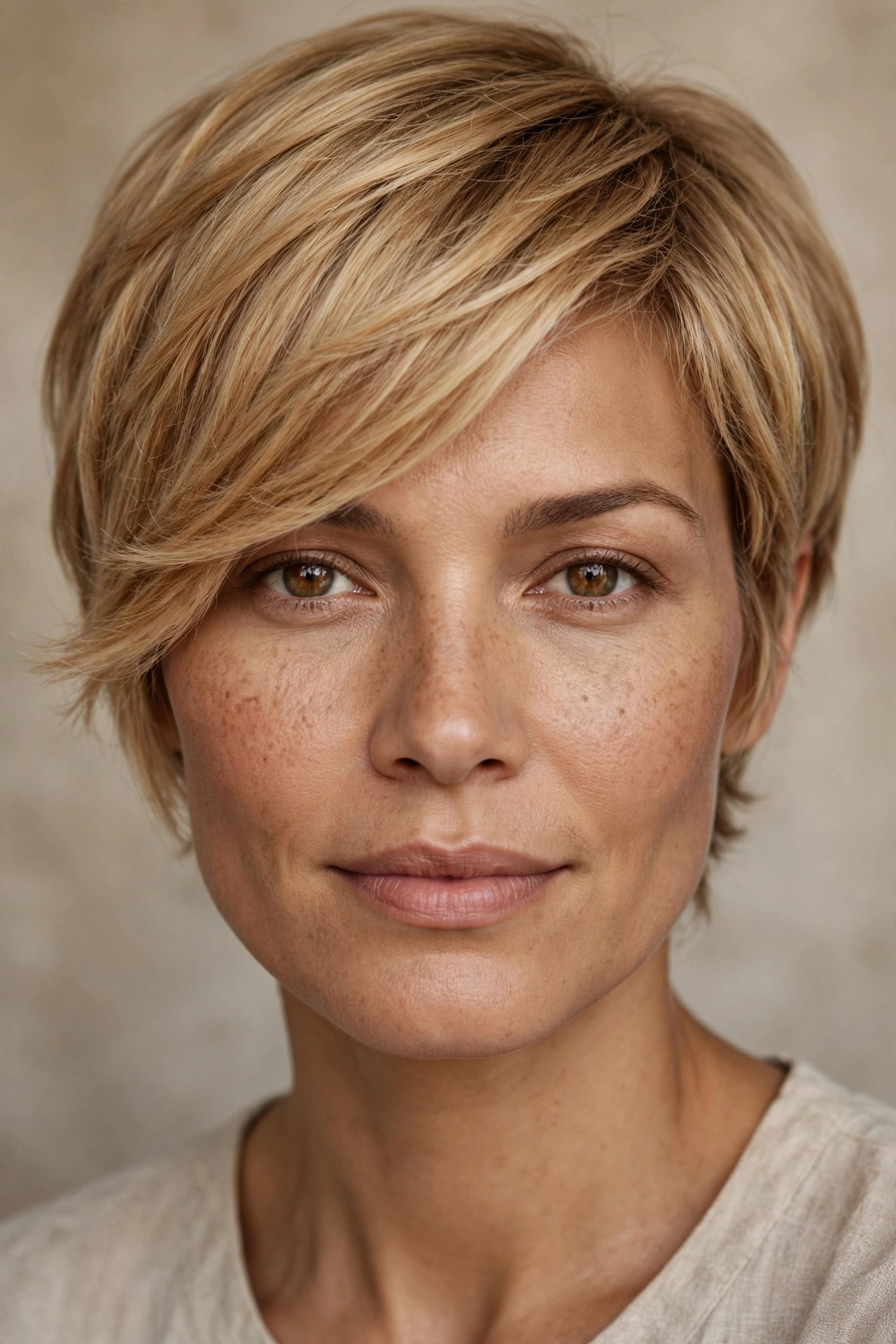
Vibe: Balanced — this version avoids anything that reinforces the jaw's geometry and adds everything that softens it.
Square face shapes have prominent, even jawlines — a pixie cut for square faces works best when it introduces softness and asymmetry rather than additional geometric precision. Specifically: avoid blunt horizontal lines (blunt fringe, hard part) which echo the jaw's angularity, and instead choose soft layering at the temples, a side sweep to break the symmetry, and a fringe that falls at an angle rather than straight across. A slight side-swept top with face-framing pieces at cheekbone level is the most flattering combination for square jaw structures.
Ask for "a softly layered pixie for a square face — I want a side sweep and no hard horizontal lines." Blow-dry with a round brush directing the top section gently to one side and the temples softly toward the face — the movement and asymmetry the blow-dry creates is the styling principle.
Shop The Look
| Product | Type |
|---|---|
| Softening curl wand (light wave for straight) | Tool |
| Light-hold flexible styling cream | Styling |
| Small round brush for temple softening | Tool |
| Featherweight anti-frizz spray | Styling |
| Silk sleep cap for shape preservation | Accessory |
25. Classic French Crop Pixie
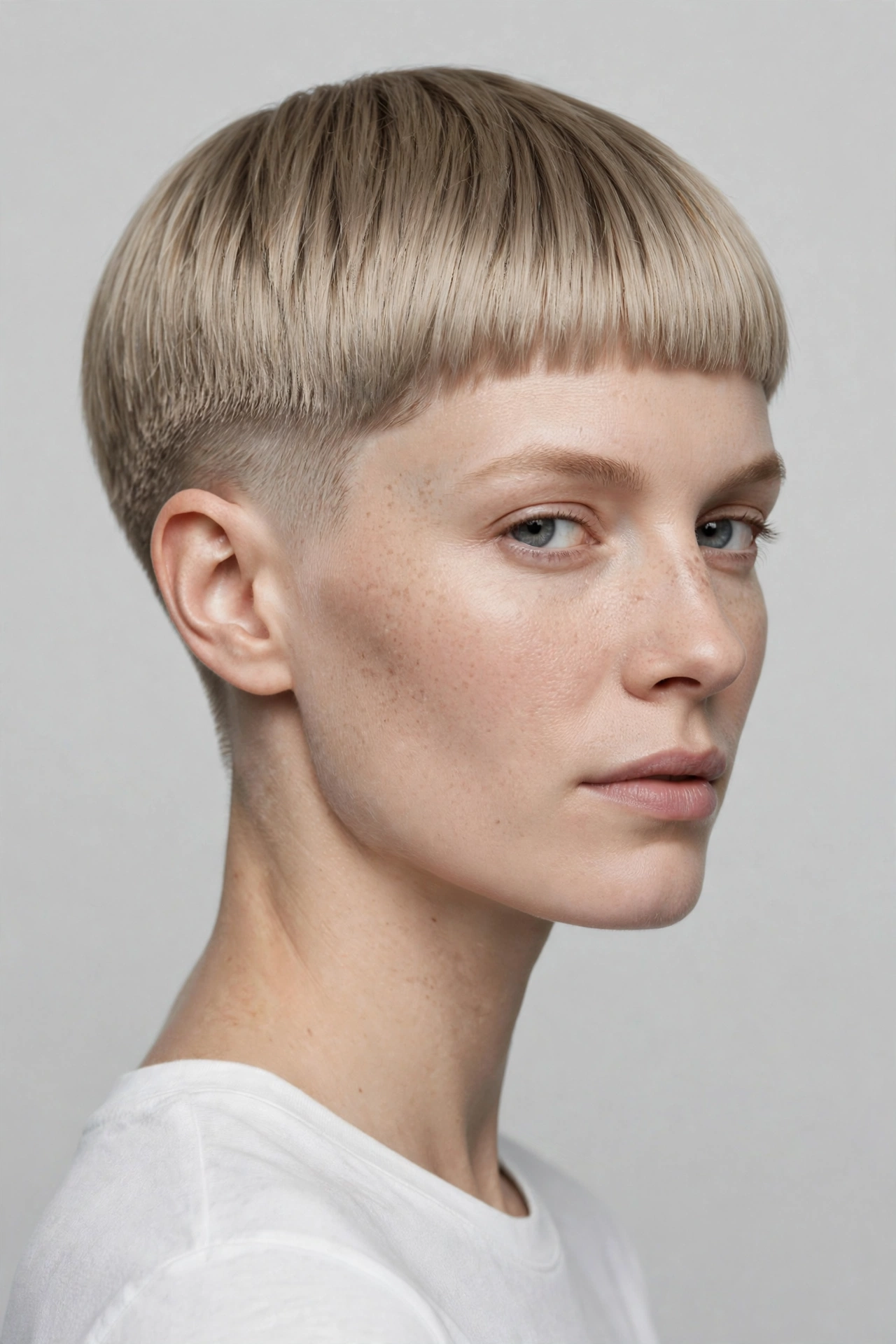
Vibe: Clean — the French crop on straight hair is minimal styling elevated to an aesthetic.
The French crop pixie positions a forward-falling fringe (rather than a swept-back crown) as the style's defining feature — the fringe lies flat and straight across the forehead at mid-brow, while the sides are faded or tapered close (1-guard) and the nape is clean. On straight hair, the fringe lies perfectly horizontal and flat without product, making this the lowest-maintenance structured style on the list. The entire styling routine is a wash, a light serum on damp hair, and air-dry — the cut holds itself.
Ask for "a French crop — forward-falling horizontal fringe, close taper on the sides, clean nape." Apply a single drop of lightweight serum to damp hair, comb the fringe forward, and let it air dry — no blow-dryer needed for this style on straight hair.
💡 Quick Win: The fringe of a French crop should be cut bone dry — always ask your stylist to cut it dry at the appointment, and trim it at home with small scissors against a horizontal comb, cutting at the comb line to maintain the clean horizontal edge.
Shop The Look
| Product | Type |
|---|---|
| Lightweight anti-frizz drop serum | Styling |
| Small hair scissors for fringe trim | Tool |
| Fine-tooth horizontal fringe comb | Tool |
| Gentle daily shampoo | Haircare |
| Satin pillowcase for fringe protection | Accessory |
26. Pixie with Slicked-Back Crown
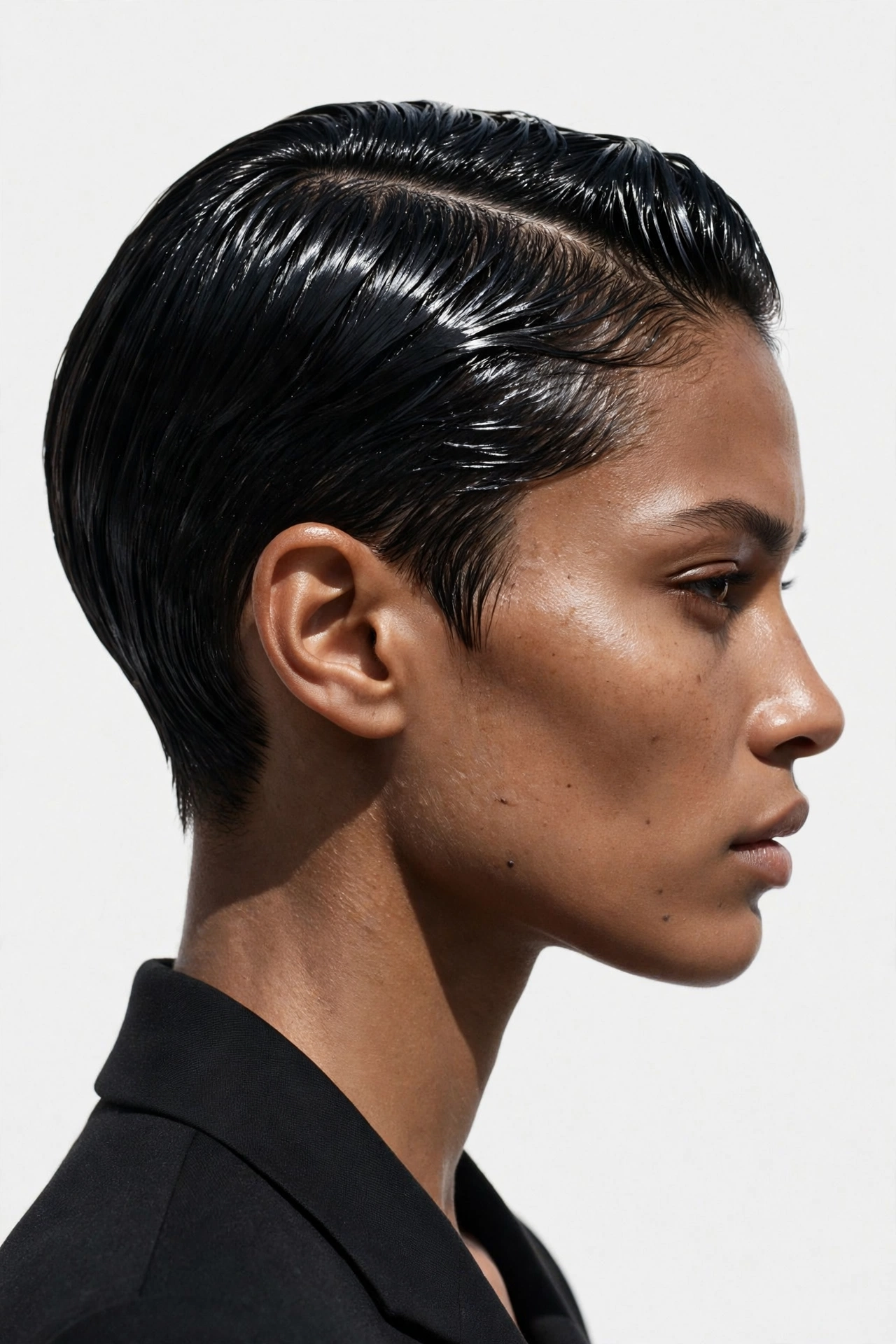
Vibe: Editorial — slicked-back straight hair at pixie length is the most architecturally graphic finish available.
A slicked-back crown on a straight pixie uses a high-shine, strong-hold water-based pomade or gel applied to damp hair, combed backward from the forehead in the direction of growth, and set with a cool shot from the blow-dryer to fix the direction. On straight hair, this finish holds rigidly and produces maximum surface reflectivity — the pomade's shine and the straight hair's flat surface together create a mirror-quality finish. The side taper must be close (1-guard) so the contrast between the slick top and the clean sides reads as intentional.
Ask for "a taper pixie with a slick-back finish — close sides, I want the top to go straight back." Apply a strong-hold pomade to damp (not dry) hair, rake through with a fine-tooth comb from forehead backward, then blow-dry on cool setting to set the direction without adding lift.
Shop The Look
| Product | Type |
|---|---|
| Strong-hold water-based high-shine pomade | Styling |
| Fine-tooth pomade comb | Tool |
| Shine-enhancing finish spray | Styling |
| Clarifying shampoo for pomade removal | Haircare |
| Cool-shot blow-dryer for setting | Tool |
27. Effortless Air-Dried Pixie
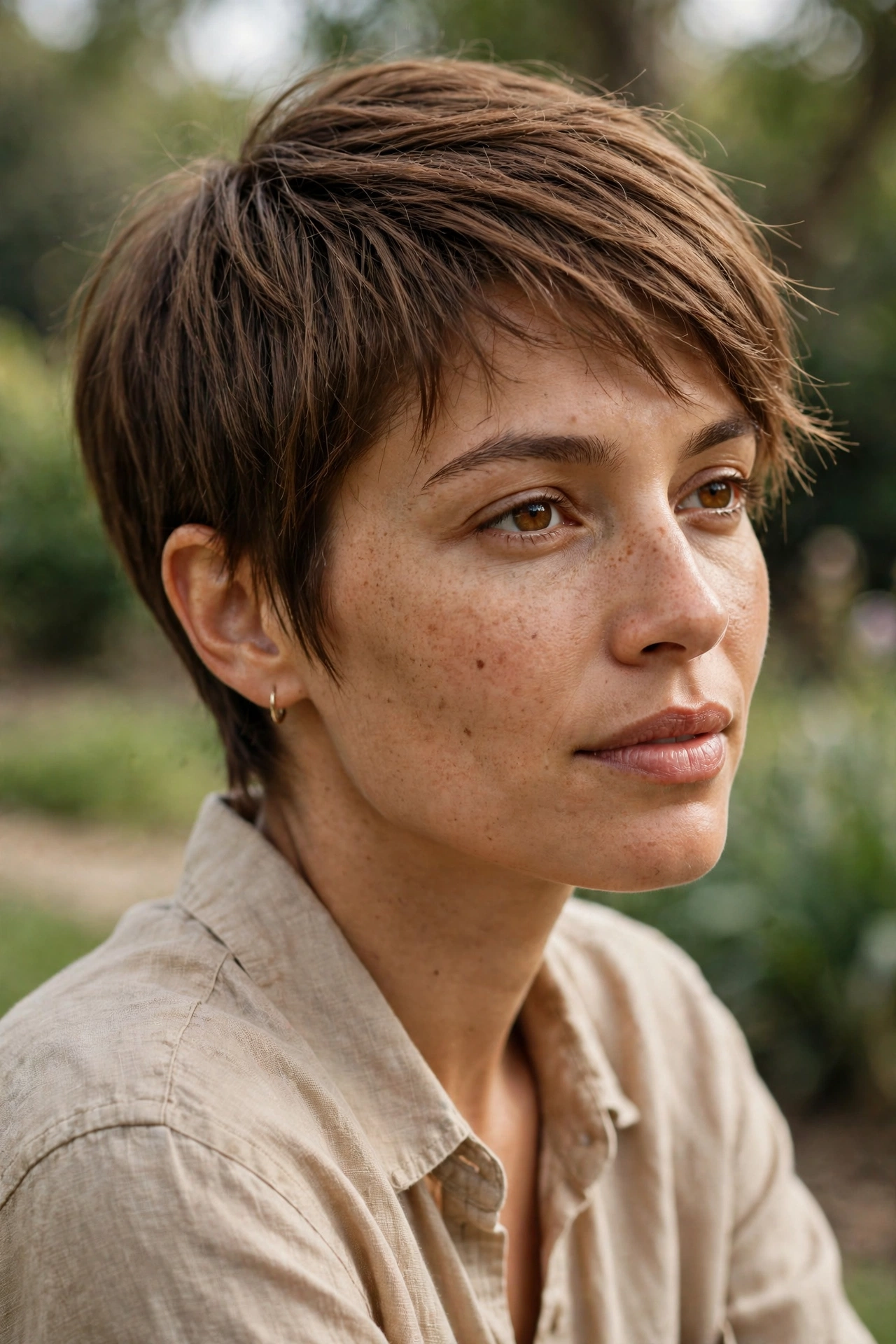
Vibe: Natural — the air-dried straight pixie is the version for people who want the style to work completely on its own.
An air-dried straight pixie requires a cut precision-designed for the hair's natural growth pattern — the stylist must identify the natural part, the natural flow of the hair at the crown, and any cowlicks or resistant areas, then cut specifically around them so the result air-dries predictably into shape. This is the opposite of a high-maintenance cut: zero blow-drying, zero product required after washing if the cut is done correctly. The result looks like the hair simply wants to be where it is.
Ask for "a pixie designed to air-dry cleanly — cut around my natural growth pattern, I don't want to style it." After washing, apply a tiny amount of lightweight anti-frizz serum to damp hair, comb once in the natural direction, and leave completely undisturbed until dry.
Shop The Look
| Product | Type |
|---|---|
| Featherweight anti-frizz air-dry serum | Styling |
| Gentle sulphate-free everyday shampoo | Haircare |
| Lightweight daily conditioner | Haircare |
| Microfibre press-dry towel (no frizz) | Accessory |
| Silk pillowcase for shape preservation | Accessory |
How to Ask Your Stylist for Feminine Pixie Cuts for Straight Hair
The single best first move is to arrive at your appointment with two reference photos — one showing the overall silhouette you want, and one close-up of the nape or fade detail if you want any shaved or tapered elements. On straight hair, small details show exactly as cut, so precision in the consultation prevents surprises. The most important thing to communicate is the finish you want: smooth and sleek requires different tools and products than textured and choppy, and your stylist needs to know which direction before picking up scissors.
The most common mistake when requesting a straight pixie is asking for a length based on how it looks in a reference photo without accounting for the model's hair density and growth pattern. Straight hair with different density or a strong cowlick will fall differently at the same measured length. The fix is to ask your stylist to dry-cut the fringe or face-framing sections first — seeing the effect on your specific hair before committing to the full cut prevents the most common length regrets.
For under $20, three products that deliver immediate impact: a 2oz tin of matte styling clay with a medium-strong hold (widely available from brands like American Crew or Layrite for approximately 14–18) for textured finishes, a volumising root-lift spray (approximately 8–12) for fine straight hair that needs lift, and a mini travel flat iron (approximately 15–18) for fringe touch-ups and face-framing piece control.
A straight pixie with no shaved elements needs professional trimming every 6–8 weeks to maintain its shape. Styles with temple fades, nape fades, or defined hairlines need those specific elements touched up every 2–3 weeks — either at a barbershop or with a personal clipper on the 0–1 guard setting at home. Budget 45–90 per appointment at a specialist salon; general salons typically charge 30–60 but may be less familiar with precision fade work.
Frequently Asked Questions About Feminine Pixie Cuts for Straight Hair
What makes a pixie cut specifically suited to straight hair?
Straight hair holds the precise lines and angles of a pixie cut without curl pattern softening or obscuring the shape — every graduation, taper, and layer the stylist creates stays exactly visible, making straight-hair pixies the most architecturally precise short cuts possible. Straight hair is also the most responsive to directional styling: pomade, wax, or blow-drying trains straight hair into a specific direction immediately and reliably. The limitation is that straight hair cannot create its own volume or texture from the cut alone — layering, internal graduation, and styling products must do that work instead.
Does a pixie cut work on fine straight hair?
A pixie cut is one of the best possible styles for fine straight hair. Removing length eliminates the weight that pulls fine hair flat and limp, and a layered internal graduation creates the appearance of density without adding actual hair mass. Fine straight hair at pixie length appears substantially thicker and fuller than the same hair at any longer length, because there's no weight dragging the strands flat. The key is a volumising blow-dry technique — root-lift spray, round brush lifting from underneath, and a dryer directed upward — which multiplies the perceived volume further.
How much does a pixie cut for straight hair cost?
A precision pixie cut for straight hair at a specialist salon or high-end barbershop typically costs 60–110 in the US and £50–£85 in the UK for the initial shaping appointment. General salons charge 30–60 but may produce less precise results on cuts that depend entirely on cutting precision rather than curl pattern to create shape. If your style includes faded or shaved elements, maintenance visits every 2–3 weeks for those details cost 20–40 per touch-up session. The full cut and colour combination (highlights, platinum, or colour-block) runs 120–200+ depending on the service complexity.
How often does a straight pixie cut need trimming to maintain its shape?
A clean straight pixie cut without shaved elements needs professional trimming every 6–8 weeks. Straight hair grows at approximately ½ inch per month, and after 8 weeks the taper and crown proportion begins to lose definition. Styles with temple fades, nape fades, defined hairlines, or undercut sections need those shaved elements refreshed every 2–3 weeks — straight hair growth at these sections is immediately visible because the hair lies flat and shows the growing-in length starkly. Daily styling at home requires only 5–10 minutes with the right products.
What is the best product for styling a straight pixie cut?
The best product depends entirely on the finish you want. For a sleek, polished finish, a high-shine water-based pomade (work a pea-sized amount between palms, smooth over dry hair in growth direction, finish with a fine-tooth comb) produces the cleanest result. For a textured, separated finish, a matte clay or paste (apply to towel-dried hair, work through with fingers, blow-dry with no brush) creates the most natural-looking movement on straight hair. For a volume finish on fine hair, a root-lift volumising mousse applied to wet roots before blow-drying is the single most impactful product in the routine.
Ready to Try Feminine Pixie Cuts for Straight Hair?
These 27 ideas cover the full spectrum of what straight pixies can be — from the extreme precision of a skin fade temple cut to the relaxed naturalness of an air-dried crop, from slicked-back editorial boldness to soft curtain fringe femininity, with colour variations, face-shape adaptations, and low-maintenance options throughout. Finding the right version typically takes two appointments — the first gives you the shape, and the second refines it once you've lived with it and understand what you want more or less of. Start today by saving one image that immediately felt right — that instinctive reaction is usually more accurate than a careful analysis. Once the cut fits you, there's a particular clarity that straight pixies deliver that no longer style matches — the face fully visible, every line intentional, nothing accidental. Pin your favourites and come back to this list each season — the best straight pixie is often the one you discover after you've already tried two others.