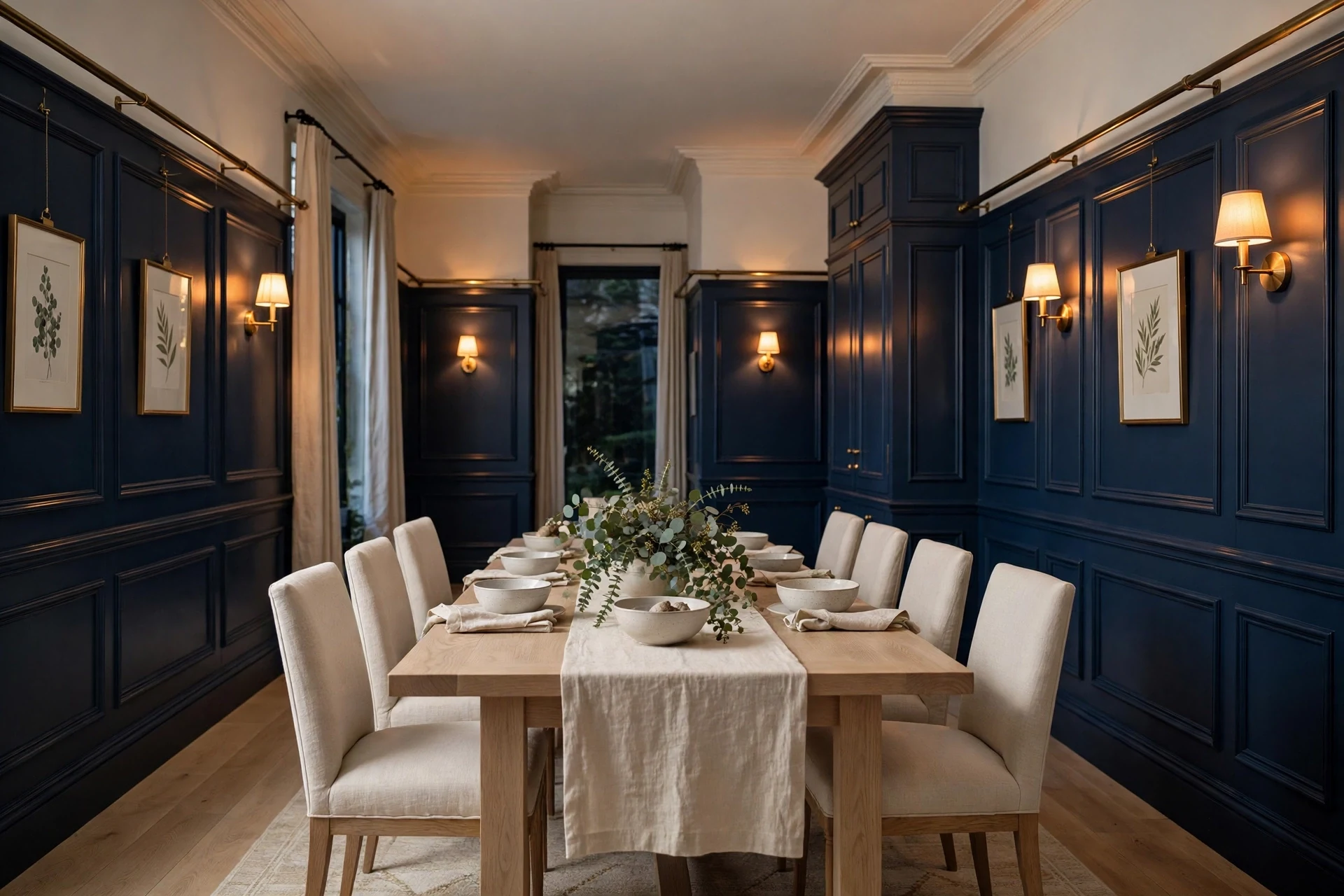
Raised panel wainscoting is traditional wall panelling built from bevelled centre panels framed by stiles, rails, and a chair rail, and these raised panel wainscoting ideas show how it adds real architectural depth to plain walls. This guide collects exactly 33 ideas covering colour, timber, lighting, furniture, and small-space layouts for every room. Run a hand along the bevel and you feel shadow, weight, and craft. Late light rakes across each frame, turning a flat hallway into a quiet gallery. The room sounds softer, looks older, and feels deliberately finished. Here are 33 ideas worth saving — and stealing.
Why Raised Panel Wainscoting Works So Well
Raised panel wainscoting began in 17th- and 18th-century English and Colonial American interiors, where solid timber panels insulated stone walls and protected plaster from chair backs. Unlike flat Shaker-style panelling, each centre panel is bevelled and raised, creating shadow lines borrowed from Georgian joinery and cabinet doors.
Build it from paint-grade poplar, MDF panel moulding, white oak, or walnut, capped with a 3-inch chair rail. Classic colours include Benjamin Moore 'White Dove', Farrow & Ball 'French Gray', deep navy, and Studio Green, usually in satin or eggshell over matte upper walls.
It is trending now because renters and renovators alike want character that new-build rooms lack, and social feeds reward shadow and texture over flat paint. Pre-primed panel moulding kits from Lowe's and Ekena Millwork have cut installation from days to a weekend.
Small spaces cope well if you keep panels below 42 inches, use one colour top to bottom, and choose narrow 2-inch stiles. A powder room or short hallway gains structure without bulk, provided doors and outlets are mapped before anything is cut.
| Element | Traditional Craft | Modern Use |
|---|---|---|
| Philosophy | Georgian proportion and permanence | Character added to plain rooms |
| Materials | Solid poplar and white oak | Pre-primed MDF and PVC kits |
| Color palette | White Dove and warm white | Hale Navy and Studio Green |
33 Raised Panel Wainscoting Ideas
1. Hale Navy Raised Panel Wainscoting for a Dining Room
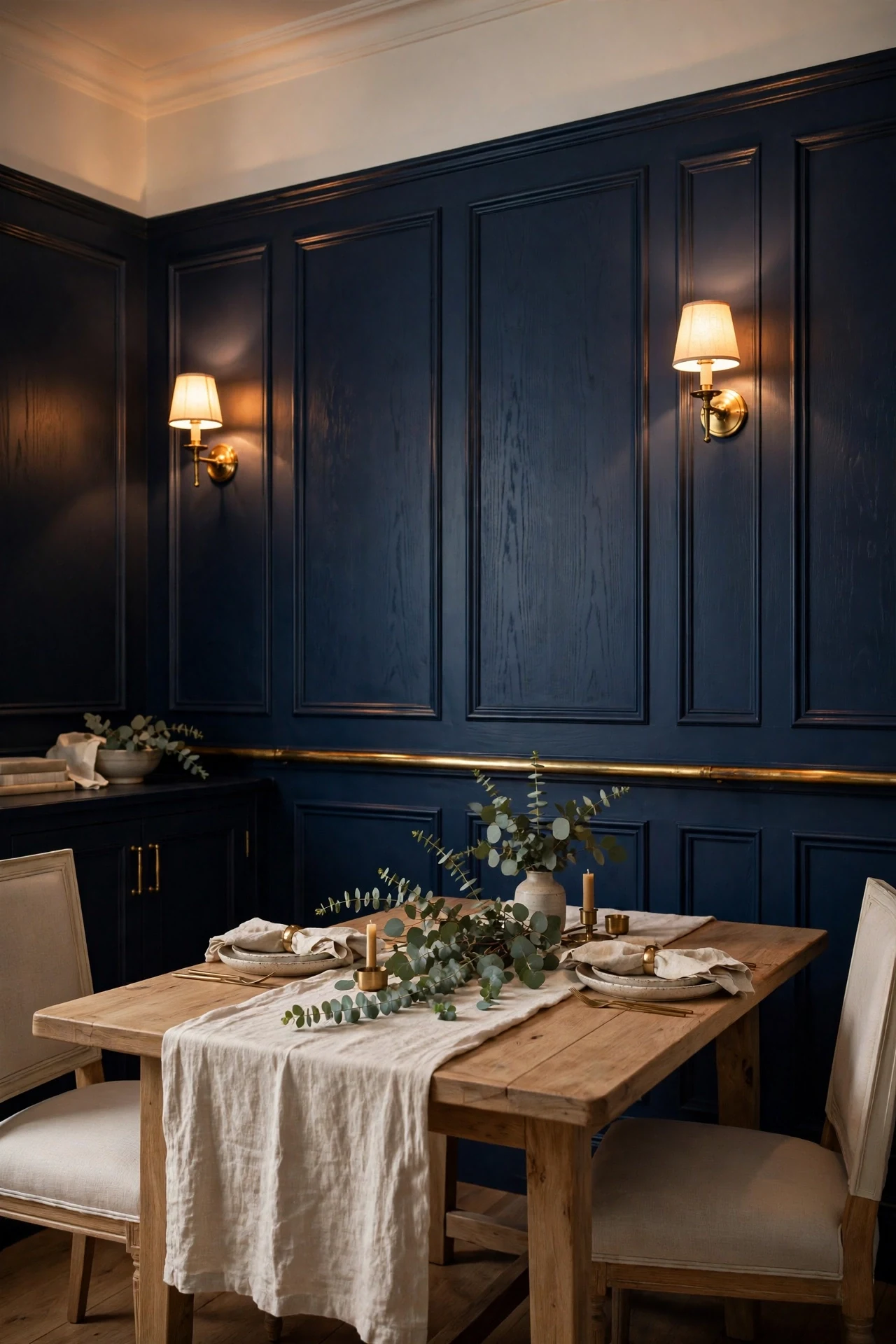
Vibe: hushed, grounded, and candle-warm at dusk.
Why it works: proportion balances tall ceilings. Contrast between Benjamin Moore 'Hale Navy' poplar and matte white plaster deepens the room without extra furniture.
How to get it: spray panels satin 'Hale Navy' for a brush-free finish. Keep upper walls flat matte.
💡 Quick Win: paint one sample panel first; navy reads darker indoors.
2. White Oak Panels in a Calm Entryway
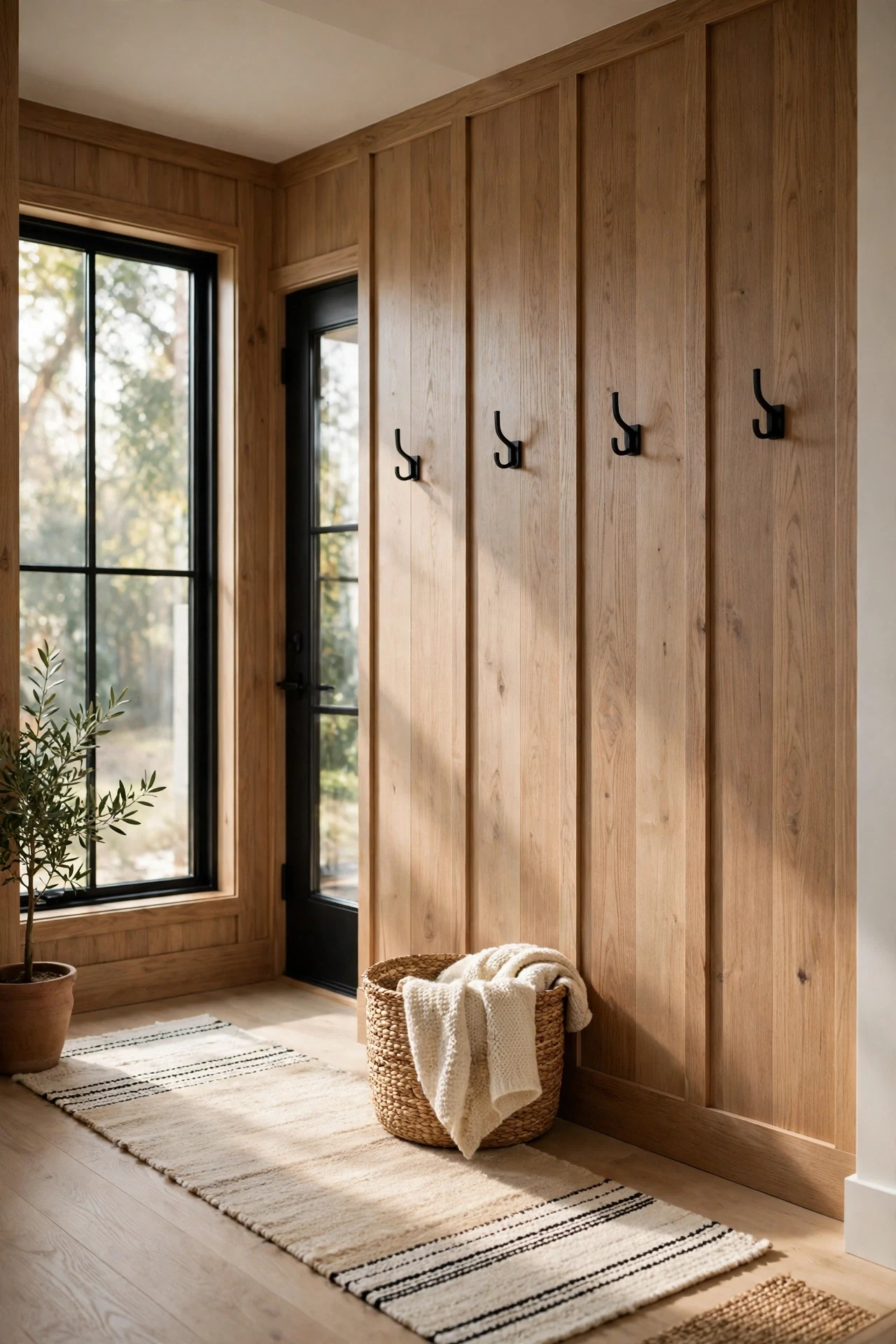
Vibe: sun-warmed timber greets you at the door.
Why it works: texture layering does the decorating. White oak grain against smooth plaster adds warmth while the horizontal rail organises coats and bags visually.
How to get it: finish oak with Rubio Monocoat 'Pure' hardwax oil. Seal before hanging anything against it.
3. Brass Sconces Between Hallway Panels
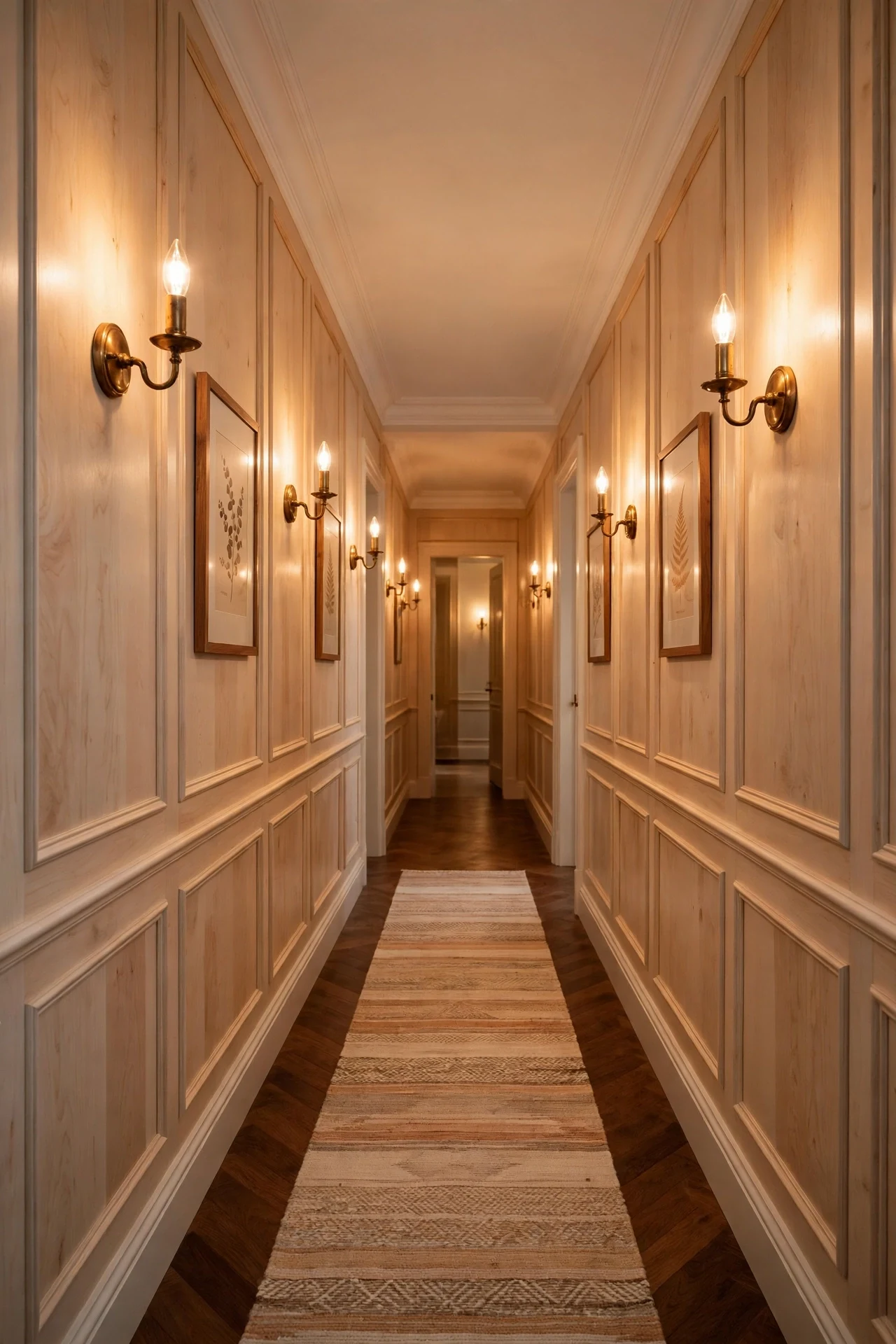
Vibe: luminous pools of light pull you forward.
Why it works: rhythm is the principle here. Repeating sconces centred on each stile create even light that grazes bevels and doubles their shadow.
How to get it: wire sconces 66 inches from the floor, centred on stiles. Use 2700K dimmable bulbs.
💡 Quick Win: battery puck sconces test placement before wiring.
4. A Low Linen Sofa Against Tall Living Room Panels
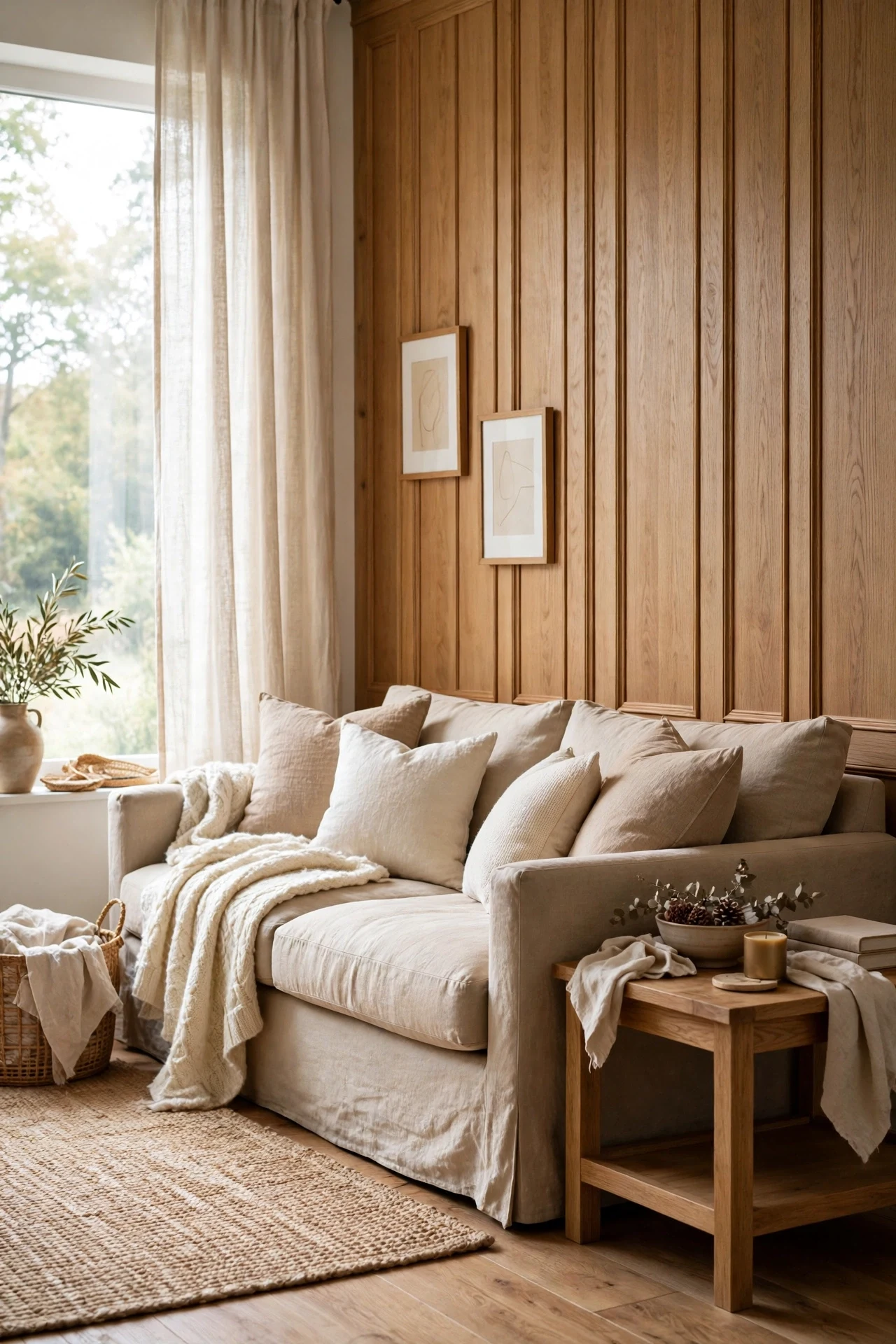
Vibe: layered, quiet, and settled for long evenings.
Why it works: visual weight anchors the seating zone. Tall panels behind a low-profile sofa in undyed Belgian linen stop the furniture floating against blank walls.
How to get it: stop panels 24 inches above sofa-back height. Leave 8 inches clearance behind the frame.
5. Botanical Prints Above a Bedroom Chair Rail

Vibe: still, green, and garden-quiet before waking.
Why it works: negative space keeps it restful. One row of framed botanical prints above the rail echoes panel geometry without competing with the bevelled frames below.
How to get it: hang print centres 58 inches high, aligned to panel centres. Use IKEA Ribba frames painted brass.
💡 Quick Win: free printable botanicals from public-domain archives fill frames cheaply.
6. Panels That Follow the Staircase Rake
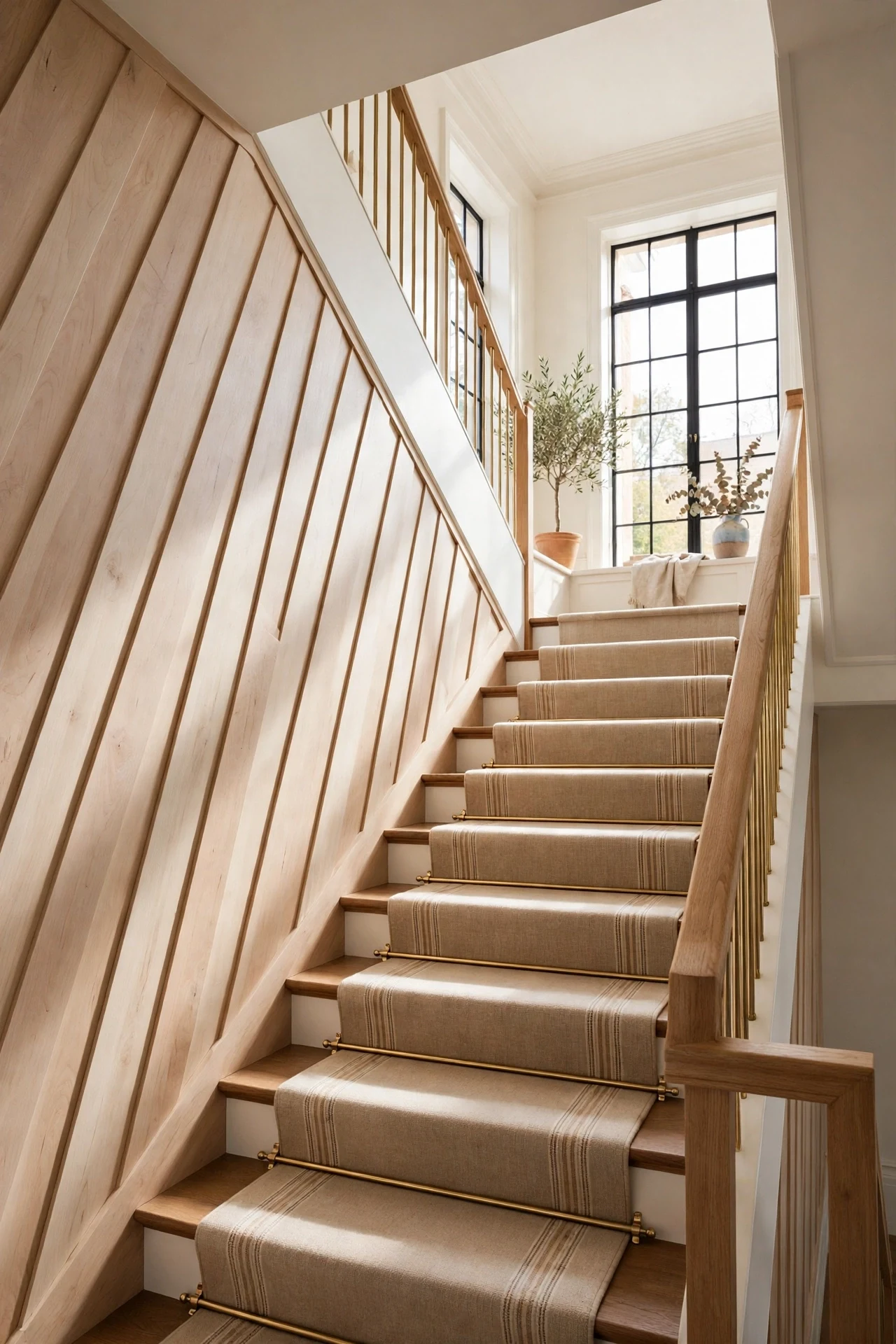
Vibe: grounded movement, rising step by step.
Why it works: line carries the eye upward. Panels cut on the rake mirror the handrail angle, turning an awkward slope into the home's strongest sightline.
How to get it: template each angle with cardboard before cutting poplar. Match rail height to the landing rail exactly.
7. Half-Height Panels in a Tiny Powder Room

Vibe: hushed and jewel-like, a small hidden room.
Why it works: scale illusion makes it feel taller. Half-height panels at 36 inches leave breathing room above while protecting splash zones behind the pedestal sink.
How to get it: use PVC panel moulding here, never raw MDF. Caulk every joint with Kwik Seal.
💡 Quick Win: one colour on panels and walls hides size completely.
8. French Gray Raised Panel Wainscoting in the Kitchen
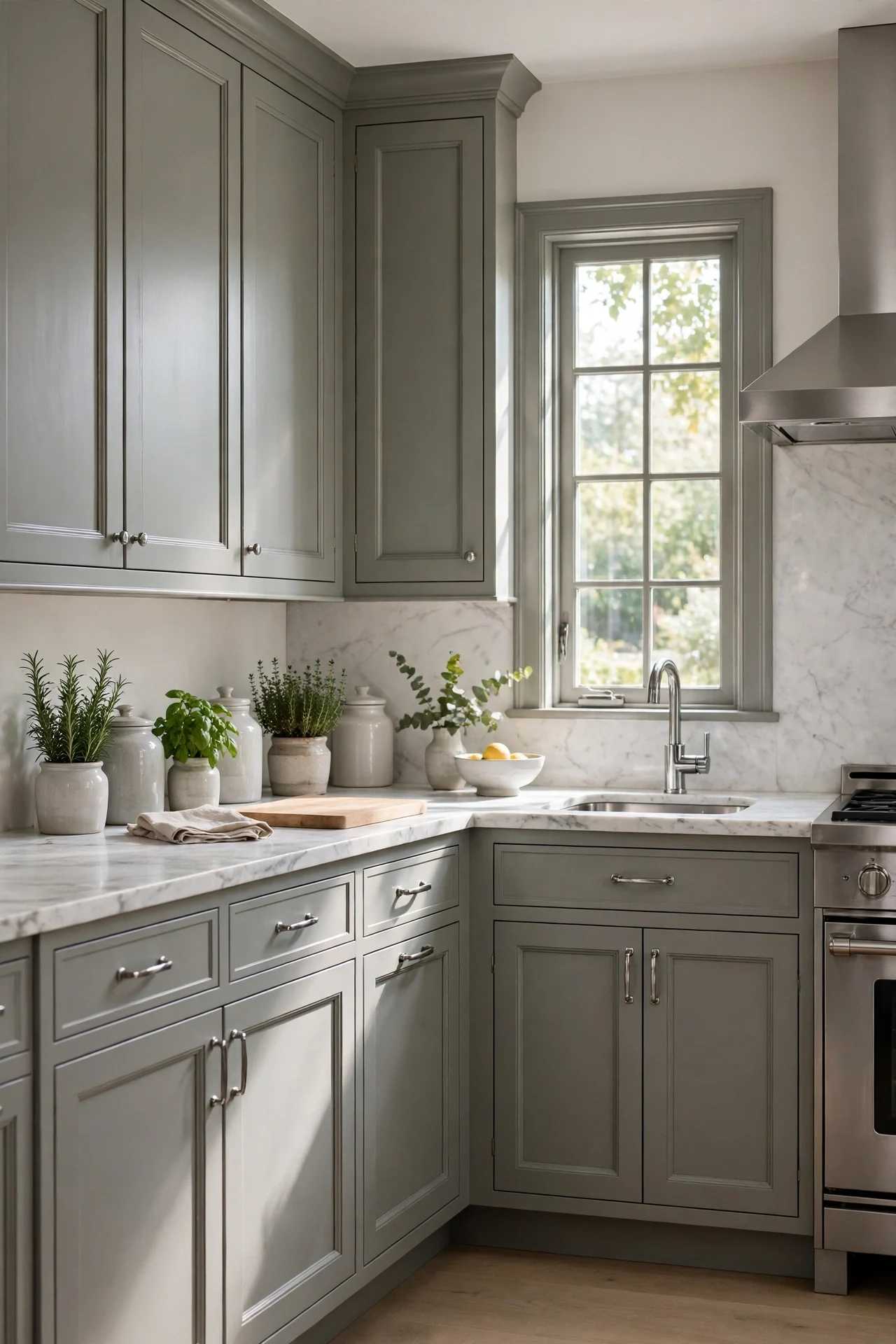
Vibe: cool, orderly, and faintly herbal.
Why it works: tonal layering links walls to cabinetry. Farrow & Ball 'French Gray' panels under matching cabinets read as one built-in run, calming a busy room.
How to get it: colour-match panels to cabinet doors at the paint counter. Use scrubbable satin near hobs.
9. Walnut Panels for a Book-Lined Library

Vibe: raw, hushed, smelling faintly of paper.
Why it works: contrast between dark walnut panels and pale book pages creates depth. The low sheen keeps reflections off spines and glass-fronted shelves.
How to get it: order walnut veneer MDF panels to cut cost. Finish with Osmo Polyx-Oil in clear matt.
💡 Quick Win: one walnut wall only; paint remaining panels to match.
10. Gloss Panels That Catch Candlelight
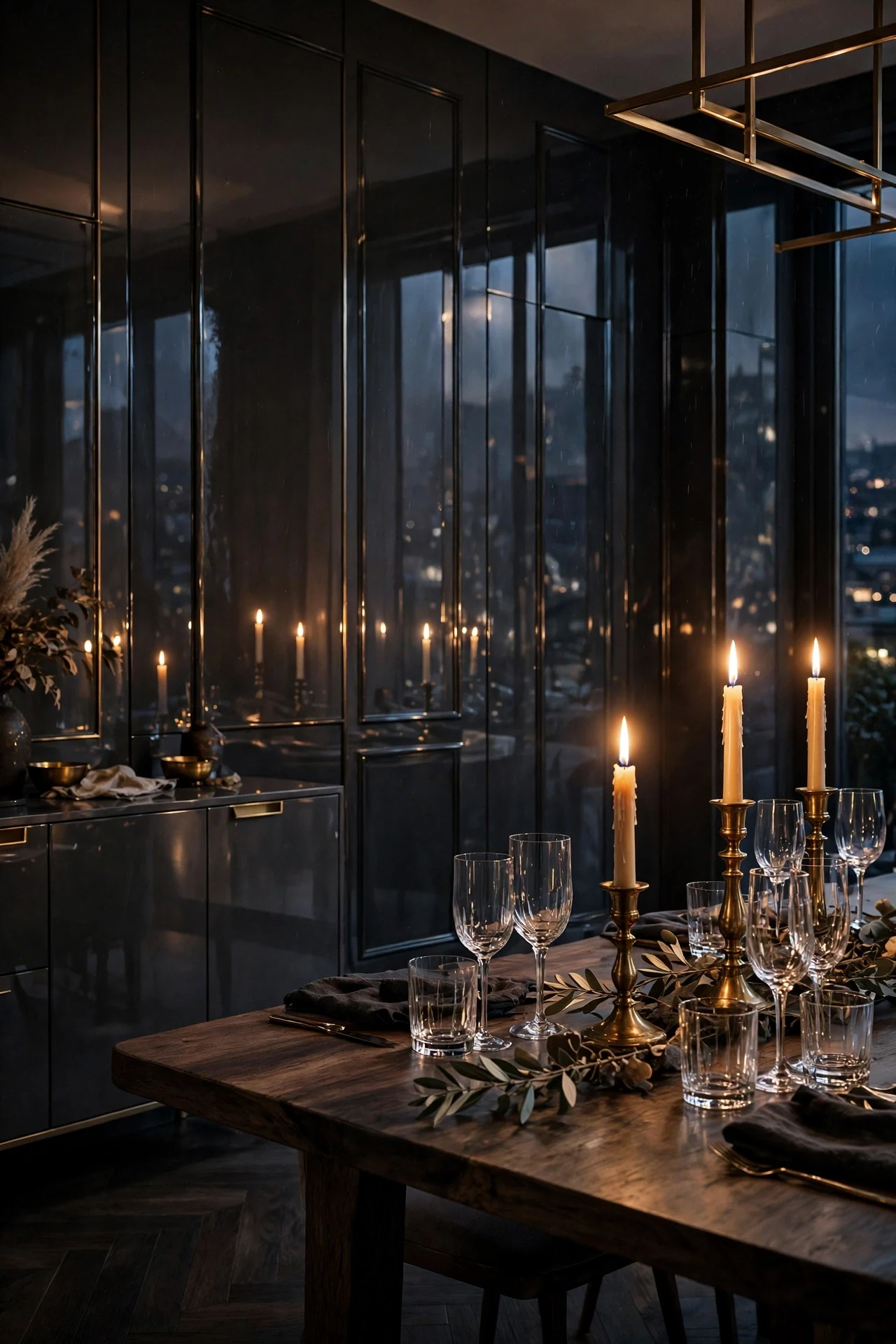
Vibe: luminous, flickering, and quietly theatrical.
Why it works: light behaviour is the whole effect. High-gloss enamel bounces candlelight across bevels, so a dark dining room glows instead of feeling flat.
How to get it: use Benjamin Moore Advance high-gloss on MDF. Sand between coats with 320-grit for glassiness.
11. Tall Panels Behind an Upholstered Headboard
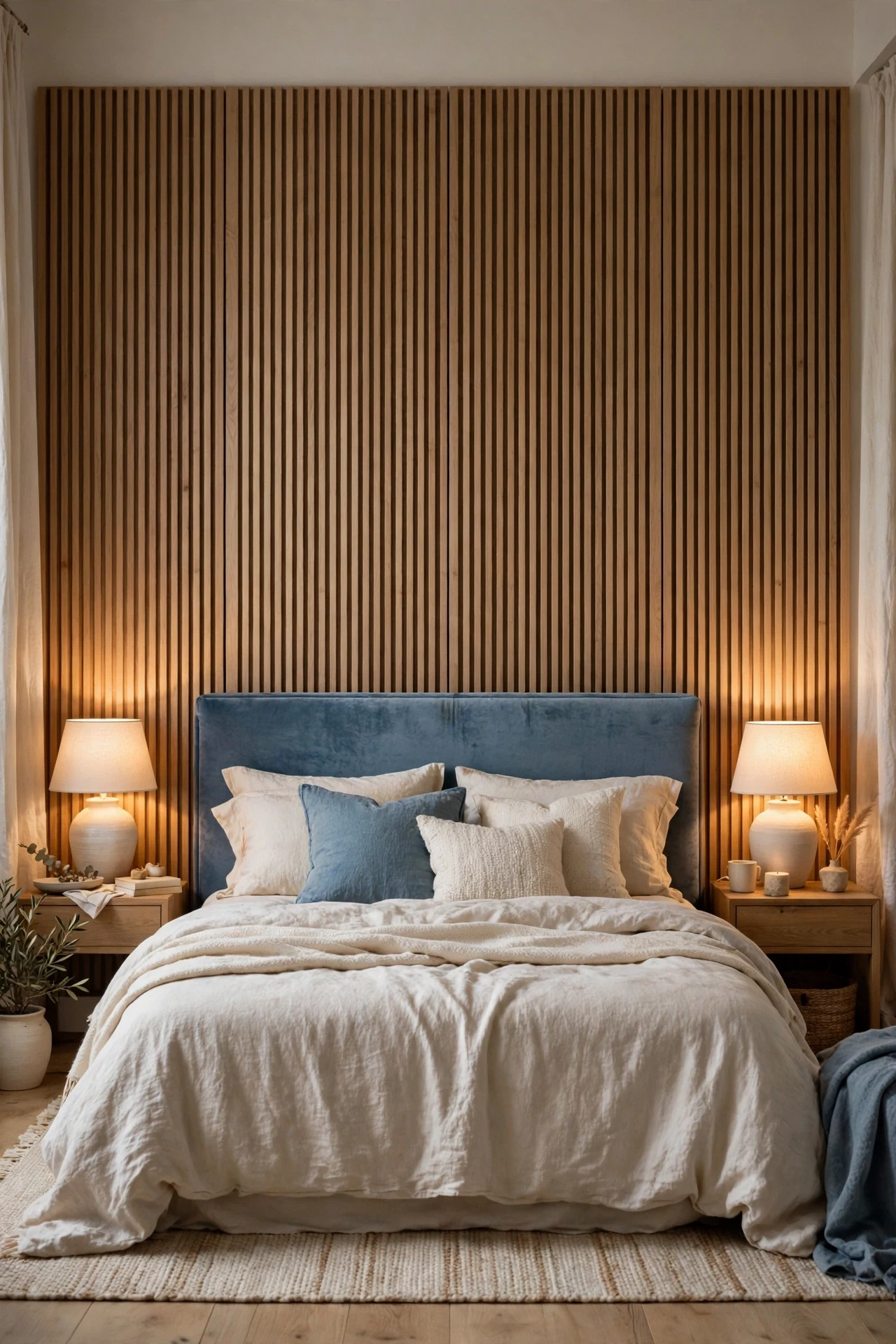
Vibe: cocooned, padded, and deeply still.
Why it works: proportion frames the bed as architecture. Panels rising behind a channel-tufted headboard in dusty blue velvet give the bed wall a headboard of its own.
How to get it: centre the middle panel exactly on the bed's centreline. Work panel widths outward from there.
💡 Quick Win: paint panels and wall one colour for instant height.
12. A Brass-Railed Mirror Wall in the Entryway

Vibe: bright, ordered, ready for the day.
Why it works: reflection doubles limited entry light. A round brass mirror centred over one panel softens all the rectangles while hooks land neatly on stiles.
How to get it: screw hooks only into stiles, never panel centres. Use a French cleat for heavy mirrors.
13. Two-Tone Panels in White Dove and Revere Pewter
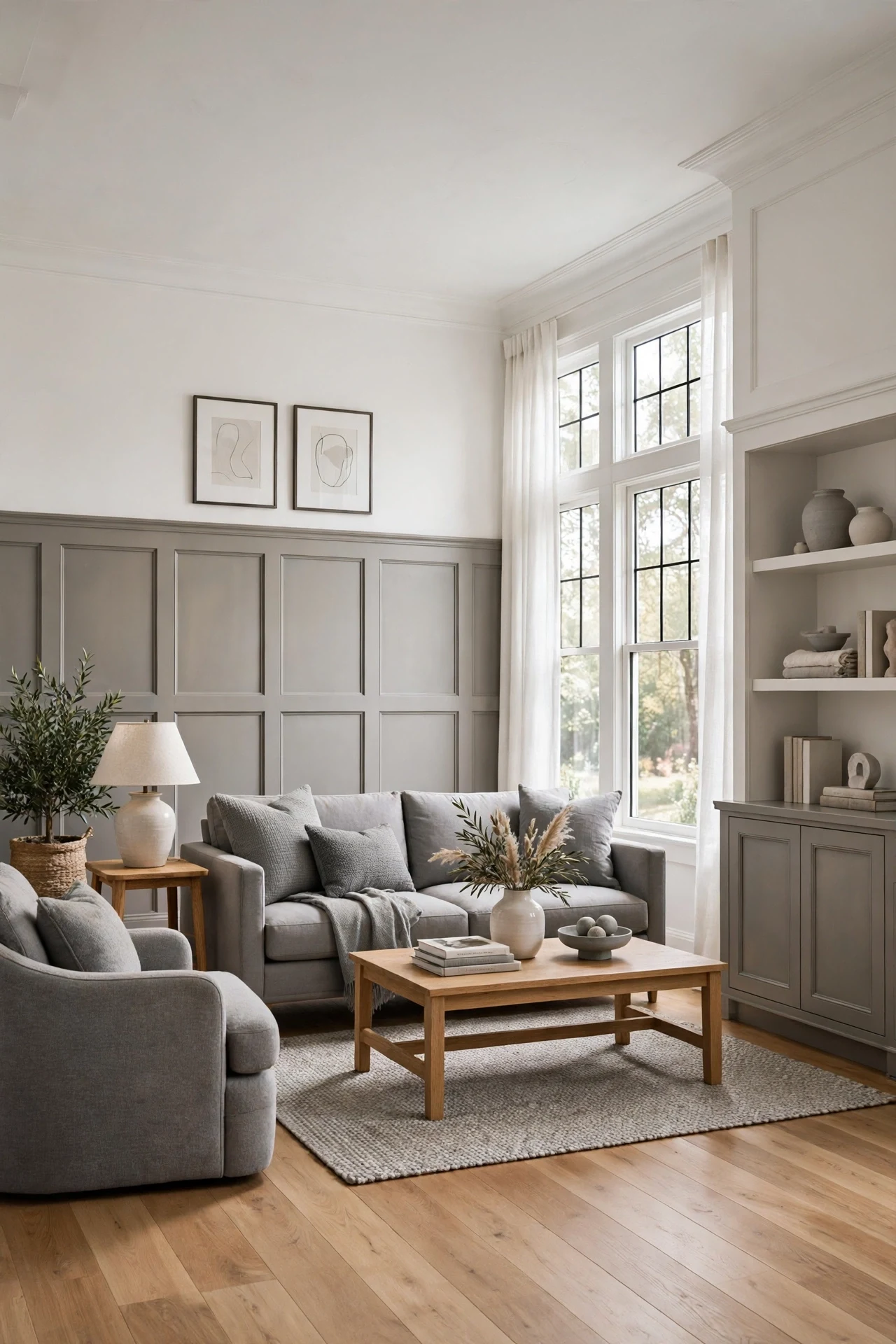
Vibe: crisp and balanced, like a tailored shirt.
Why it works: contrast defines the architecture politely. Benjamin Moore 'Revere Pewter' panels under 'White Dove' walls draw a calm horizon line that suits transitional furniture.
How to get it: paint the chair rail the darker tone. It hides scuffs where hands and bags brush past.
💡 Quick Win: this pairing works in north- and south-facing rooms alike.
14. Waterproof PVC Raised Panel Wainscoting in a Bathroom
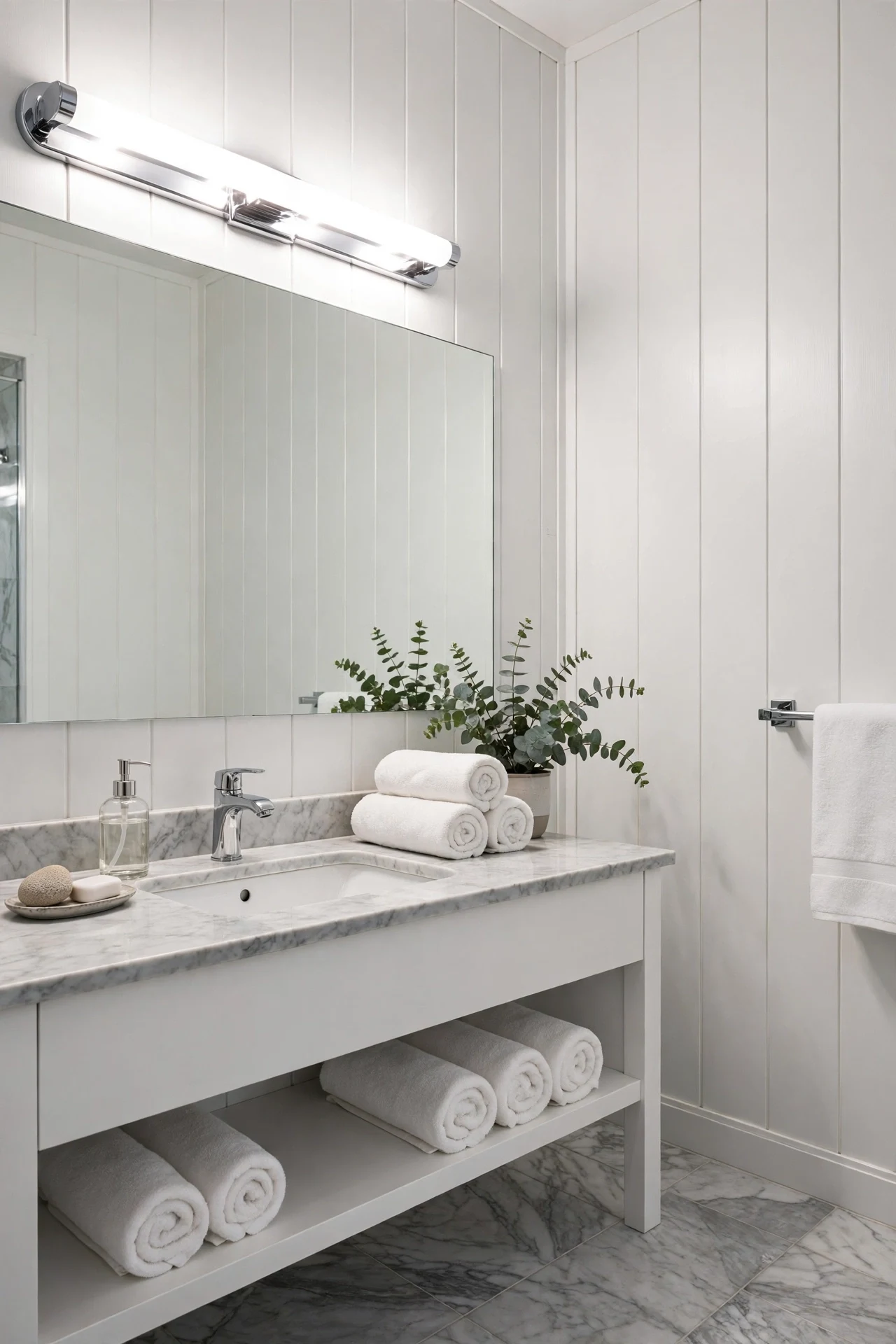
Vibe: clean, steamy, and spa-quiet after showers.
Why it works: material honesty solves a real problem. Cellular PVC panels from Royal Building Products shrug off humidity that swells MDF and peels paint within a year.
How to get it: bond PVC with PVC-specific adhesive, not wood glue. Seal the rail top with silicone.
15. Window Light Raking Across a Breakfast Nook

Vibe: sun-warmed and cheerful before coffee.
Why it works: light behaviour rewards bevels. Low morning sun raking sideways across white panels in a breakfast nook throws long shadows no flat wall can match.
How to get it: keep this wall gloss-free; satin shows rake best. Face the banquette toward the window wall.
💡 Quick Win: sheer linen curtains soften glare without killing shadows.
16. A Panelled Study Wall Built Around the Desk
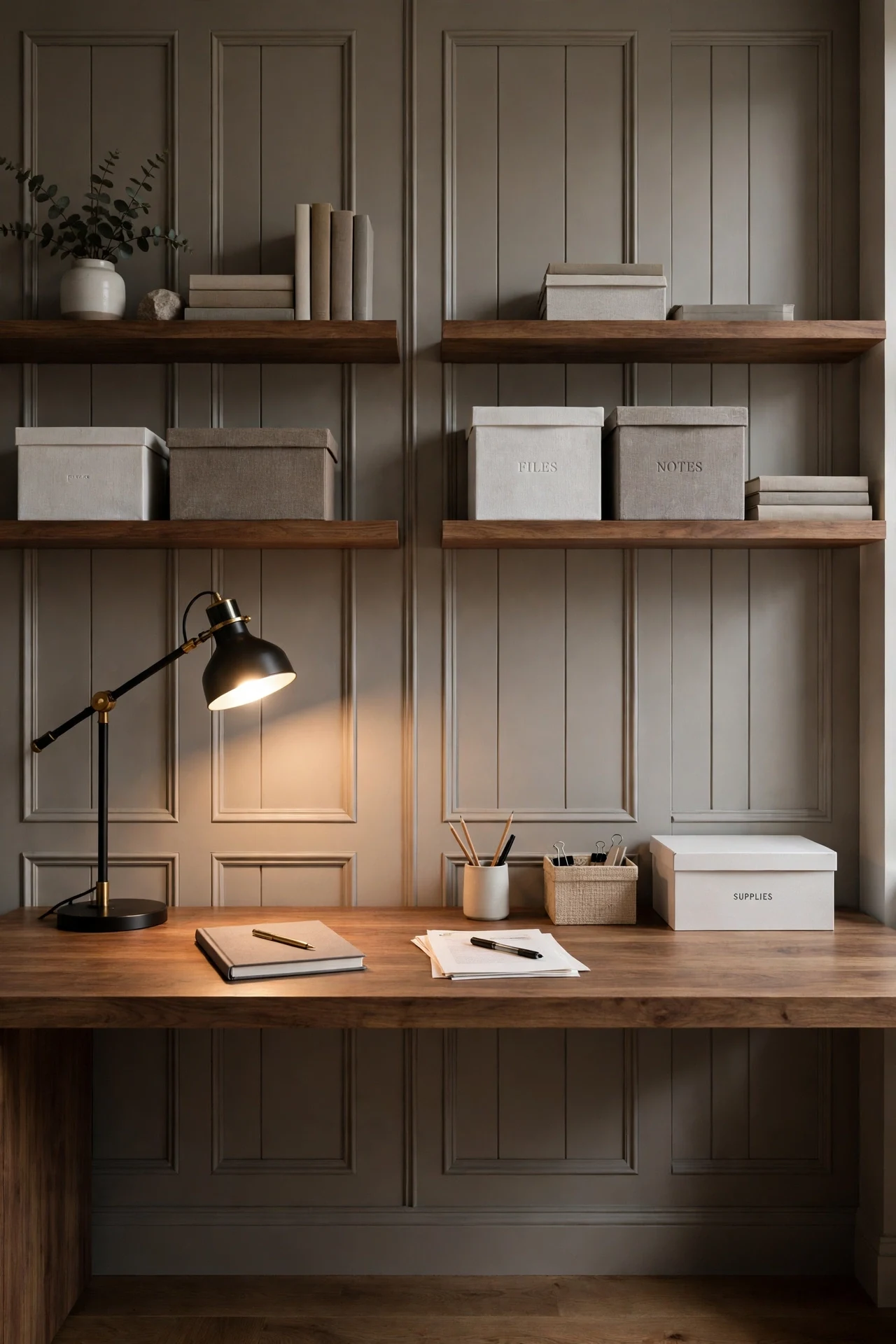
Vibe: focused, tidy, and quietly serious.
Why it works: zone definition separates work from rest. Panels sized around a walnut desk mark the work zone, while floating shelves sit cleanly above the rail line.
How to get it: set panel width to desk width plus 12 inches. Hide cables inside one hollow stile.
17. A Plate Rail of Ceramics Above Dining Panels

Vibe: layered and collected, nothing bought yesterday.
Why it works: visual rhythm links display to panelling. A grooved plate rail atop the chair rail repeats panel spacing while showing stoneware too handsome for cupboards.
How to get it: route a 1/4-inch groove into the rail cap. Add museum putty behind each plate.
💡 Quick Win: thrifted ironstone plates cost under $5 each.
18. Floor-to-Ceiling Panels in a Formal Living Room
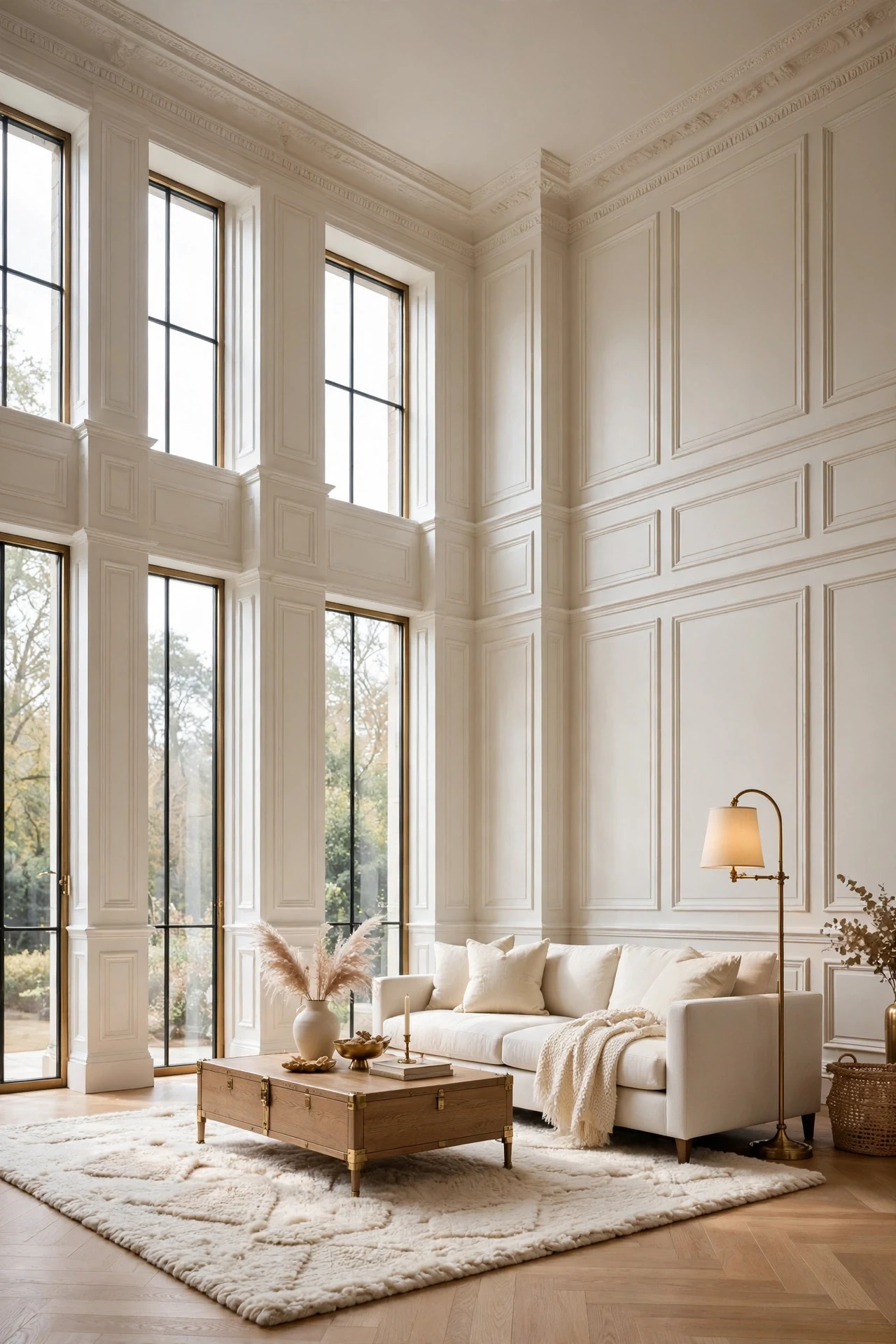
Vibe: grand yet serene, like a quiet hotel.
Why it works: proportion suits high ceilings. Two stacked tiers of raised panels fill 10-foot walls without the fussiness of wallpaper or the cost of full joinery.
How to get it: make the lower tier taller than the upper. A 60/40 split looks intentional, not gridded.
19. Slim Panels for a Narrow Hallway

Vibe: neat, elongated, no longer a corridor.
Why it works: illusion stretches the space. Narrow 2-inch stiles and a 48-inch rail in a 36-inch-wide hallway add frames without eating visual width.
How to get it: keep panel moulding projection under 3/4 inch. Bulky profiles catch hips and shopping bags.
💡 Quick Win: paint skirting to match panels; the line disappears.
20. Aegean Teal Panels in a Primary Bedroom

Vibe: moody, enveloping, made for slow mornings.
Why it works: colour temperature cools the room visually. Benjamin Moore 'Aegean Teal' on bedroom panels pairs with warm white bedding, balancing saturation with rest.
How to get it: limit teal to the bed wall only. Repeat it once, in a cushion, then stop.
21. Hard-Wearing Poplar Panels in a Mudroom
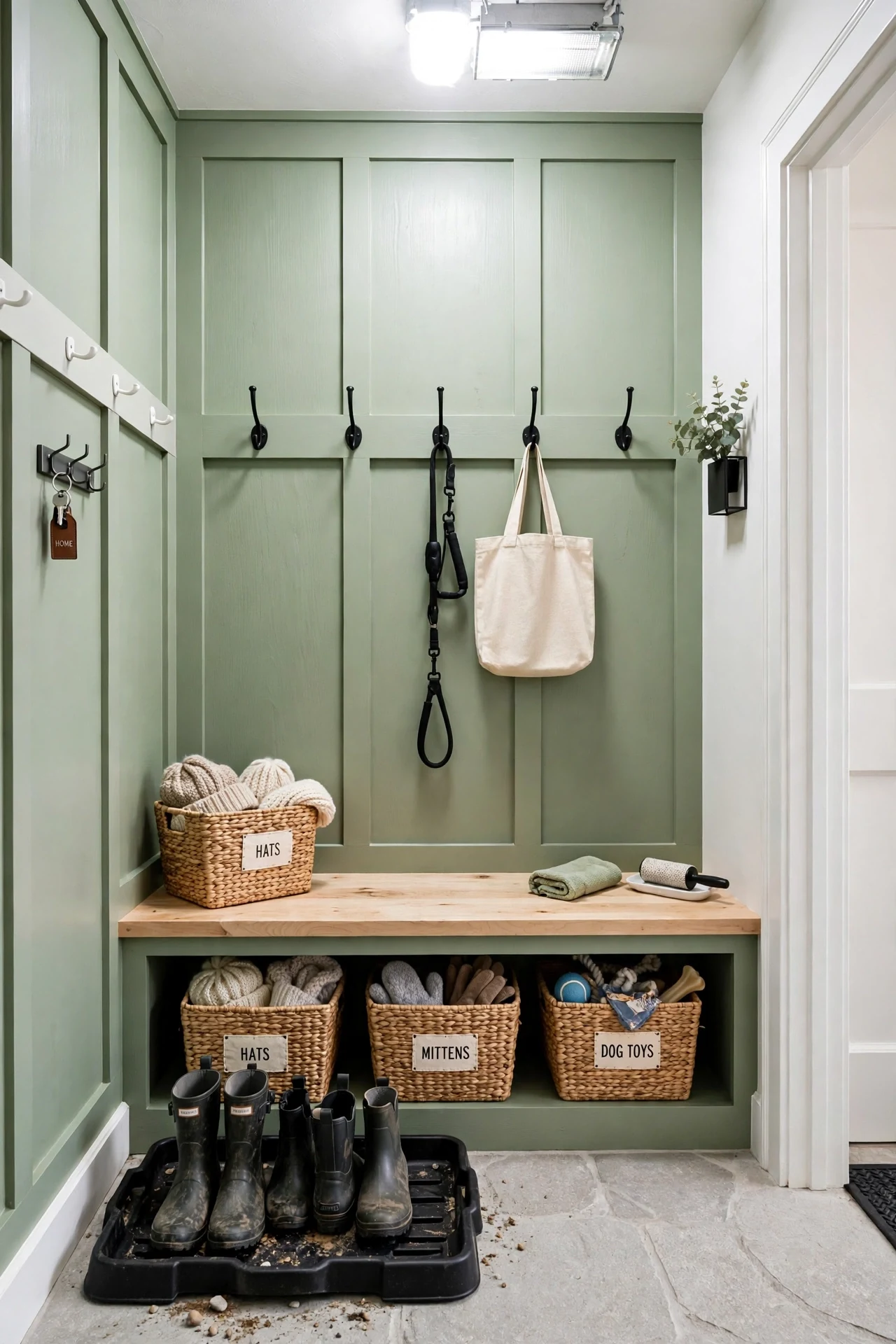
Vibe: practical, muddy-boot proof, still cheerful.
Why it works: material choice matches the abuse. Paint-grade poplar panels in scrubbable satin take kicks, paws, and school bags that would dent plaster weekly.
How to get it: choose Benjamin Moore Scuff-X for this room. It was formulated for high-traffic commercial walls.
💡 Quick Win: darker panels below the rail hide scuffs longest.
22. Backlit Mirrors Over Bathroom Panels
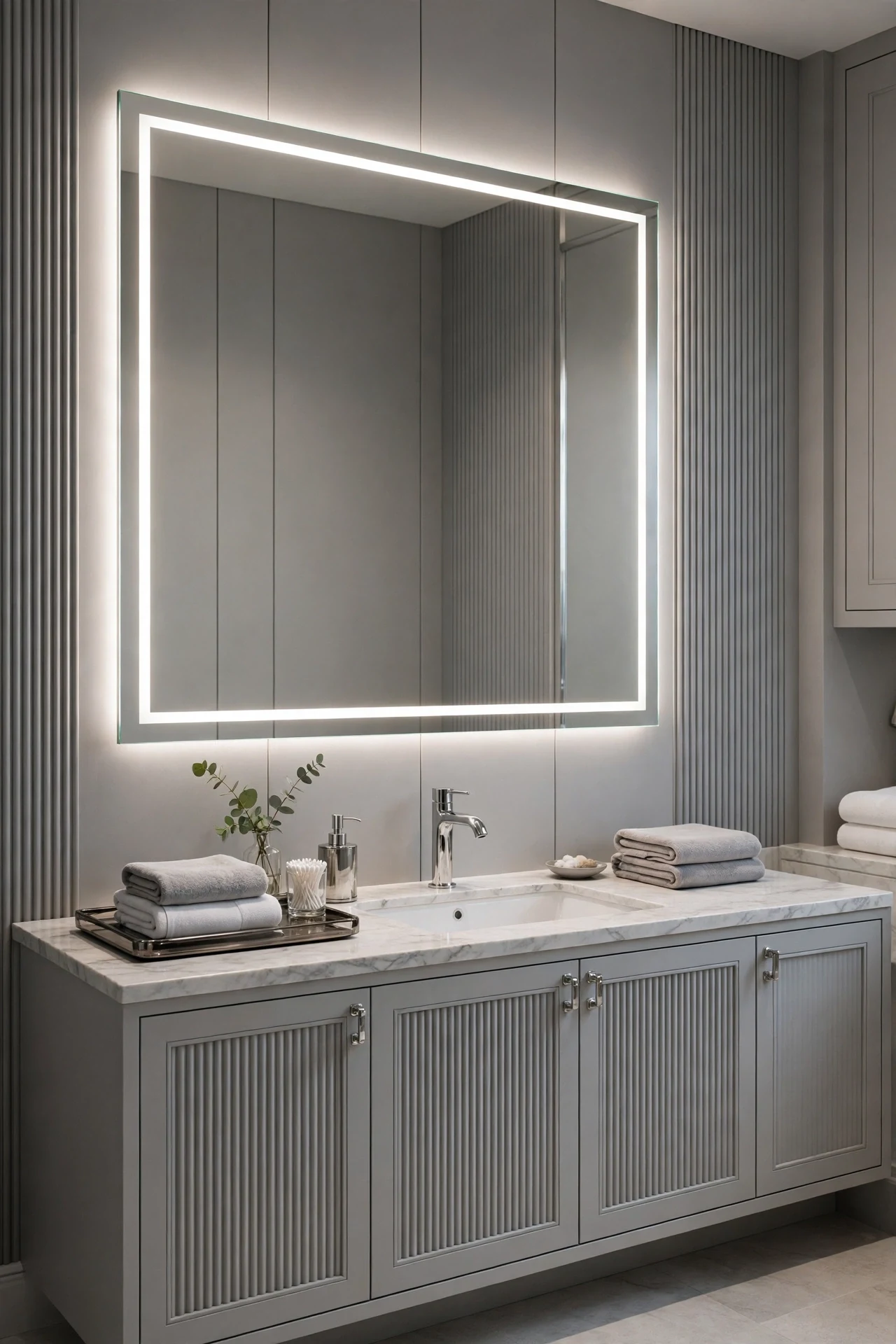
Vibe: calm, flattering, hotel-quiet at midnight.
Why it works: layered lighting flattens shadows kindly. A backlit LED mirror above grey raised panels lights faces evenly while the halo grazes the bevels below.
How to get it: choose a 3000K mirror with a demister pad. Wire it to the existing vanity circuit.
23. A Kitchen Island Clad in Raised Panels
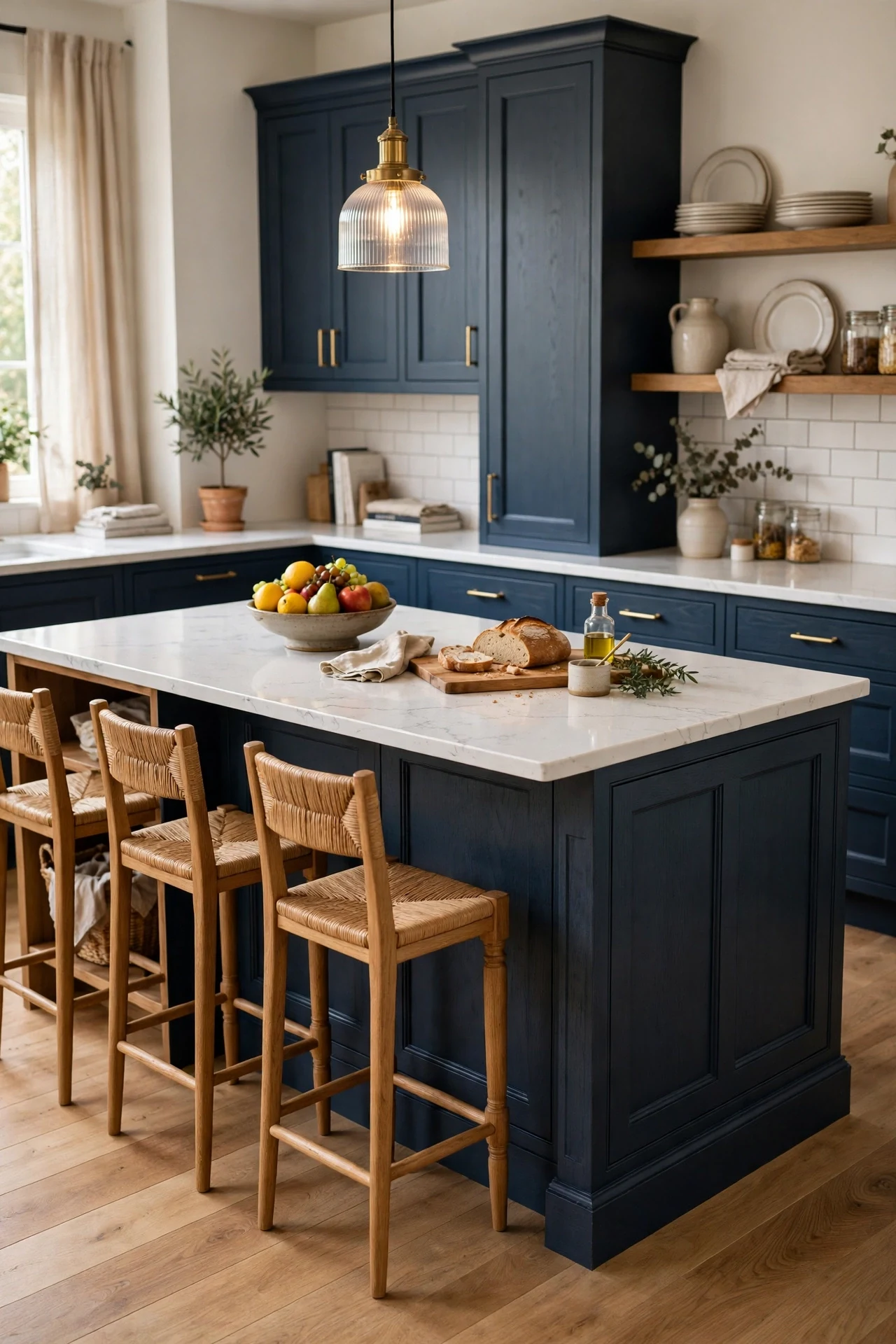
Vibe: crafted and social, the room's true centre.
Why it works: repetition ties island to walls. Cladding the island in the same raised panels as the perimeter walls makes stock cabinetry read as bespoke joinery.
How to get it: apply 1/4-inch MDF panel skins over island sides. Mitre corners so frames wrap continuously.
💡 Quick Win: panel only the seating side; it takes the compliments.
24. Velvet and Wool Softening a Panelled Sitting Room
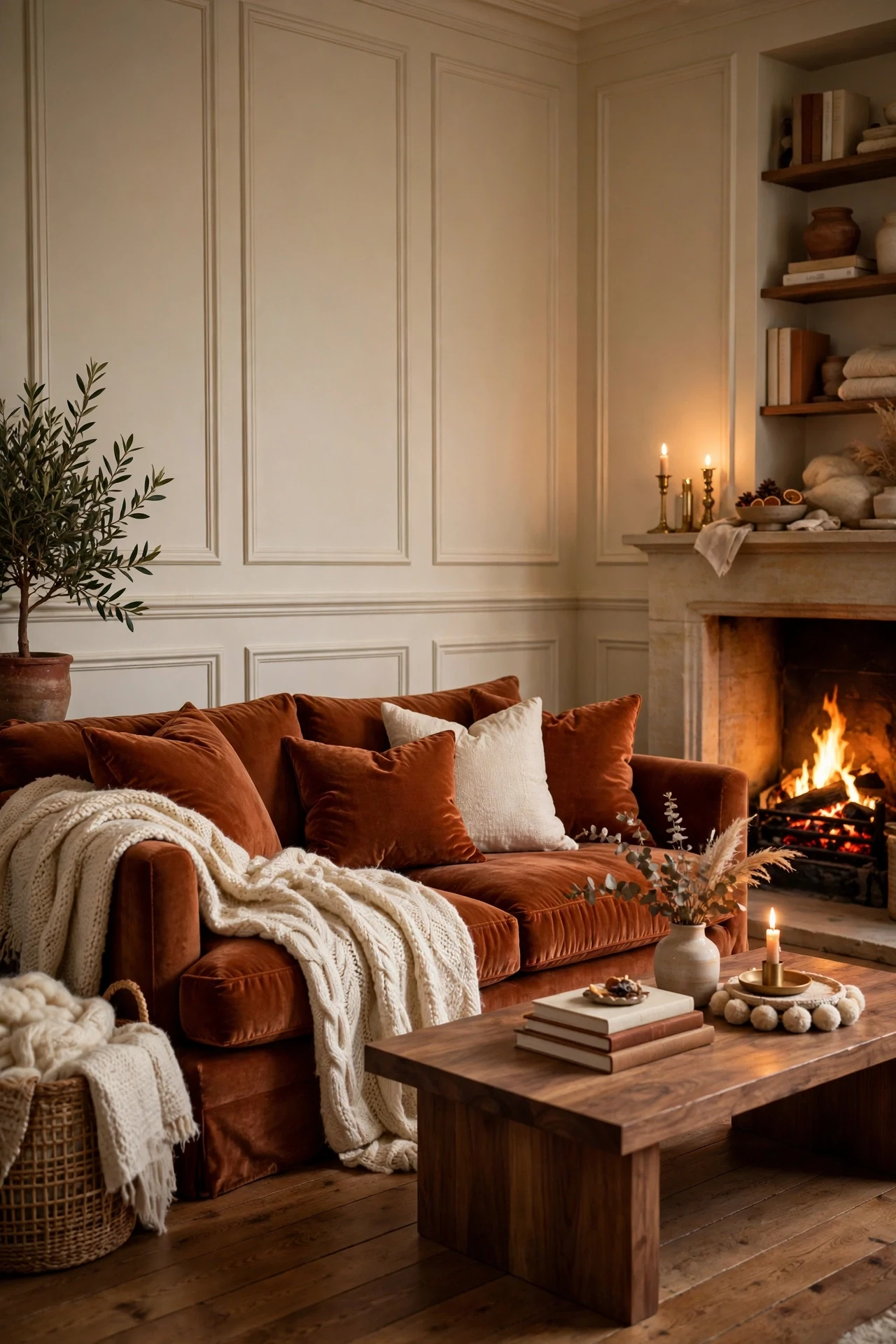
Vibe: tactile and cosy, hard edges softened.
Why it works: texture contrast is the principle. Crisp painted panels need soft counterweights, so rust velvet cushions and a chunky wool throw stop the formality feeling stiff.
How to get it: follow a 60/30/10 textile split across sofa, cushions, throw. Keep metals out of this mix.
25. Studio Green Raised Panel Wainscoting for a Study

Vibe: enveloping, bookish, sealed against distraction.
Why it works: saturation aids concentration here. Farrow & Ball 'Studio Green' raised panel wainscoting absorbs glare and makes brass desk lamps and tan leather glow by comparison.
How to get it: paint ceiling a warm off-white, never bright white. The contrast would cheapen the green.
💡 Quick Win: test Studio Green at night; it shifts nearly black.
26. Budget MDF Panel Moulding, Painted to Look Bespoke

Vibe: smart and achievable, no joiner required.
Why it works: material substitution keeps the geometry. Pre-primed MDF panel moulding from Ekena Millwork reproduces bevelled profiles at a third of solid timber's price per wall.
How to get it: apply moulding frames directly to drywall with adhesive. Caulk, sand, then paint everything one colour.
27. Panels Wrapping Continuously Around Corners

Vibe: seamless, calm, finished from every angle.
Why it works: continuity removes visual stopping points. Wrapping raised panels around both internal corners of a bedroom makes the panelling read as architecture, not decoration.
How to get it: plan panel widths from the corner outward. Never let a half-panel land beside a door.
💡 Quick Win: graph paper planning prevents one awkward narrow panel.
28. Low 32-Inch Panels in a Compact Guest Room
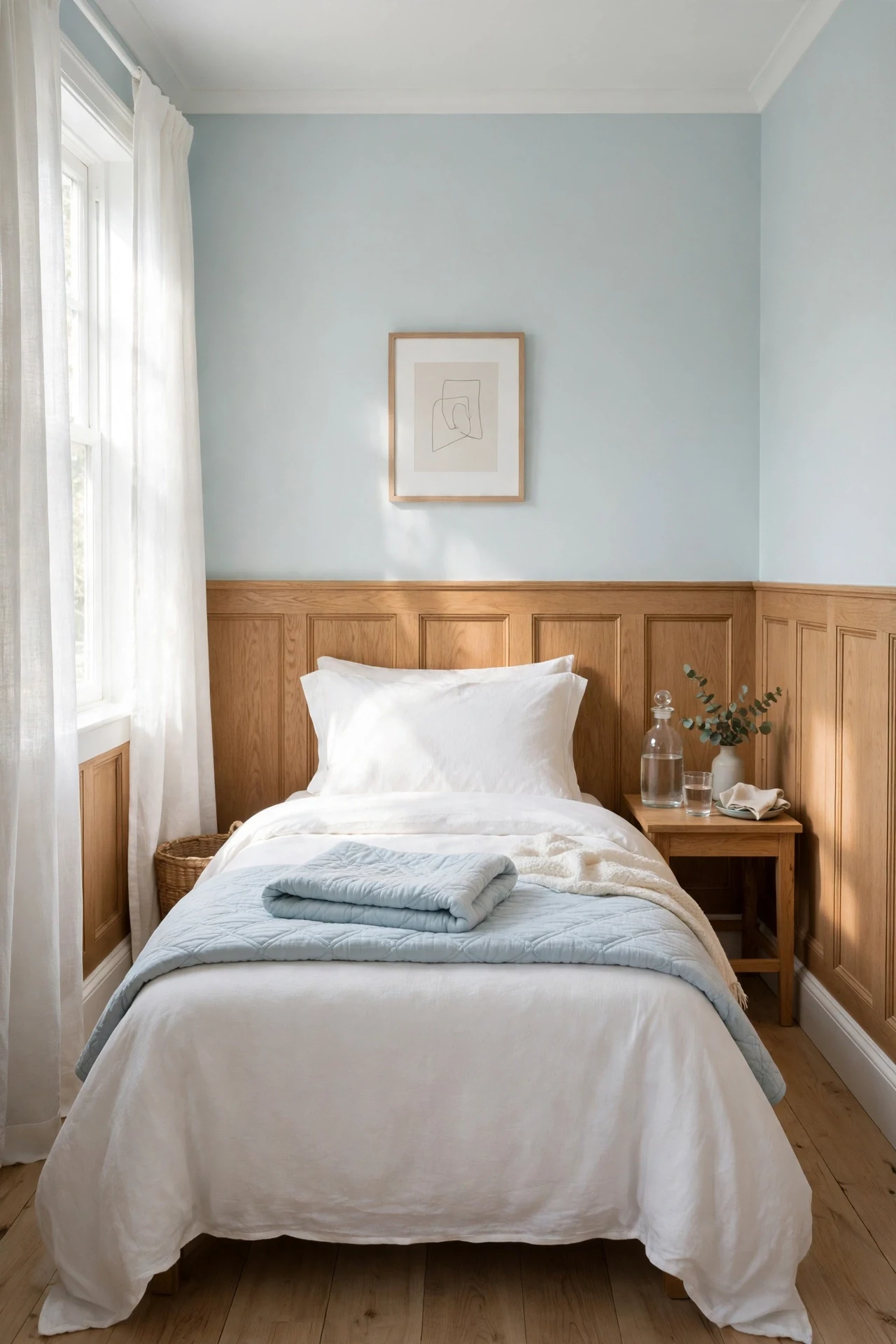
Vibe: airy and welcoming despite the footprint.
Why it works: proportion protects headroom. Panels stopping at 32 inches in a small guest room guard walls from luggage while leaving most of the wall light and open.
How to get it: align rail height with the windowsill. One shared line makes small rooms feel planned.
29. A Lantern Pendant Highlighting Foyer Panels
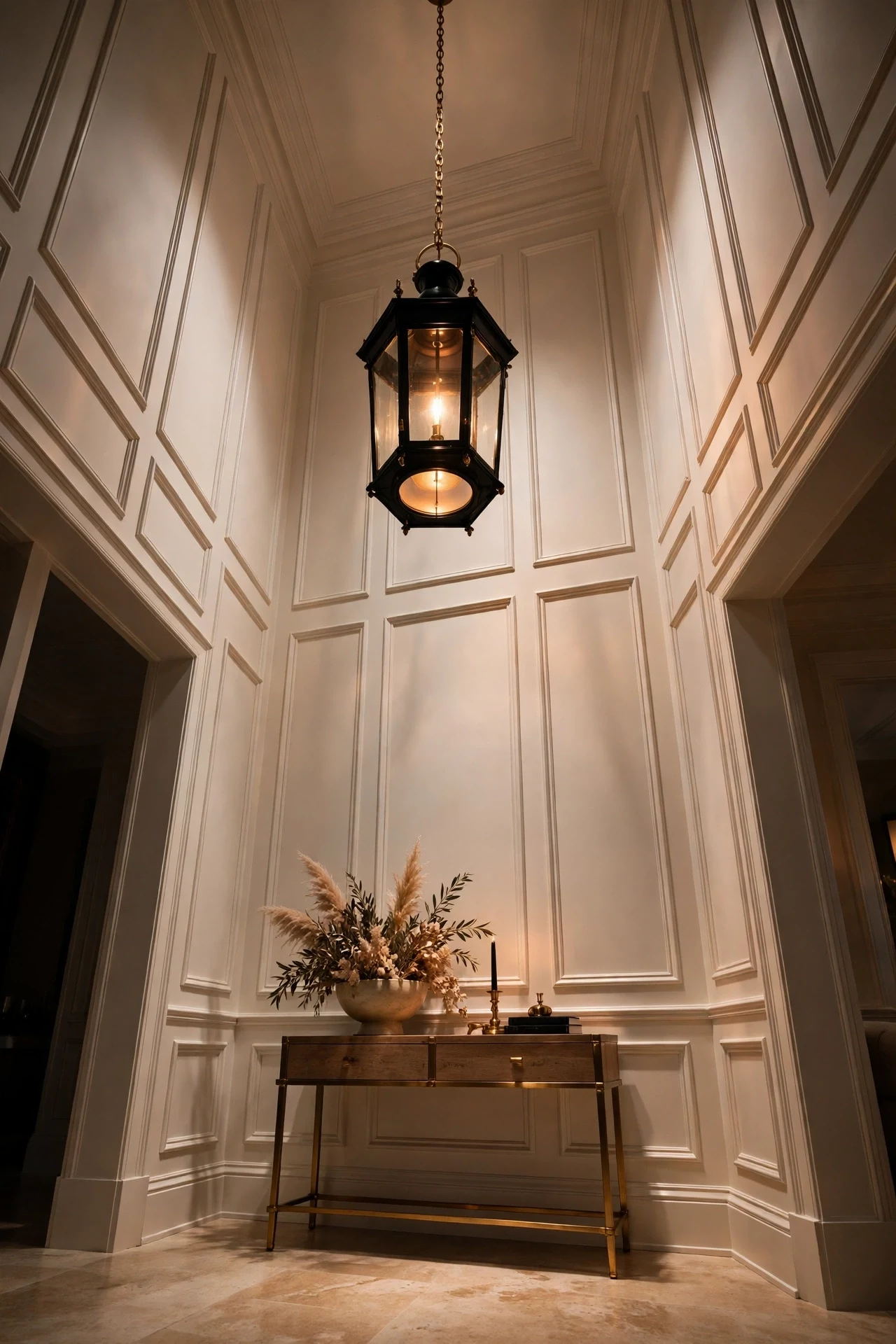
Vibe: dramatic on entry, warm within seconds.
Why it works: a single statement light rewards tall panelling. An oversized black lantern pendant throws patterned shadow across foyer bevels that recessed spots would flatten.
How to get it: hang the lantern bottom 7 feet above the floor. Centre it on the middle panel.
💡 Quick Win: a plug-in pendant kit avoids new wiring entirely.
30. A Slim Console Styled Between Hallway Panels
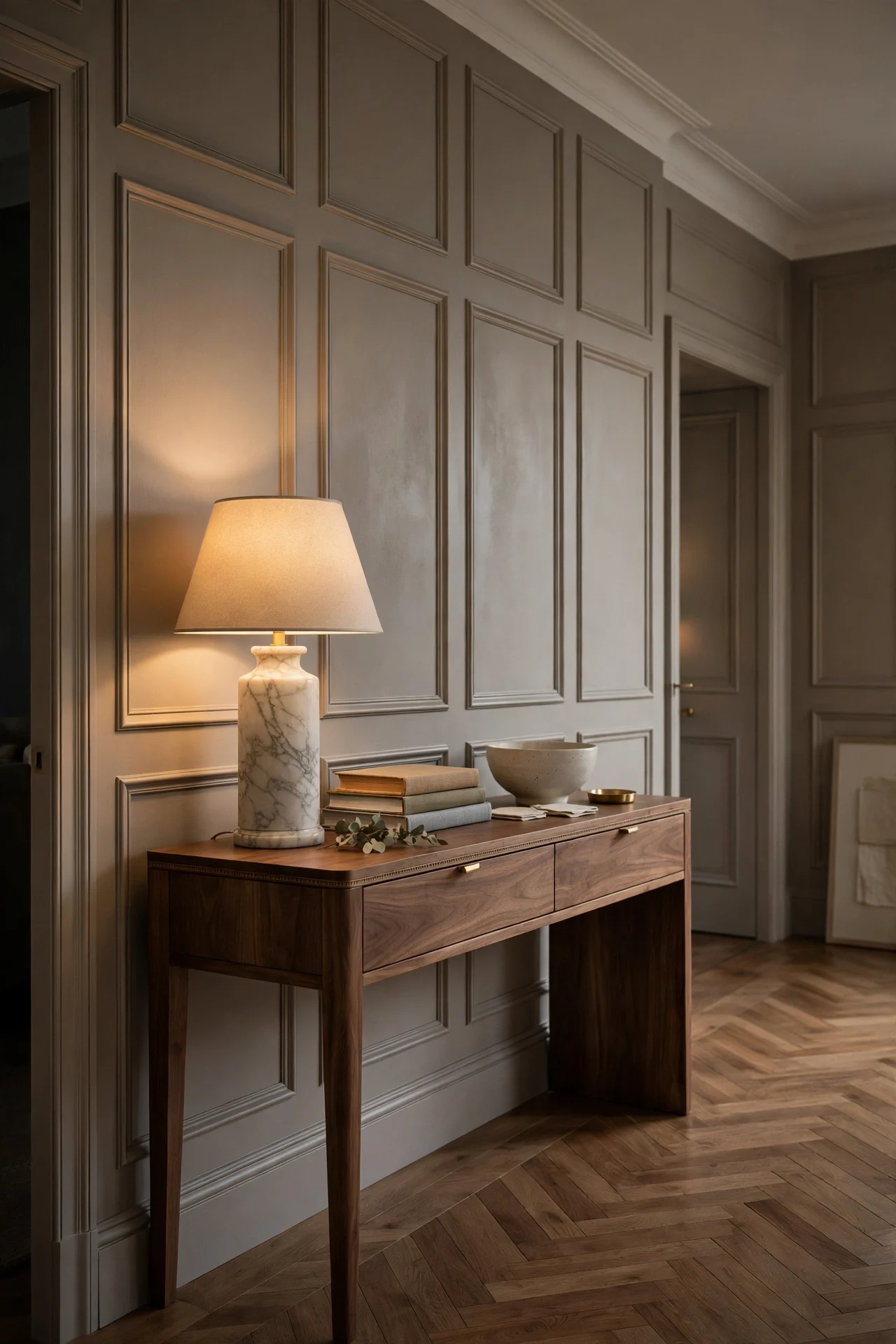
Vibe: composed and personal, a pause point.
Why it works: negative space gives objects importance. One slim walnut console centred on a single panel, styled with three objects, reads as a vignette, not storage.
How to get it: keep console depth under 12 inches in halls. Style in odd numbers and stop there.
31. Marble Accessories Against Bathroom Panels
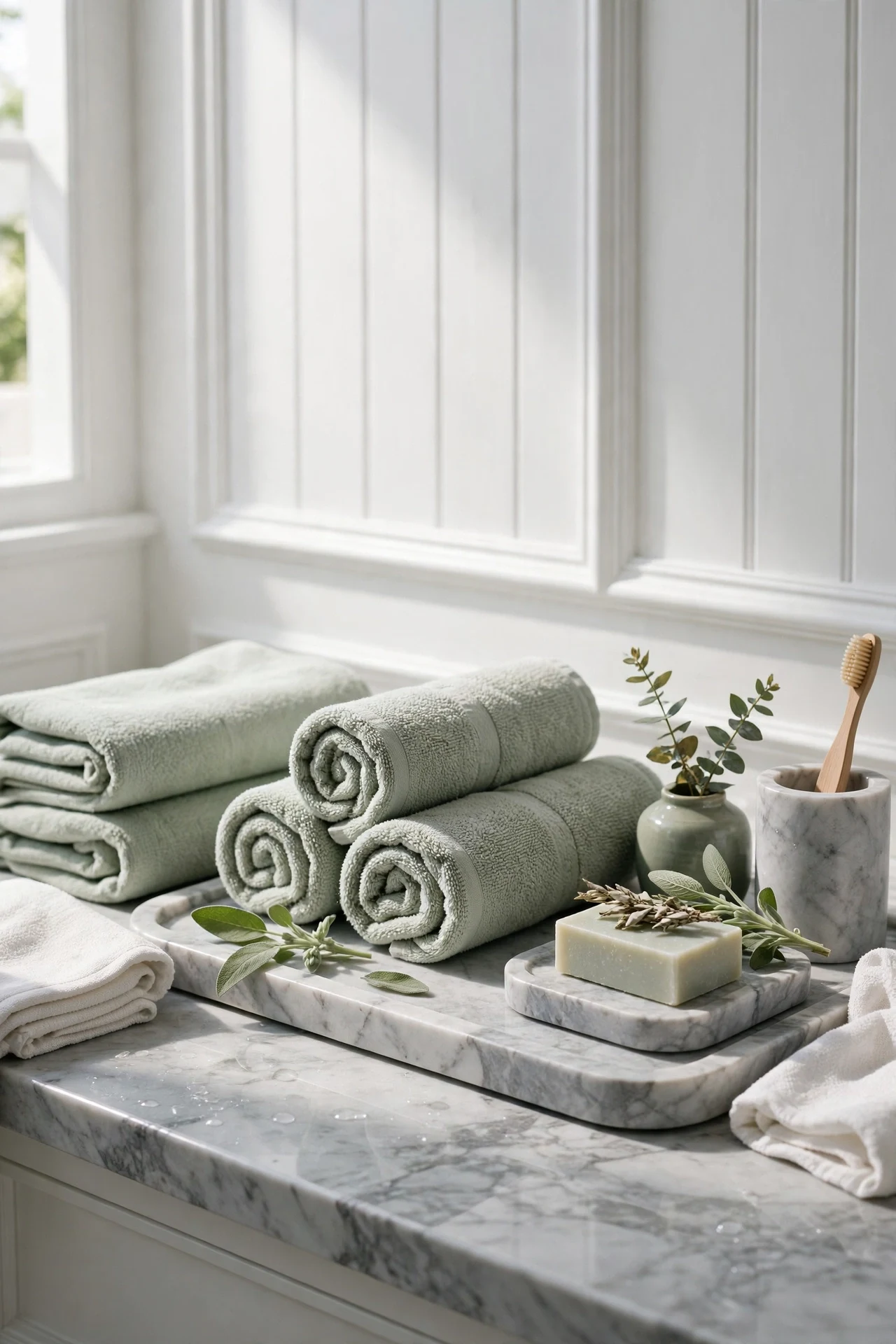
Vibe: refined, fresh, quietly expensive feeling.
Why it works: material echo is the trick. A Carrara marble tray and soap dish on the vanity repeat the cool veining tones that white raised panels frame so neatly.
How to get it: group accessories on one tray only. Loose bottles scattered along the rail destroy the effect.
💡 Quick Win: one marble tray elevates every budget bottle placed on it.
32. Swiss Coffee Panels Throughout a Sunroom

Vibe: bright, botanical, warm at every hour.
Why it works: undertone control matters in changing light. Benjamin Moore 'Swiss Coffee' on sunroom panels stays warm at noon and dusk, where pure whites turn blue-grey.
How to get it: paint panels, walls, and ceiling the same colour. Colour-drenching suits plant-filled rooms especially well.
33. A Marble Chair Rail Cap in a Grand Foyer

Vibe: solid, cool under the palm, luxurious.
Why it works: one premium material lifts everything below it. A honed Carrara marble chair rail cap over oak panels gives the whole wall a furniture-grade finish.
How to get it: order marble threshold strips as the cap; they are pre-polished. Bed them in white thinset.
💡 Quick Win: marble on the entry wall only sets the home's tone.
How to Start Your Raised Panel Wainscoting Transformation
Start with paint, specifically one gallon of Benjamin Moore 'White Dove' in satin for the panels of a single wall. That wall becomes your test of height, spacing, and sheen, and every later decision — colour, rail profile, lighting — anchors to how it looks in your light.
The common mistake is setting the chair rail at a random height, usually 36 inches, regardless of ceilings or windowsills. It breaks proportion and leaves panels squat or stretched. Fix it by aligning the rail to a windowsill or using one-third of wall height, then templating with painter's tape first.
Three items under $50 create immediate impact: an Ekena Millwork pre-primed panel moulding frame (about $18), a 10-ounce tube of DAP Alex Plus caulk (about $6), and a Purdy 2.5-inch angled sash brush (about $14). Together they finish one test panel completely, so you judge the real result, not a guess.
A single wall takes one weekend including drying time; a full dining room takes two to three weekends. Budget $150–$400 per wall with MDF kits, or $800–$1,500 with solid oak and a carpenter. Paint and one finished wall this month beats planning a whole house for a year.
Frequently Asked Questions About Raised Panel Wainscoting
What is the difference between raised panel wainscoting and Shaker wainscoting?
Raised panel wainscoting has bevelled centre panels that project forward, creating strong shadow lines. Shaker wainscoting uses flat recessed panels with square frames. Raised panels suit Georgian and Colonial rooms. Shaker suits simpler, more modern spaces. The raised profile also costs more, because each panel needs shaping or applied moulding.
What colors work best for raised panel wainscoting ideas?
Warm whites like Benjamin Moore 'White Dove' suit most rooms and light levels. Deep colours — 'Hale Navy', Farrow & Ball 'Studio Green' — work best below the rail in dining rooms. Painting panels and upper walls one colour makes small rooms feel larger. Satin sheen shows the bevels best.
Is raised panel wainscoting expensive to achieve?
It can cost $150–$400 per wall using MDF panel moulding kits. Solid oak installed by a carpenter runs $800–$1,500 per wall. Paint-grade poplar sits between the two. Labour, not materials, drives most quotes. A confident DIYer with a mitre saw can halve the total cost.
Can I mix raised panel wainscoting with other styles?
Yes, if one element repeats. Raised panels pair with Shaker cabinets when paint colour matches exactly. They also suit transitional furniture and modern art, provided frames stay simple. Avoid mixing with rustic shiplap in the same room. Two competing wall treatments make both look accidental.
What lighting works best with raised panel wainscoting?
Sconces and picture lights work best because side light grazes the bevels. Choose 2700K bulbs for warm, flattering shadow. Place sconces centred on stiles, about 66 inches high. Overhead-only lighting flattens panels badly. Even one plug-in swing-arm sconce per wall improves the effect noticeably.
Ready to Create Your Dream Raised Panel Wainscoting?
From Hale Navy dining rooms to marble-capped foyers, these raised panel wainscoting ideas covered colour, timber, lighting, furniture, layout, and small-space tricks. Starting with one wall is not a compromise; it is exactly how carpenters have always tested proportion before committing. Today, tape one panel layout on your emptiest wall with painter's tape and live with the outline until tomorrow. When the bevels finally catch evening light, the room will feel older, calmer, and unmistakably yours. Save your favourite panels now — that shadow line is the detail you will keep coming back to.